
c. 430 – c. 500·Feast January 7
St. Dalua of Tibradden
Early Irish Saint; Disciple of St. Patrick
Overview
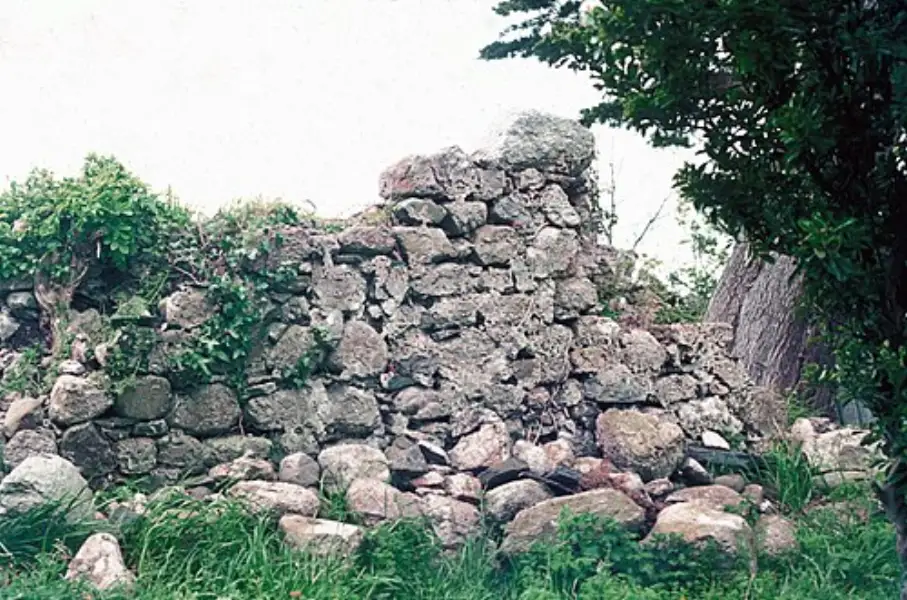
Dalua of Tibradden (Irish Do-Lúe; Latinized as Daluanus, and styled also Dalua of Craoibheach) numbered among the earliest Irish saints, with a career threads together the Britain-to-Ireland migration of the age of Patrick, the founding of a Dublin mountain church, and the planting of a monastery in County Louth. Born in Britain around the year 430, he belonged to a family the ninth-century Book of Armagh names: a brother called Lonan, a father called Senach and a mother called Rigell, whom some have identified with Richella, the fifth sister of Saint Patrick himself. Crossing to Ireland, he founded the church of Tegh Bretan — the house of Bretan, Dun Tighe Bretan — whose ruins in the old section of Cruagh Cemetery in the Dublin foothills remained a place of worship until about 1620 and have been associated with him ever since. He became a disciple of Saint Patrick, who stationed him at Dromiskin in County Louth alongside another disciple, Lugaid, son of Aengus mac Nadfraoch, the first Christian king of Munster and later first bishop of Dromiskin. There the two founded the famous monastery the sources call Druim-Inisclainn. Lugaid died in 515 or 516; Dalua is said to have died at Dromiskin before that time, around the year 500. The Martyrology of Donegal records his feast on January 7.
The Complete Life
A British Family in the Age of Patrick
Dalua's origins lie in Britain in the early-mid fifth century, in the very years when Patrick's mission was transforming Ireland. The precious early witness is the ninth-century Book of Armagh, which speaks of a 'DuLuae Chroibige' — Dalua of the branch, Croibige or Craoibheach, one of his several designations. Professor John Gwynn's interpretation of that passage gives him a brother named Lonan, a father named Senach and a mother named Rigell. A later tradition, recorded in John Healy's life of Patrick, suggests that this Rigell was none other than Richella, the fifth sister of Saint Patrick — which would make Dalua the great saint's nephew. The identification is conjectural, but it belongs to a family of traditions that set Dalua close to the heart of the Patrician mission.
§ Origins
Tibradden and Dromiskin
At some point in his life Dalua crossed the Irish Sea. In Ireland he founded the church known as Tegh Bretan or Dun Tighe Bretan — Tibradden — which stood in what is today the townland of Cruagh, County Dublin, on the slopes below Tibradden Mountain. The stone church whose ruins lie in Cruagh Cemetery's oldest part — a site kept in use until roughly 1620 — has been linked to his memory for centuries, and it is likely these are the remains of his own foundation. Later he joined the circle of Saint Patrick as a disciple, and Patrick gave the Briton and another disciple, Lugaid, a shared field of labor at Dromiskin in County Louth. Lugaid was no ordinary companion: a son of Aengus mac Nadfraoch, the first Christian King of Munster, he became the first bishop of Dromiskin. The Patrician record preserved in the sources describes a church 'afterwards famous' that Patrick raised at Druim-Inisclainn, with Da-luanus de Croebheach and Lugaid building it alongside him. There, at that Louth monastery, Dalua's life was spent and, it is said, ended: he died at Dromiskin, presumably before Lugaid, whose death is placed in 515 or 516, giving Dalua a death date of about 500.
§ Life
The Question of Molua of Creevah
Irish saint-dossiers rarely close neatly, and Dalua's carries an open question. A saint named Molua of Creevah — not to be confused with Mo Lua of Killaloe — may be the same man. The suggestion arises from a circumstance of naming: an older name of the Tibradden and Cruagh district was Creevagh, surviving into the nineteenth century, and the Vita tripartita gives this Molua the label of a Briton's pilgrim — wording that suits Dalua, born across the sea. Some scholars have accepted the identification; the sources themselves judge it not certain, even with these indications. The cult of Dalua rests on firmer ground in the early martyrologies — the Martyrology of Tallaght, the Martyrology of Gorman and the Martyrology of Donegal, which assigns his feast to 7 January — and in the notices of the Acta Triadis Thaumaturgae of John Colgan, the seventeenth-century laborer in the hagiographic vineyard who preserved much of what is known of him.
§ 'Molua of Creevah'
Timeline
- 430
Born in Britain in the early-mid fifth century, son of Senach and Rigell and brother of Lonan, per the Book of Armagh tradition
§ Origins
- 500
Dies at Dromiskin, County Louth, presumably before his companion Lugaid, who died in 515 or 516
§ Life
- 1620
The Martyrology of Donegal attests his cult, recording his feast on 7 January
§ Notes
In Their Own Words
[St Patrick] also erected a church, afterwards famous, which is called Druim-Inisclainn ... which two of his disciples, Da-luanus de Croebheach and Lugaid ... also made
The Record
- Symbols
- Ruins of the church at Cruagh, County Dublin
- Canonization
- Pre-congregation; ancient Irish cult attested by the early martyrologies
Prayer
Bibliography
Show 8 sources
- Martyrology of Donegal (c. 1620).
- 'Acta Triadis Thaumaturgae', John Colgan (1647, Latin), p131.
- Book of Armagh, Appendix D (1913), 9 fol. 19, r°.
- The Life and Writings of Saint Patrick, p619, John Healy (1905).
- Medieval Parish Churches of South-West Co. Dublin, p265, Máirín Ní Mharcaigh.
- Lives of the Irish Saints, John O'Hanlon (1875).
- History of Kilsaran, p166, James Leslie (1908).
- "An Chraobhach/Cruagh". Logainm.ie.
Profile text adapted from the Wikipedia article, licensed CC BY-SA 4.0.
Pray with this saint every day
Save St. Dalua of Tibradden to your favorites, read the full profile, and get feast-day reminders in the Saints app.
Get the Saints AppFree on the App Store for iPhone and iPad