
1846 – 1929·Feast September 7
St. Daniel of Katounakia
Athonite hesychast elder and founder of the Danielaioi Brotherhood
Overview
Daniel of Katounakia, born Dimitrios Dimitriadis in Smyrna in 1846, became one of the most influential Athonite elders of the early twentieth century. Educated with honors at the Evangelical School of Smyrna, he left the world at nineteen to seek a monastery, visiting holy elders across the Peloponnese and the Aegean islands before being directed to Mount Athos. He received the monastic habit at St. Panteleimon Monastery in 1866 and served as the monastery's secretary, but the quarrels between Greek and Russian monks in the 1870s carried him through exile in Thessaloniki, a term at Vatopedi, and finally to the bare rocks of Katounakia, the southernmost tip of the Athos peninsula, where he settled in 1881. There he founded the brotherhood known as the Danielaioi, which continues his way of life today. A practicing hagiographer, essayist, and author of hundreds of spiritual letters, he guided disciples including Joseph the Hesychast and Kallinikos the Vigilant, and corresponded with figures such as St. Nectarios of Pentapolis. He refused a bishopric in order to keep the contemplative life, and died on 8 September 1929, the feast of the Nativity of the Mother of God. The Ecumenical Patriarchate canonized him on 9 March 2020.
The Complete Life
A Scholar's Son of Smyrna
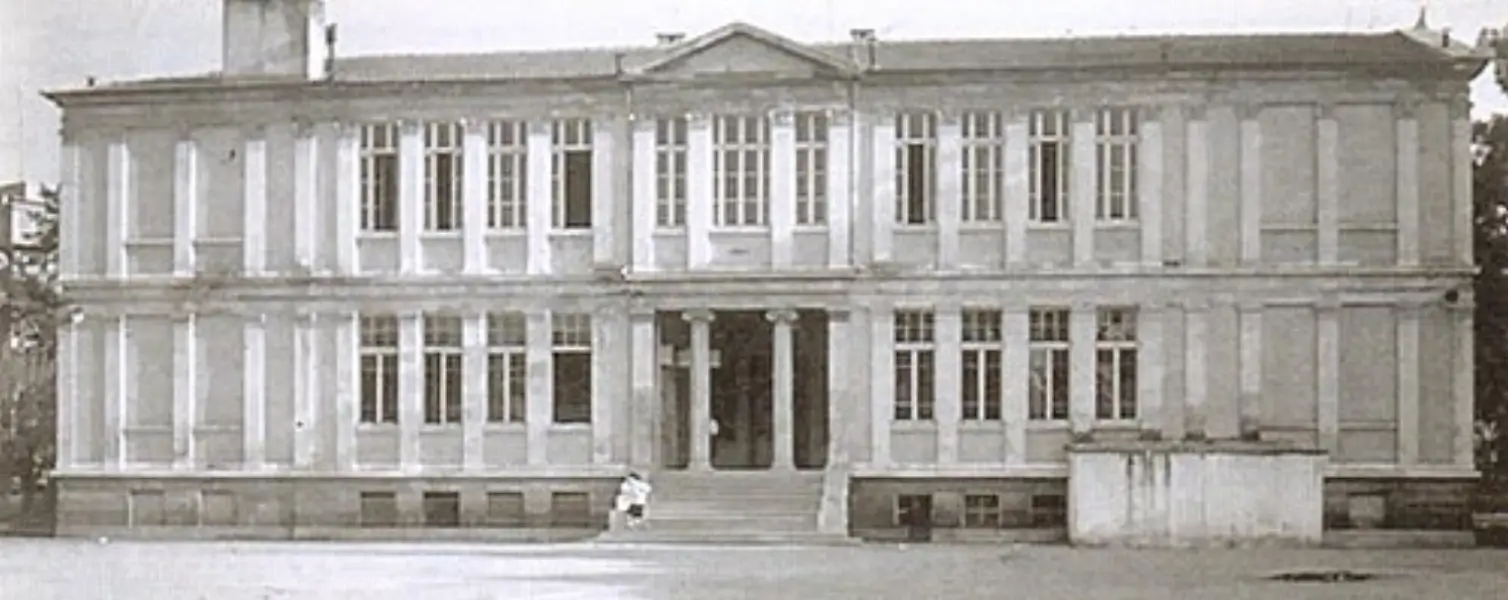
The future elder was born in 1846 in Smyrna, the great Greek city on the Anatolian coast, into a large family as its youngest son. Smyrna's Greek community maintained one of the finest school systems of the Ottoman world, and the boy distinguished himself in it, graduating with honors from the Evangelical School of Smyrna, the community's principal educational institution. His formation there gave him the classical and theological grounding that would later surface in his essays and letters, but his heart turned early toward the monastic rather than the academic life. At nineteen, still known by his baptismal name Dimitrios, he set out to find the tradition of the elders for himself. He visited monasteries across the Peloponnese and made the round of the Aegean islands, Hydra, Tinos, Paros, and Ikaria, meeting Orthodox elders and weighing where he might give his life. On Paros he encountered St. Arsenios of Paros, one of the most respected figures of nineteenth-century Greek monasticism. When Dimitrios asked to stay and practice the ascetic life with him, the old saint, discerning the young man's calling, instead directed him to the famous and flourishing St. Panteleimon Monastery on Mount Athos, the garden of the Mother of God.
§ Early years
Tonsure, Service, and the First Great Trial
Following Arsenios' counsel, Dimitrios received the habit at St. Panteleimon in 1866 under the name Daniel. The monastery, though bearing a Russian foundation's history, then had a Greek abbot and a mostly Greek brotherhood, and the young monk was held in esteem by both; during this period he served the community as secretary, an office that used his Smyrna education. The peace did not last. From 1874 to 1875 the Russian monks of St. Panteleimon pressed to take control of the monastery, and the resulting quarrels and tensions split the community. The Greek monks departed, Daniel among them, and he withdrew to Little St. Anne's Skete on the western side of the peninsula. The affair did not end there: the dispute reached the Ecumenical Patriarchate itself, and Daniel was summoned to Constantinople and punished with permanent removal from Mount Athos, a sentence that fell on a man whose chief fault seems to have been his fidelity to his Greek brethren. Thus, at the moment his monastic life should have settled into quiet, he found himself a monk without a mountain, sent into what became a formative exile in Macedonia.
§ Early years
Exile in Thessaloniki and Vindication
Banished from Athos, Daniel was handed over to Metropolitan Joachim of Thessaloniki, the same churchman who would later reign as Ecumenical Patriarch Joachim III. Joachim, recognizing the injustice of the sentence against him, declined to treat the exile as disgrace; he suggested instead that Daniel take up residence in a monastery of the Metropolis of Thessaloniki. Daniel chose the Monastery of St. Anastasia Pharmakolytria at Vasilika, and there the exiled monk accomplished what decades of security might not have: he contributed to the revitalization of a struggling community by introducing Athonite usages of fasting and worship, so that the discipline of the Holy Mountain reached a monastery that had drifted from it. Meanwhile the storm at St. Panteleimon ran its course. After the Russian party's deconsecration of the monastery and the successful appointment of the Russian Abbot Makarios, the grounds of Daniel's banishment collapsed, and his exile was formally overturned. He was permitted to return to Mount Athos, though not to St. Panteleimon itself, so that the monastery of his tonsure remained closed to him. He came back to the peninsula a tested man, marked by both injustice and vindication, ready for the eremetical life.
§ In Thessaloniki
Katounakia: Hesychia, Brush, and Pen
On his return to Athos Daniel passed about five years in the Holy Monastery of Vatopedi, where tradition relates that he was miraculously cured of renal colic. The monastery sent him to his native Smyrna to settle the affairs of its metochion there, and he remained nine months in the city of his birth. Metropolitan Meletius of Smyrna was so impressed with him that he offered to keep Daniel and ordain him bishop as his assistant; Daniel refused, choosing the contemplative life over the episcopal dignity, and returned to the Holy Mountain. In 1881 he established his hut at Katounakia, a rock wilderness on the peninsula's southernmost edge, kept for the strictest hesychasts. There his life took its permanent shape: the practice of hagiography, which he handed down to his brotherhood and which they preserve to this day; essays and many hundreds of letters on the spiritual and theological life, through which he guided souls far beyond his cell. He was spiritually connected with St. Nectarios of Pentapolis, with Elder Philotheos Zervakos, with Elder Theodosia, abbess of Kechrovouni Monastery on Tinos, and with the writer Alexandros Moraitidis, whom he helped find his monastic orientation. Among his disciples were Kallinikos the Vigilant, who died in 1930, and, in the 1920s, the young Joseph the Hesychast, who would become one of the greatest Athonite elders of the century.
§ Return to Mount Athos
A Quiet Death on the Feast of the Nativity of Mary
Daniel grew old in his Katounakia cell, surrounded by the brotherhood his hut had become and by the correspondence that made him a father to monks, nuns, students, and laypeople across the Greek world. He had spent nearly half a century on the Holy Mountain, from his novicehood at St. Panteleimon in 1866 to his last years among the crags of Katounakia, and had seen the Order of his youth, the quarrels of the Russian period, the exile in Thessaloniki, and the flowering of his own community pass behind him. His death carried the quiet symbolism his disciples loved: he died on 8 September 1929, the day that keeps the Nativity of the Mother of God, to whom the Holy Mountain is dedicated. To those who came after him the date seemed fitting for a man whose whole life had been an offering to her and a dwelling in her garden. He was eighty-three years old. The brotherhood he founded continued in the place he had chosen, and the memory of the elder passed at once into the living tradition of Katounakia, where his hut, his icons, and his letters remained in the keeping of the monks who succeeded him.
§ Return to Mount Athos
Glorification with the Elders of the Twentieth Century
Daniel's canonization came as part of the Orthodox Church's recognition of the great Athonite elders of the twentieth century. On 20 October 2019, at the Protaton Church in Karyes, the administrative heart of Mount Athos, Ecumenical Patriarch Bartholomew announced the beatification of four great Athonite elders of the century just ended: Daniel of Katounakia, who died in 1929; Ieronymos of Simonopetra, who died in 1957; Joseph the Hesychast, who died in 1959; and Ephraim of Katounakia, who died in 1998. The gathering of the four in a single act was itself a statement, for the three who were Daniel's spiritual descendants carried forward the very tradition of prayer and discipleship his hut at Katounakia had begun; Joseph the Hesychast had been his disciple in the 1920s, and Ephraim belonged to the same rugged neighborhood of the peninsula. On 9 March 2020 the Ecumenical Patriarchate of Constantinople canonized Daniel as a saint, together with the three other monks. The Church keeps his memory on 7 September, the eve of the feast on which he died, and he is venerated in the Eastern Orthodox Church as one of the modern witnesses of Athonite hesychasm.
§ Canonization
The Brotherhood That Still Keeps His Cell
Daniel's most visible legacy is institutional: the Danielaioi Brotherhood, which he founded at Katounakia and which keeps its home on those same southern crags of Athos to this day. From his single hut there grew a community that has kept two of his practices alive without interruption, the art of hagiography, which the brotherhood still exercises, and the writing of spiritual counsel, for which his essays and hundreds of letters remain in circulation. His influence also flows through persons. Joseph the Hesychast, formed as his disciple in the 1920s, became the fountainhead of a widespread spiritual family of Athonite and American monasteries; Kallinikos the Vigilant carried his teaching into the next generation of hesychasts. Through his correspondence with St. Nectarios of Pentapolis, Elder Philotheos Zervakos, Abbess Theodosia of Tinos, and the writer-monk Alexandros Moraitidis, his counsel touched the wider renewal of Greek Orthodox spiritual life in the late nineteenth and early twentieth centuries. His canonization in 2020, only ninety years after his death, reflected how quickly the Church recognized that a life hidden in a Katounakia rock-shelter had become a public gift to all Orthodoxy.
§ Introduction
Timeline
- 1846
Born Dimitrios Dimitriadis in Smyrna, youngest child of a large Greek family.
§ Early years
- 1865
At nineteen he tours monasteries of the Peloponnese and the islands, meeting Orthodox elders.
§ Early years
- 1866
On St. Arsenios of Paros' advice he becomes a monk at St. Panteleimon Monastery, where he serves as secretary.
§ Early years
- 1874
Quarrels over Russian control of St. Panteleimon drive him to leave with the Greek monks for Little St. Anne's Skete.
§ Early years
- 1881
He establishes his hut at Katounakia, the origin of the Danielaioi Brotherhood that continues there today.
§ Return to Mount Athos
- 1920
In the 1920s Joseph the Hesychast joins him as a disciple at Katounakia.
§ Return to Mount Athos
- 8 Sep 1929
Dies on Mount Athos, on the great Marian feast of September.
§ Return to Mount Athos
- 20 Oct 2019
At Karyes, Patriarch Bartholomew announces his beatification with three other twentieth-century Athonite elders.
§ Canonization
- 9 Mar 2020
Canonized by the Ecumenical Patriarchate of Constantinople together with the three other elders.
§ Canonization
The Record
- Major works
- Founder of the Danielaioi Brotherhood at Katounakia·Hagiographic works, handed down to his brotherhood·Essays and hundreds of letters on spiritual and theological matters
- Symbols
- Monastic habit·Icons painted by his own hand
- Canonization
- Canonized by the Ecumenical Patriarchate of Constantinople on 9 March 2020
Prayer
Bibliography
Show 5 sources
- A.S. Anastasiadis, "The Evangelical School of Smyrna", Annals of Asia Minor, vol. 1 (1938), pp. 90-115
- Leda Istikopoulou, "Evangelical School: The turbulent years from 1914-1922", Chronicles of Asia Minor, vol. 22 (2007), pp. 109-135
- Elder Daniel Katounakiotis, Angelic Life, ed. Monastic Brotherhood of Danieleon, Holy Mountain - Thessaloniki 1981
- Daniel of Katounakiotis, Contemporary Athonite Forms 4, ed. M. Paraklitou, Oropos Attiki 1979 [2nd edition]
- "Γέρων Δανιήλ Κατουνακιώτης (1846-1929): 80 χρόνια από την οσιακή κοίμησή του [με πλούσιο φωτογραφικό υλικό] (μέρος 2ο) | Διακόνημα". July 2, 2019. Archived from the original on 2 July 2019.
Profile text adapted from the Wikipedia article, licensed CC BY-SA 4.0.
Pray with this saint every day
Save St. Daniel of Katounakia to your favorites, read the full profile, and get feast-day reminders in the Saints app.
Get the Saints AppFree on the App Store for iPhone and iPad