
fl. 2nd century (legendary)·Feast May 26
St. Deruvian
Legendary missionary bishop sent to King Lucius
Overview
Deruvian, in Medieval Latin Deruvianus and also known under the forms Duvian, Dwywan, and — through a scribal error — Damian, was a possibly legendary second-century bishop said to have been sent by Pope Eleutherius, together with his companion Fagan, to answer King Lucius's request for baptism and the conversion of Britain to Christianity. In some accounts the two missionaries were reckoned the apostles of Britain. The story of Lucius's letter to Eleutherius appears in sources no earlier than the sixth century, and the missionaries' own names appear in none older than the early twelfth century, when they first surface in William of Malmesbury's chronicle of Glastonbury Abbey and then, with far greater detail, in Geoffrey of Monmouth's History of the Kings of Britain. Modern scholars are widely dismissive: some suspect a pious fraud in Glastonbury's feud with Westminster, while others allow that Deruvian and Fagan may have been genuine local saints of the Llandaff region whose names became entangled with the Lucius legend. Deruvian was later conflated, probably mistakenly, with the obscure martyr Dyfan. His feast appears in no medieval Welsh calendar and is currently unobserved by any major denomination in Wales.
The Complete Life
A Name Written Many Ways
Almost nothing certain can be said of Deruvian's origins, and even his name is unstable across the manuscript tradition. Medieval Latin sources call him Deruvianus, but he also appears as Duvian or Duvianus and as Dwywan, and through a scribal error he entered modern saints' lists under the entirely different name Damian or Damianus. Bishop Ussher catalogued numerous further variants and misspellings in his study of the antiquities of the British churches. No birth date, family, or homeland is recorded anywhere; the legend itself supplies his only identity, presenting him as a missionary dispatched from Rome. What the surviving sources make clear is that his name is a construction of the twelfth century rather than of the second: it surfaces in William of Malmesbury's Glastonbury chronicle, composed between 1129 and 1139, and receives its fullest elaboration from Geoffrey of Monmouth around 1136. The later attempt to identify him with Saint Dyfan, the presumed namesake of Merthyr Dyfan in Wales, was introduced by the antiquarian Iolo Morganwg, whose forgeries have made that identification generally discredited; Baring-Gould observed that the earliest forms of Deruvian's name could never have developed into Dyfan.
§ Name
The Mission to King Lucius
The story that gave Deruvian his place in legend runs as follows. King Lucius of Britain, desiring baptism and the conversion of his kingdom, wrote to the pope — in most accounts Pope Eleutherius — and the pope responded by sending missionaries to the island. According to William of Malmesbury, Deruvian was sent to Wales in the mid-second century as the companion of the missionary Phagan, and shortly afterward Geoffrey of Monmouth described the same figure, under the name Duvian, as the companion of Fagan, adding many details of his own that scholars regard as suspect. The kernel of the tale is older than the missionaries' names: the Felician Catalog, an early sixth-century edition of the Book of Popes, already records that Lucius's pious request for baptism was granted, and Bede repeated the claim in the eighth century. The ninth-century History of the Britons associated with Nennius goes further, reporting that the entire British leadership stood beside their king at the font. Geoffrey claimed to have drawn his additions from a treatise by Gildas on Aurelius Ambrosius, but if that work ever existed it has been lost, leaving Geoffrey's account as the legend's principal vehicle.
§ Legend
Apostle of Britain?
Together with Fagan, Deruvian was sometimes reckoned as an apostle of Britain, and the story of their mission was pressed into service for centuries by institutions and causes that benefited from its antiquity. The monks of Glastonbury Abbey told it in their chronicles; scholars such as Robinson have argued that the missionaries' appearance there was a pious fraud, part of Glastonbury's medieval feud with Westminster over which house was founded first. The clergy of St David's in Wales likewise employed the legend to support their independence as bishops, and a letter to Pope Honorius II from their convent, preserved by Gerald of Wales around 1203 but seemingly dating from the 1120s, invoked it. During the English Reformation the ancient mission became a weapon for both sides: the Blessed John Sugar, as he was put to death in 1604, challenged his Protestant judges to name the country's first evangelists and, when they fell silent, answered with the roll of Eleutherius, Damianus, and Fugatius to prove how old British Catholicism was; Protestants, for their part, read the same tale as proof of a national church standing independent of Rome. A tale of two missionaries thus became one of the most contested texts in English ecclesiastical history.
§ Sources
A Saint Without a Feast
Deruvian was never formally canonized; he belongs to the ranks of saints venerated by popular custom before the modern canonization process existed, and his cult rests almost entirely on the literary legend of King Lucius. Even in the Middle Ages his liturgical standing was fragile. His festival appears in no surviving medieval Welsh calendar of the saints. Cressy later listed it on 8 April, and the antiquary Willis gave it as 13 July, though Baring-Gould notes that Willis's date rests on a confusion with Saint Doewan. Challoner records that Deruvian was celebrated together with Fagan at medieval Glastonbury on 3 January, while further witnesses record a shared observance on 24 May, or one kept alongside Fagan on the festival of Pope Eleutherius itself, 26 May — the day tradition assigns to Lucius's baptism, and one occasionally listed by the Eastern Orthodox diocese of Thyateira and Great Britain. When the monasteries of England were dissolved, Glastonbury Abbey was still asserting possession of his relics. In our own day, whatever alias he bears, no Anglican, Catholic, or Orthodox church in Wales marks his feast.
§ Legacy
Dedications, Conflations, and a Long Afterlife
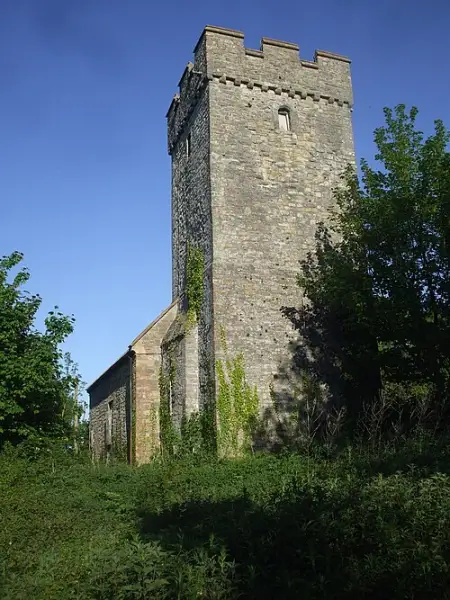
Deruvian's story has repeatedly attached itself to places and persons to whom it does not belong. Following the Iolo Manuscripts, he is now often conflated with the supposed Saint Dyfan, an early martyr of southeastern Wales, although scholars usually distrust Williams's account. The church at Merthyr Dyfan seems to have honored Saint Teilo as its patron from the moment of its founding, though it now carries a joint dedication to Dyfan and Teilo, and the parish could still say in 2010 that its roots ran back to Wales's first Christian community, appealing to the Lucius legends for proof. A church at Llandyfan outside Ammanford, notable later for its importance in the Welsh Nonconformist movement, stands beside a holy well known as Ffynnon Gwyddfaen or Gwyddfân, esteemed for the treatment of paralysis, and the building may in fact have been raised late by its lords, the Dynevor family, to serve pilgrims as a chapel of ease; Roberts, however, doubts any link with Dyfan at that site. John Stow's Annals of England record a since-discontinued parish church of Saint Deruuian in the deanery of Dunster in Somerset. Scholars such as Baring-Gould, Rees, and Mullins allow that Deruvian and Fagan may preserve the names of genuine local saints of the Llandaff region who were later absorbed into the grander legend.
§ Legacy
Timeline
- 150
Legend dates his mission to the mid-second century, when Pope Eleutherius reportedly sends him and Phagan to baptize King Lucius.
§ Legend
- 500
The story of King Lucius's baptism under Pope Eleutherius first appears in the early sixth-century Felician Catalog of the Book of Popes.
§ Sources
- 731
Bede records that Lucius's pious request for baptism had been granted.
§ Sources
- 830
The History of the Britons linked with Nennius reports that the whole leadership of the British people received baptism alongside their king.
§ Sources
- 1129
The missionaries' names first appear in William of Malmesbury's chronicle of Glastonbury Abbey, composed between 1129 and 1139.
§ Sources
- 1136
Geoffrey of Monmouth's History of the Kings of Britain popularizes the story of Fagan and Duvian with many added details.
§ Sources
- 1203
Gerald of Wales cites a letter from the convent of St David's invoking the Lucius legend to defend its antiquity.
§ Sources
- 1604
At his martyrdom, the Blessed John Sugar invokes Eleutherius, Damianus, and Fugatius as witnesses to early British Christianity.
§ Legacy
- 2010
The parish of Merthyr Dyfan still advertises itself as Wales's most ancient Christian community, citing the legends surrounding King Lucius.
§ Legacy
In Their Own Words
the rust of antiquity may have obliterated their names
The Record
- Patron of
- patron (mistakenly) of Merthyr Dyfan·patron (mistakenly) of Llanddyfnan
- Symbols
- missionary bishop
- Canonization
- Pre-congregation canonization; his cult rests on medieval legend and his feast is now unobserved
Prayer
Bibliography
Show 8 sources
- Galfredus Monemutensis [Geoffrey of Monmouth]. Historia Regnum Britanniae [History of the Kings of Britain], Vol. IV, Ch. xix. c. 1136
- Beda Venerabilis [The Venerable Bede]. Historia Ecclesiastica Gentis Anglorum, Vol. I, Ch. IV, & Vol. V, Ch. XXIIII. 731
- "Nennius". Edited by Theodor Mommsen. Historia Brittonum, Vol. II, Ch. xxii. c. 830
- Gulielmus Malmesburiensis [William of Malmesbury]. De Antiquitate Glastoniensis Ecclesiæ. 1129-1139. Hosted at the University of Zurich's Corpus Corporum
- Bartrum, Peter C. "Duvianus (1)", in A Welsh Classical Dictionary: People in History and Legend up to about A. D. 1000, p. 236. National Library of Wales, 1993. Emended 2009
- Baring-Gould, Sabine & al. The Lives of the British Saints: The Saints of Wales and Cornwall and Such Irish Saints as Have Dedications in Britain, Vol. III, pp. 9-10. Honourable Society of Cymmrodorion (London), 1911
- Robinson, Joseph Armitage. "William of Malmesbury 'On the Antiquity of Glastonbury'" in Somerset Historical Essays. Oxford University Press (London), 1921. Hosted at Wikisource
- Challoner, Richard. A Memorial of Ancient British Piety: or, a British Martyrology. W. Needham, 1761
Profile text adapted from the Wikipedia article, licensed CC BY-SA 4.0.
Pray with this saint every day
Save St. Deruvian to your favorites, read the full profile, and get feast-day reminders in the Saints app.
Get the Saints AppFree on the App Store for iPhone and iPad