
late 5th century·Feast Not recorded
St. Dingad of Llandingat
Welsh church founder and son of King Brychan
Overview
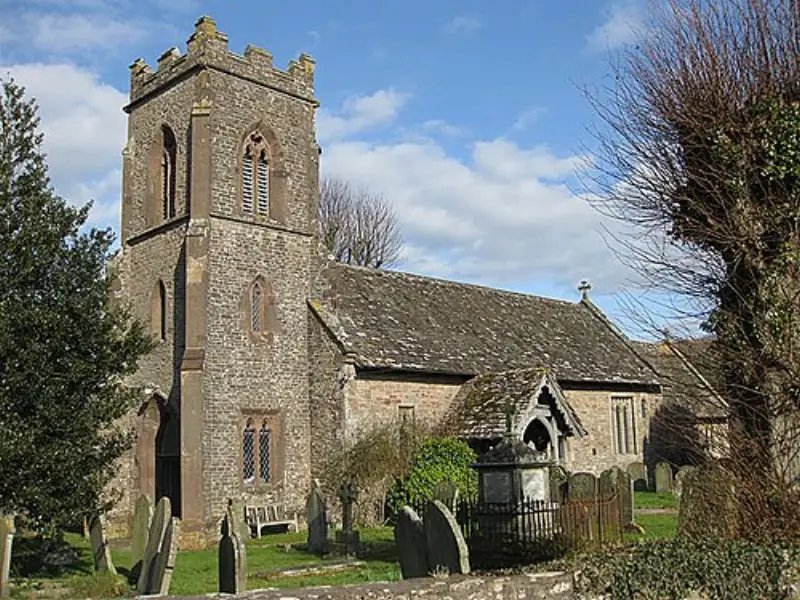
Dingad, also called Dingat ap Brychan, was a Welsh saint of the late fifth century and an early Christian church founder. Every one of the early 'Brychan documents' counts him among the sons of King Brychan, the ruler of Brycheiniog, a Welsh kingdom of the country's south-east, and of the prolific royal house from which a great number of Welsh and Breton saints descended. Dingad was patron of Llandingat Church, at Llandovery in Carmarthenshire, and of the church of Dingestow in Monmouthshire, where the parish still bears his name and preserves its medieval church of St Dingat. His cult belongs to the age in which the ruling families of Wales endowed the first Christian foundations of the countryside, and his title of church founder marks him among the saints who gave the Welsh landscape its sacred geography. It is sometimes suggested, however, that the titular saint of Dingestow was not Dingad ap Brychan but Dingad ap Nudd Hael, the so-called King of Brynbuga, identified with Usk in Monmouthshire — one of the substitutions of memory by which the dedications of early Wales are often hard to assign. His memory survives above all in the place-names and church dedications of Carmarthenshire and Monmouthshire.
The Complete Life
A Son of King Brychan
Dingad or Dingat ap Brychan was a late fifth-century Welsh saint and an early Christian church founder, and the key to his identity lies in his family. The early 'Brychan documents' without exception count him among the sons of King Brychan, ruler of Brycheiniog, a Welsh kingdom of the country's south-east. Brychan was one of the great ancestral figures of the Welsh Church: the documents that preserve his memory enumerate an extraordinary number of children, most of them accounted saints, whose foundations are scattered across Wales, Cornwall and Brittany. To be counted among the sons of Brychan was to belong to the closest thing early Wales possessed to a dynasty of holiness, a royal house in which kingship and the service of the Church were joined. Dingad's own vocation followed the pattern of that house: he turned from the inheritance of a king's son to the founding of churches, in an age when the Christian institutions of Roman Britain were being rebuilt by the native princely families. The church founder of the fifth century did his work without chronicles or archives; his monument was the foundation itself, and it is by the churches he patronised that Dingad is known to history.
§ Dingad of Llandingat
Llandingat and Dingestow
Dingad was patron of Llandingat Church, at Llandovery in Carmarthenshire, and of Dingestow in Monmouthshire, and it is in these two dedications that his cult lived on. The church of St Dingat at Dingestow still bears the founder's name in its parish, a Welsh village remembering a Welsh saint whose historical outlines have otherwise grown faint. The memory of the early church founders of Wales survives chiefly in this way: in place-names and dedications rather than in written lives. Yet even these dedications carry their uncertainties, for it is sometimes suggested that the titular saint of Dingestow was not Dingad ap Brychan at all but Dingad ap Nudd Hael, the so-called King of Brynbuga — Usk in Monmouthshire — another prince of the same period whose cult may have been folded into that of his namesake. Such confusions are the ordinary condition of the earliest Welsh saints, whose stories were preserved by tradition long before they were written down. What remains certain is that a saint of the house of Brychan was honoured in both Carmarthenshire and Monmouthshire, that the Oxford Dictionary of Saints records him among the church founders of late fifth-century Wales, and that his name still stands over two ancient churches.
§ Dingad of Llandingat
The Record
- Major works
- Llandingat Church, Llandovery, Carmarthenshire·Church of Dingestow, Monmouthshire
- Canonization
- Pre-congregation saint; no formal canonization recorded
Prayer
Bibliography
Show 1 sources
- Farmer, David Hugh. (1978). The Oxford Dictionary of Saints. Oxford: Oxford University Press.
Profile text adapted from the Wikipedia article, licensed CC BY-SA 4.0.
Pray with this saint every day
Save St. Dingad of Llandingat to your favorites, read the full profile, and get feast-day reminders in the Saints app.
Get the Saints AppFree on the App Store for iPhone and iPad