
died 286·Feast October 12
St. Domnina of Anazarbus
Martyr beaten and burned in Cilicia
Overview
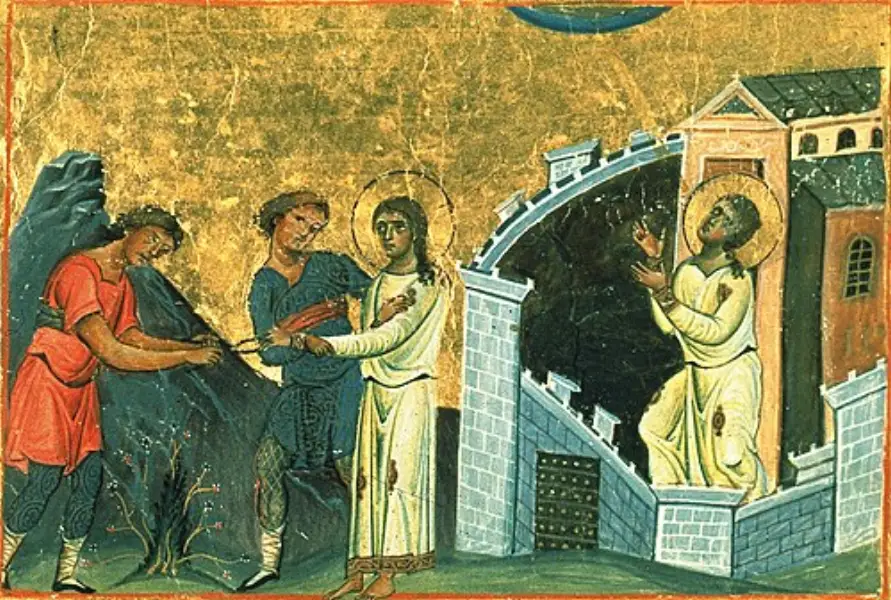
The Roman Catholic and Eastern Orthodox Churches honour Domnina of Anazarbus among their martyrs. Tradition calls her a native of Cilicia, in Asia Minor, who fell into the hands of the Roman authorities at Anazarbus, a city whose name survives in the modern village of Aǧaçli in Adana Province, Turkey. Under orders from the prefect Lysias — given as Licius in some versions — she was imprisoned and repeatedly beaten, and finally she was burned with fire. The torments did not kill her at once: she endured her sufferings in custody and died in prison, her endurance completing the witness of her martyrdom. Her passion is dated to 286, in the decades of intermittent persecution that preceded the great official onslaughts of the early fourth century. Her feast is kept on October 12. One scholarly note preserved in her acta observes that the Roman Martyrologist apparently worked from a corrupted manuscript, which displaced the scene of her passion from the prefect Lysias to the province of Lycia — a small textual tangle at the edge of an otherwise steadfast memory.
The Complete Life
A Daughter of Cilicia
Domnina belonged to the church of Cilicia, the coastal region of southeastern Asia Minor where Christianity had taken early root through the labours of the Apostle Paul and the flourishing road networks of the Roman East. Tradition calls her a native of the land, one of the many unnamed and half-named believers whose constancy held the communities of the region together in the generations before the empire's final conversion. Anazarbus, the city of her passion, was a chief town of Cilicia Campestris, proud of its games and its imperial connections, and its courts were fully equipped for the coercion of defiant subjects. That she was remembered there by name indicates that her trial was public enough to leave an impression on the local church: the faithful knew who had been taken, what had been demanded of her, and how far the authorities went. Everything else about her — her family, her age, her station in life — the sources withhold, as they so often do for the women and men whose only recorded deed is that they did not deny their Lord.
§ Introduction
Passion at Anazarbus
Her martyrdom is dated to 286. According to the tradition preserved by the churches, Domnina was imprisoned at Anazarbus at the command of the prefect Lysias — written Licius in some retellings. What followed was a slow unmaking: she was beaten again and again in custody, and then her tormentors burned her with fire. Even this did not end her witness on the spot of her trial. She lingered, and she died in prison — a martyr whose crown was won not in a single dramatic moment before a crowd but through days of pain borne behind locked doors. The church that remembered her did not forget the sequence, and handed on the detail that her death came in custody precisely because her endurance had outlasted the tortures. Later liturgical memory preserved her feast on October 12, and both the Roman Catholic and Eastern Orthodox Churches count her among the martyrs. A textual quirk entered the record when a corrupted manuscript led the Roman Martyrologist to place her passion in Lycia rather than at the prefect's seat, but the substance of her witness was never lost.
§ Introduction
Memory and Manuscript
The cult of Domnina of Anazarbus has survived in the calendars of both East and West, kept each year on October 12, and her story illustrates how the memory of the martyrs travelled — and occasionally stumbled — through the manuscripts that carried it. A note preserved in her tradition observes that the Roman Martyrologist worked from a copy in which the name of the prefect Lysias had been corrupted into Lycia, with the result that the official martyrology placed her martyrdom in the province of that name. The error is a small one, but it marks the fault line along which hagiographical texts passed: from local records to imperial calendars, from Greek to Latin, from one hand to the next across centuries. The Antiochian Orthodox Christian Archdiocese of North America republished her notice for its own faithful in 2000, a reminder that the memory of a third-century Cilician prisoner is still living currency in the Orthodox world. For the churches that honour her, the manuscript confusion matters far less than the fact it garbled: that a woman named Domnina chose prison and death over apostasy.
§ Introduction
In Their Own Words
The Roman Martyrologist must have used a corrupt manuscript in which Lycia was substituted for Lysias, as he places St. Domnina’s martyrdom in the Province of that name.
The Record
- Canonization
- Pre-congregation martyr; venerated by the Roman Catholic and Eastern Orthodox Churches
Prayer
Bibliography
Show 2 sources
- "St. Domnina of Anazarbus". Self-Ruled Antiochian Orthodox Christian Archdiocese of North America. September 2000. Retrieved May 19, 2009
- Benedictine Monks, Book of the Saints (Published by Kessinger Publishing, 2003), 84
Profile text adapted from the Wikipedia article, licensed CC BY-SA 4.0.
Pray with this saint every day
Save St. Domnina of Anazarbus to your favorites, read the full profile, and get feast-day reminders in the Saints app.
Get the Saints AppFree on the App Store for iPhone and iPad