
died c. 60·Feast October 12
St. Edistus
Early Roman martyr of the Via Laurentina
Overview
Edistus, honored in Italian as Sant'Edisto and known by the variant names Aristus, Orestes, and Horestes, is venerated as an early Christian martyr in the Roman Catholic and Eastern Orthodox churches alike. His passio places his death during the persecutions of Nero, on October 12 in the year 60, on the Via Laurentina near Rome. According to the legendary account, he was a soldier who had received baptism from Saint Peter himself, and he belonged to a small clandestine Christian community that gathered in a sandpit, or arenario, at a place called Laurento, where the priest Priscus celebrated the mass. With him at that gathering were Thermantia, Christina, and his servant Victoria. When the assembly was discovered by the authorities, Edistus and his companions were condemned to be buried alive in the very sandpit that had served them as a church, though Victoria escaped momentarily, only to be killed later in a nearby forest. His cult is ancient and well attested: a monastery dedicated to him existed at San Paolo fuori le Mura in the age of Gregory the Great, his relics were venerated alongside those of Christina and Victoria, his sepulcher stood beside the Via Ardeatina at its sixteenth milestone, and a papal estate bore his name. On Mount Soratte a church honors him, and the town of Sant'Oreste preserves his memory in its very name, the end point of a long chain of linguistic corruptions from Sanctus Edistus.
The Complete Life
A Soldier Baptized by Peter
The legendary passio of Edistus introduces him as a soldier, young and clean-shaven in his traditional iconography, who had been christened by Saint Peter. If the tradition is honored, it binds his story to the very first generation of Roman Christianity, the age when the apostle himself dwelt in the city and gathered converts from every rank, soldiers among them. His name has come down in several forms, Aristus, Orestes, and Horestes, a sign of how many hands transmitted his legend before writing fixed it. The account places him within a small community of believers who met in secret at Laurento, in a sandpit, an arenario, whose excavated hollows offered shelter to a persecuted church. There the priest Priscus officiated at the mass, and Edistus took his place beside Thermantia, Christina, and his own servant Victoria, a company that joined master and servant, clergy and laity, men and women around one table. Whatever history underlies the narrative, the portrait it preserves is of a Christian soldier whose allegiance to Christ outweighed his oath to the empire, and whose faith drew around him a household of fellow believers willing to risk everything for the Sunday assembly in a gravel pit outside Rome.
§ Edistus 1st-century Christian martyr
Martyrdom in the Sandpit
The passio places Edistus's death on October 12 in the year 60, during the persecution of Nero, on the Via Laurentina. The ending the legend preserves is stark. The Christian gathering at the Laurento sandpit was discovered by the authorities, and the sentence fell upon the whole company: burial alive in the same pit in which they had celebrated their mysteries. Edistus, Priscus the priest, Thermantia, and Christina were thus entombed by the very earth that had roofed their worship, a martyrdom whose poetry the early church did not miss, since the place of the Eucharist became the place of everlasting life. Victoria alone, the servant of Edistus, managed to flee the scene, but her escape was brief; she was later overtaken and killed in a nearby forest, winning the same crown her companions had received underground. His feast of October 12 has kept the memory of that day across nearly two millennia, and the Roman Catholic and Eastern Orthodox churches both number him among the martyrs. however uncertain the details, the story anchors the conviction of the Roman community that its earliest generation included soldiers and servants, slaves and free, who died together and were honored together.
§ Edistus 1st-century Christian martyr
An Ancient and Well-Attested Cult
Whatever doubts surround the details of his passio, the antiquity of Edistus's cult is documented. By the time of Gregory the Great, around the end of the sixth century, a monastery dedicated to him stood at San Paolo fuori le Mura, one of the great basilicas of Rome, and in the seventh century his relics were still venerated there together with those of his companions Christina and Victoria. The sepulcher itself stood at the Via Ardeatina's sixteenth milestone, where a church had been raised in his honor; restoration came during the papacy of Adrian I, between 772 and 795, evidence of continuing devotion eight centuries after his death. The papacy also maintained an estate, a domusculta, at the site under the name Sancti Edisti, so that the martyr's memory was woven into the agricultural and administrative geography of the Roman campagna. Such continuity of cult, from monastic dedication to papal estate, marks Edistus as one of those early Roman martyrs whose historical outlines are faint but whose presence in the prayer of the church has never lapsed. He is venerated as a saint by both the Roman Catholic and Eastern Orthodox churches, with his feast kept on October 12.
§ Veneration
The Town That Bears His Name
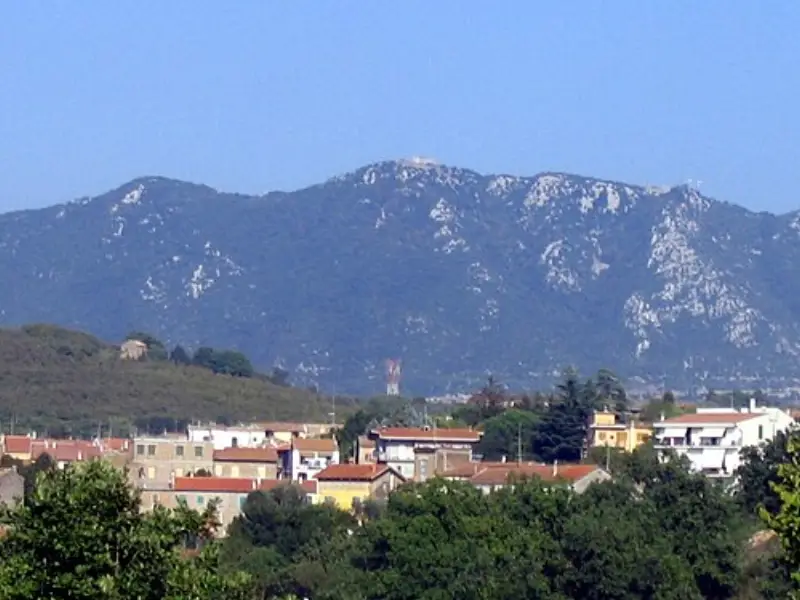
Edistus's most living monument is a town. He is the patron of an old church on Mount Soratte, near which the community of Sant'Oreste grew up bearing his name. The first written mention of the settlement comes from Benedict of Soracte, who in his Chronicon of 747 recorded a place called Curtis Sancii Heristi, the curtilage of Saint Heristus. One source derives the toponym from the Aristi or Edisti family, among whom a member was martyred for the faith around the year 68, and from there the linguists can trace an unbroken chain of corruption: Sanctus Edistus became Sanctus Heristus, then Santo Resto, San Tresto, and finally Sant'Oreste. A church and village first rose on the site of the sandpit itself, the curtis Sancti Heristi of the records, but for safety against raiders the inhabitants moved to the slopes of Mount Soratte, where the settlement became the Castrum Sancti Heristi and eventually Sant'Oreste. There the Romanesque church of Sant'Edisto still stands, a medieval building that keeps the martyr's name in stone. Few first-century martyrs can claim so continuous a local presence: a town, a mount, and a church, all of them speaking his altered name day by day across thirteen centuries.
§ Veneration
Timeline
- 12 Oct 60
His passio places his martyrdom under Nero on 12 October, on the Via Laurentina near the later site of Sant'Oreste.
§ Introduction
- 12 Oct 60
The legend says he was buried alive in a sandpit at Laurento with Priscus, Thermantia and Christina once their gathering was discovered; Victoria escaped, dying nearby.
§ Veneration
- 590
During the papacy of Gregory the Great, a monastery dedicated to Edistus existed at San Paolo fuori le Mura in Rome.
§ Veneration
- 600
In the seventh century his relics, together with those of Christina and Victoria, were still venerated at San Paolo fuori le Mura.
§ Veneration
- 747
Benedict of Soracte's Chronicon made the first recorded mention of Sant'Oreste, naming the place Curtis Sancii Heristi.
§ Veneration
- 772
The church at his sepulcher on the Via Ardeatina's sixteenth milestone underwent restoration during the papacy of Adrian I.
§ Veneration
The Record
- Major works
- A monastery dedicated to him at San Paolo fuori le Mura·A church raised over his sepulcher on the Via Ardeatina·The Romanesque church of Sant'Edisto on Mount Soratte
- Patron of
- Patron of Sant'Oreste
- Symbols
- Young, clean-shaven soldier·Palm of martyrdom·White flag with red cross
- Canonization
- Pre-congregation canonization; venerated as a martyr since antiquity in the Roman Catholic and Eastern Orthodox churches.
Prayer
Bibliography
Show 4 sources
- Ekkart Sauser (2000). "Edistus (Aristus, Orestes, Horestes)". In Bautz, Traugott (ed.). Biographisch-Bibliographisches Kirchenlexikon (BBKL). Vol. 17. Herzberg: Bautz. cols. 304–305. ISBN 3-88309-080-8.
- "sant'edisto - un patrono che viene da lontano". Prolocosantoreste.com. Archived from the original on 2011-02-17. Retrieved 2011-06-27.
- "Comune di Sant'Oreste". Santoreste.it. Archived from the original on 2011-07-22. Retrieved 2011-06-27.
- "Monte Soratte is characterized by the so-called "Meri", pits which can be up to 115 m-deep". Prolocosantoreste.com. Archived from the original on 2011-02-17.
Profile text adapted from the Wikipedia article, licensed CC BY-SA 4.0.
Pray with this saint every day
Save St. Edistus to your favorites, read the full profile, and get feast-day reminders in the Saints app.
Get the Saints AppFree on the App Store for iPhone and iPad