
c. 1174 – 1240·Feast November 16
St. Edmund of Abingdon
Archbishop of Canterbury and Doctor of Divinity
Overview
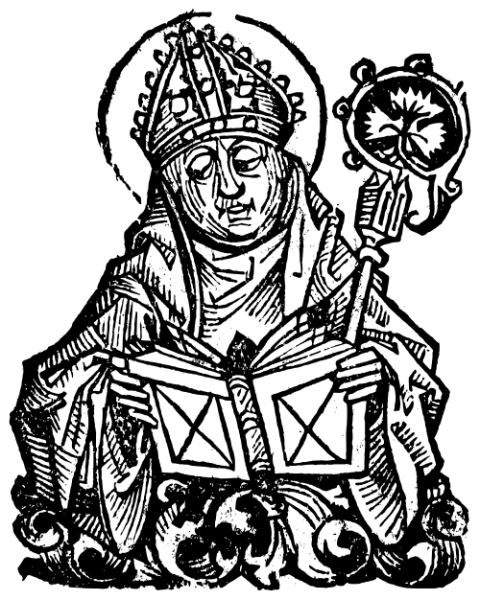
Edmund of Abingdon, also called Edmund Rich and St Edmund of Canterbury, was an English prelate who served as Archbishop of Canterbury from 1233 until his death in 1240. Born at Abingdon around 1174 to a merchant father who retired to monastic life and a devout ascetic mother, he was educated at the monastic school in Abingdon before studying at Oxford and Paris. About 1200 he became a teacher of mathematics and dialectics, dividing his time between the two universities and helping to introduce the study of Aristotle; he was among Oxford's first Master of Arts lecturers. Under his mother's influence he turned to theology between 1205 and 1210, spent a year with the Augustinian canons of Merton Priory, was ordained, and took a doctorate in divinity, winning renown as a lecturer and extemporaneous preacher. As vicar of Calne and treasurer of Salisbury he preached the Sixth Crusade across England in 1227. Compelled by Pope Gregory IX to accept the see of Canterbury, he defended Magna Carta, confronted Henry III over his foreign councillors, pressed strict monastic observance, and negotiated peace with Llywelyn the Great. His rigour provoked hostility from king, legate, and his own cathedral monks. Setting out for Rome in 1240, he died in France on 16 November at Soisy-Bouy and was buried at Pontigny Abbey. He was canonized in 1246.
The Complete Life
A Merchant's Son of Abingdon
Edmund was born around 1174 — perhaps on 20 November, coincidentally the memorial of St Edmund the Martyr — in the Berkshire town of Abingdon, seven miles south of Oxford. His father Reynold, a wealthy merchant, left the family its sobriquet Rich, though in their own lifetimes neither Edmund nor his brothers and sisters ever bore it. The household was marked by an unusual religious cadence: Reynold withdrew, with his wife's blessing, into the monastery of Eynsham Abbey, leaving the education of the children to his wife Mabel. She was a devout and ascetic woman who encouraged her children to the same discipline, and both of Edmund's sisters eventually took the veil. Abingdon's monastic school may well have given Edmund his first schooling, where he developed a taste for religious learning and experienced visions while still a schoolboy. At the age of twelve he bound himself by a vow of lifelong chastity in Oxford's church of St Mary, a resolution that foreshadowed a life of deliberate renunciation. His early studies were conducted in England, but about 1195 he was sent, in company with his brother Richard, to the schools of Paris. There he completed the higher education that fitted him for the universities, moving between Oxford and Paris at a moment when the intellectual life of western Europe was being reshaped by the recovery of ancient philosophy.
§ Early life and career
Master of Arts, Doctor of Divinity
About 1200, or a little earlier, Edmund became a teacher. For six years he taught mathematics and dialectics, moving, it appears, between Oxford and Paris, and lent his aid to bringing Aristotle into the schools. He was one of Oxford's first lecturers holding a Master of Arts degree, though not, as tradition once claimed, Oxford's first Doctor of Divinity. Student life already bore the imprint of his asceticism: long hours of night prayer left him nodding off during lectures, and a long-established tradition holds that he used his lecture-fees to build the Lady Chapel of St Peter's in the East at Oxford. The site where he lived and taught later became a medieval academic hall bearing his name, incorporated as St Edmund Hall. His mother's influence led him to take up theology; though he resisted the change for a time, he entered on the new career between 1205 and 1210, passing a year of quiet with the Augustinian canons at Merton Priory. He received ordination, took his doctorate in divinity, and quickly gained a reputation as a lecturer in theology and an eloquent extemporaneous preacher. He spent his fees in charity, refused to spend on himself the revenues of several benefices, and often sought solitude at Reading Abbey, though the cloister would have given too little play to his talents as preacher and interpreter of Scripture.
§ Early life and career
Archbishop Against the King
In 1233 word came of Edmund's appointment as Archbishop of Canterbury by Pope Gregory IX. The chapter had already made three selections the pope declined to confirm, and Edmund's name was proposed as a compromise, perhaps on account of his preaching for the crusade. He was reluctant, accepting only when it was pointed out that refusal might open the way for a foreign appointment, and was consecrated on 2 April 1234, choosing as his chancellor Richard of Wich, later St Richard of Chichester. Even before consecration he had become known for championing the English Church's independence of Rome, upholding Magna Carta, and barring foreigners from civil and ecclesiastical posts. On 2 February 1234 he admonished Henry III at Westminster in the name of the bishops; a week after his consecration he appeared before the king again with barons and bishops, threatening excommunication unless the foreign councillors, notably Peter des Roches, were dismissed. Henry yielded, the favourites were dismissed, Hubert de Burgh was released, and Edmund was sent to negotiate peace with Llywelyn the Great in Wales. But success turned the king against him. His insistence on good discipline in civil and ecclesial government, strict observance in monastic life, and justice in high quarters drew opposition from Henry III, from a number of monasteries, and from the monks of his own Christ Church Priory, against whom he had to litigate to maintain his metropolitan rights of visitation.
§ Archbishop of Canterbury
The Ascetic in the World
Edmund's public stature rested on a private life of rigorous self-denial. From boyhood he practised asceticism: he fasted on Saturdays on bread and water and wore a hair shirt against his skin. After only a few hours of sleep he gave most of the night to prayer and meditation, a habit so fixed that it sometimes showed in his drowsiness at the lectern the next day. Those who knew him described a life given over to self-denial and the service of others. The revenues of several benefices passed through his hands without touching himself; the fees he earned as a preacher and lecturer went to charity, including, by tradition, the building of a Lady chapel at Oxford. He valued solitude, retiring often to Reading Abbey and once spending a year with the Augustinian canons of Merton Priory, yet he never embraced the cloister, judging that the religious profession would have left his gifts as preacher and expositor of Scripture too little room. Among the people he was loved for his teaching, preaching, study, and prayer, an unsought reputation for holiness that preceded his episcopal elevation. The same qualities produced his written work: his Constitutions of 1236 for the English Church, and the Speculum ecclesiae, a mirror of the holy Church in the devotional Speculum genre, which circulated in Anglo-Norman as the Mirour de Seinte Eglyse, a treatise on the Christian faith aimed at religious practitioners.
§ Character
Conflict, Rome, and Pontigny
The closing years of Edmund's archiepiscopate were consumed by frustrated resistance. In 1236 Henry III, seeking to escape Edmund's control, asked the pope for a legate; once Cardinal Odo landed in 1237, obstruction and insult met the archbishop at every turn. The politically charged marriage of Simon de Montfort to the king's sister Eleanor — a union Edmund had declared void — won confirmation on appeal at Rome, and king and legate alike upheld the monks of Canterbury in their defiance of his authority. Edmund laid his complaint before the king and launched a sweeping sentence of excommunication against all who had violated Canterbury's rights, but these measures had no effect, and the pope would not reverse the legate's decisions. Protesting that rival jurisdictions had wrecked the discipline of the English Church, he began to consider retirement. In December 1237 he took the road to Rome to make his appeal in the pope's own presence; the mission proved futile, and he returned to England in August 1238 to find his efforts at reform frustrated. In early 1240 he submitted to the papal demand, paying one fifth of his revenue toward the pope's war against Emperor Frederick II, an example other English prelates followed. When the papacy ordered 300 English benefices assigned to Romans, Edmund set out again for Rome in 1240. Falling ill at the Cistercian Pontigny Abbey, he turned back toward England but died fifty miles further north on 16 November 1240 at the house of the Augustinian Canons at Soisy-Bouy, and was carried back to Pontigny for burial.
§ Journey to Rome
A Saint Within Seven Years
Less than a year after Edmund's death, wonders were reported at his grave in Pontigny Abbey. Despite the hostility of Henry III, who had opposed him in life, the process moved with remarkable speed: he was canonized by Pope Innocent IV in December 1246, only six years after his death. His feast was fixed on 16 November, the anniversary of his passing, and he is venerated both in the Catholic Church and in the Anglican Communion, where the Church of England keeps a commemoration of Edmund Rich of Abingdon on the same day. A few years after his canonization, the first chapel dedicated to his memory, St Edmund's Chapel in Dover, was consecrated by his friend Richard of Chichester, an act without parallel — the sole chapel one English saint ever dedicated to another; the small building still stands. At Salisbury, Bishop de la Wyle founded a collegiate church there in 1269 and set it under Edmund's patronage, and rebuilt in 1407; the structure survives today as Salisbury Arts Centre, and an altar in the cathedral itself also bears his dedication. Canterbury never received his body, for its Benedictine monks, resenting what they took to be his assaults on their independence, his main relics remain at Pontigny in a baroque reliquary tomb dating from the seventeenth century.
§ Veneration
From Oxford Halls to Vermont
Edmund's memory is woven into the institutions of English education: his memory endures at Oxford in St Edmund Hall, which grew from the very ground on which he lived and taught, and of St Edmund's College, Cambridge, as well as St Edmund's College, Ware, schools at Canterbury, Hindhead, Portsmouth, and Abingdon, and even a preparatory school in Brooklyn. His relics are dispersed among three countries: the principal remains at Pontigny, an arm enshrined at St Edmund's Retreat on Enders Island off Mystic, Connecticut, and the fibula of his left leg, presented to St Edmund's College, Ware, by Cardinal Wiseman in 1853, where local cures were credited to his intercession, including the near-fatal fall of a student in 1871 whose complete healing led to the extension of the Pugin chapel with a side chapel in the saint's honour. The Islamic silk chasuble, its fabric probably woven in Al-Andalus, that he wore at his death survives in the museum at Provins with a stole and maniple. Most durably, his life inspired the founding of the Society of Saint Edmund at Pontigny in 1843 by Jean Baptiste Muard and Pierre Boyer, dedicated to parish missions in the archdiocese of Sens. Driven to the United States by French anticlericalism in 1889, the Edmundites settled in Winooski Park, Vermont, and in 1904 founded Saint Michael's College, where his values endure, alongside ministries in Selma, Alabama, and retreat work in Connecticut and Vermont.
§ Relics
Timeline
- 20 Nov 1174
Born at Abingdon in Berkshire, perhaps on 20 November, the feast of St Edmund the Martyr, to the merchant Reynold and his wife Mabel.
§ Early life and career
- 1195
Sent to the schools of Paris with his brother Richard to complete his higher education.
§ Early life and career
- 1200
Became a teacher around this time, lecturing on mathematics and dialectics at Oxford and Paris and helping introduce Aristotle.
§ Early life and career
- 1210
Took up theology between 1205 and 1210, spending a year with the Augustinian canons of Merton before receiving ordination and a divinity doctorate.
§ Early life and career
- 1222
Appointed between 1219 and this year as vicar of Calne in Wiltshire and treasurer of Salisbury Cathedral, offices held for eleven years.
§ Early life and career
- 1227
Preached the Sixth Crusade through a large part of England.
§ Early life and career
- 1233
Appointment as Archbishop of Canterbury by Pope Gregory IX was announced, as a compromise after three unconfirmed chapter selections.
§ Archbishop of Canterbury
- 2 Feb 1234
In the bishops' name admonished Henry III at Westminster to heed the example of his father John.
§ Archbishop of Canterbury
- 2 Apr 1234
Consecrated archbishop on 2 April; about a week later he and the barons forced Henry to dismiss his foreign councillors.
§ Archbishop of Canterbury
- 1236
Issued his Constitutions for the English Church.
§ Works
- Dec 1237
After Cardinal Odo's arrival left him thwarted at every point, he travelled to Rome in December to argue his case personally.
§ Journey to Rome
- Aug 1238
Returned to England from the futile Roman mission in August, where his reform efforts met frustration.
§ Journey to Rome
- 1240
Early in the year paid the papal agents a fifth of his revenue, levied for the pope's war against Emperor Frederick II.
§ Journey to Rome
- 16 Nov 1240
Set out for Rome again, fell ill at Pontigny Abbey, and died on 16 November at Soisy-Bouy; his body was taken back to Pontigny.
§ Journey to Rome
- 16 Dec 1246
Canonized by Pope Innocent IV on 16 December, only six years after his death, despite the opposition of Henry III.
§ Veneration
- 1269
A collegiate church dedicated to him was founded at Salisbury by Bishop de la Wyle.
§ Veneration
- 1843
Jean Baptiste Muard and Pierre Boyer founded the Society of Saint Edmund at Pontigny in his memory.
§ Religious Congregation of the Society of St Edmund
- 1853
The fibula of his left leg was presented to St Edmund's College, Ware, by Cardinal Wiseman.
§ Relics
The Record
- Major works
- Constitutions (1236)·Speculum ecclesiae·Mirour de Seinte Eglyse (Anglo-Norman version of the Speculum)
- Patron of
- Abingdon, Oxfordshire·Roman Catholic Diocese of Portsmouth·St Edmund's College, Cambridge·St Edmund Hall, Oxford·St Edmund's College, Ware
- Symbols
- archbishop making a vow before a statue of the Blessed Virgin Mary·embracing the Child Jesus·placing a ring on the finger of a statue of the Blessed Virgin Mary·receiving a lamb from the Blessed Virgin Mary·with Saint Richard of Chichester·with Saint Thomas of Canterbury
- Canonization
- Canonized by Pope Innocent IV on 16 December 1246, less than seven years after his death.
Prayer
Bibliography
Show 5 sources
- Lawrence, C.H. (1960). St. Edmund of Abingdon: A Study in Hagiography and History. Oxford: Clarendon Press.
- Davis, Henry William Carless (1911). "Edmund, Saint". In Chisholm, Hugh (ed.). Encyclopædia Britannica. Vol. 8 (11th ed.). Cambridge University Press. p. 947.
- Fryde, E. B.; Greenway, D. E.; Porter, S.; Roy, I. (1996). Handbook of British Chronology (Third Edition, revised ed.). Cambridge: Cambridge University Press. ISBN 0-521-56350-X.
- Walsh, Michael. A New Dictionary of Saints: East and West. London: Burns & Oats, 2007. ISBN 0-86012-438-X.
- Wilshere, A.D. (ed.). Mirour de Seinte Eglyse. Anglo-Norman Text Society, 40. London: Anglo-Norman Text Society, 1982.
Profile text adapted from the Wikipedia article, licensed CC BY-SA 4.0.
Pray with this saint every day
Save St. Edmund of Abingdon to your favorites, read the full profile, and get feast-day reminders in the Saints app.
Get the Saints AppFree on the App Store for iPhone and iPad