
6th century·Feast 6 January
St. Eigrad
Sixth-Century Founder of Llaneugrad in Anglesey
Overview
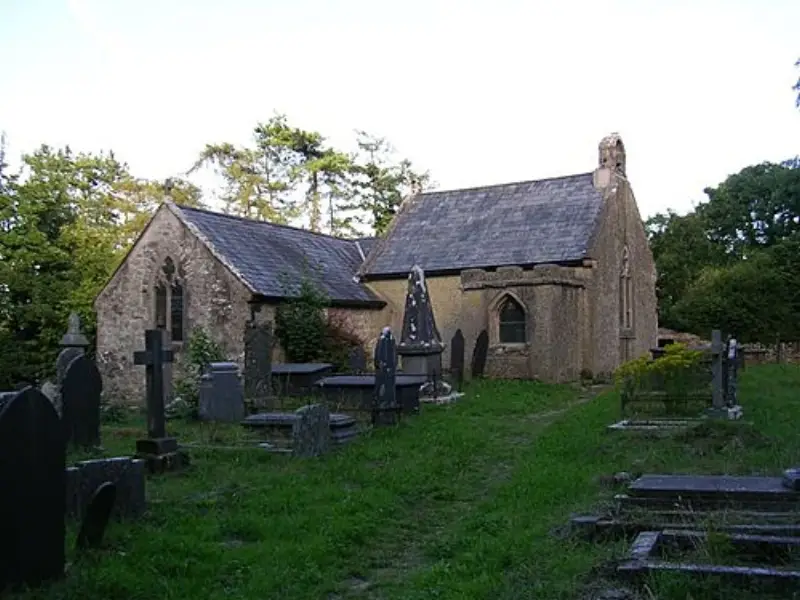
Eigrad, whose name is also written Eugrad, was a sixth-century Welsh saint remembered as the founder of St Eugrad's Church in Llaneugrad, Anglesey. He belonged to one of the most remarkable holy families of the early British church: the twelfth-century Life of Gildas by Caradoc counts him among the sons of King Caw of Strathclyde, and so a brother of the great historian Gildas and of Samson of York. Like many of his siblings he was formed in the school of Saint Illtud, the master of the monastic college at Llanilltud Fawr, which trained a generation of British bishops and saints. His enduring work was pastoral and local. In the year 605 he established a church at Llaneugrad on Anglesey, and his brother Gallgo founded another at Llanallgo close by, so that the two foundations served neighboring communities on the same island shore. The two parishes remain united today. His feast is kept on 6 January, and though the record of his life is spare, it preserves the outlines of a monastic career of the classic Celtic type: royal birth, schooling under a renowned abbot, and the planting of a church whose congregation continues under his name.
The Complete Life
A Son of Caw's Crowded Family of Saints
Eigrad came from a household that early Wales counted among its springs of holiness. His father was Caw, a king of Strathclyde whose children included an extraordinary number of men and women given to the church. The most famous was Gildas, whose moral history of the Britons would become one of the few written monuments of the age, and another was Samson of York, remembered among the missionary bishops of the period. Caradoc's twelfth-century Life of Gildas is the source that places Eigrad within this family, and its testimony has been accepted by the standard dictionaries of the saints. To be a son of Caw meant inheritance of rank in the north, but it also meant, in practice, a destiny removed from throne and battlefield. The royal children of Strathclyde were dispersed to the monastic schools of Wales and Armorica, where their royal blood gave them standing and their vocation gave them work. Eigrad's share in that destiny was shaped above all by the teacher to whose discipline he was next sent.
§ Life
Formed in the School of Illtud
Like his brothers before him, Eigrad became a student of Saint Illtud, the abbot whose college in south Wales was the great seminary of the early British church. Illtud himself had been a soldier before he was a monk, and the school he built was famous for combining sacred learning with severe ascetic practice. There the sons of kings learned scripture, chant and the discipline of common life alongside the sons of chiefs and the orphans of the coast. For Eigrad the years under Illtud were the decisive formation of his vocation: the warrior class into which he had been born was transmuted into the missionary class the church required. His brother Gildas had passed the same way, and the shared schooling bound the scattered family of Caw into a single spiritual network that stretched from Brittany to Anglesey. When Eigrad left the college, he carried with him the two things the school existed to give, a settled rule of prayer and the conviction that the faith must be planted in living communities rather than merely professed by tribes.
§ Life
Two Brothers, Two Churches, One Shore
The work for which Eigrad is remembered came in the year 605, when he founded a church at Llaneugrad in Anglesey. The name of the place, the enclosure of Eigrad, preserves the memory of the founder in the landscape itself. He did not labor alone: his brother Gallgo established a church at Llanallgo close at hand, and the two foundations stood within reach of one another, serving the coastal settlements of the island in partnership. This pattern of sibling foundations was characteristic of the Welsh church, where families of saints covered a region with a lattice of related churches bound by kinship and shared rule. The arrangement proved lasting. Today the church Eigrad founded and the church Gallgo founded are joined in a single parish, so that the fraternal cooperation of the seventh century continues as an administrative fact of the present. A foundation that began as a monk's stone or timber oratory thus reaches across fourteen centuries, its continuity unbroken by conquest, reformation or the slow erosion of the Welsh kingdoms that first nurtured it.
§ Life
A Quiet Memory Kept in January
Eigrad's memory has been kept with modest constancy. Medieval calendars and the later collections of the hagiographers record his feast on 6 January, the day the Western church keeps the Epiphany, so that his commemoration falls within the brightest feast of the winter. The modern churches that bear him, above all St Eugrad's in Llaneugrad, carry his name in their dedication and their parish identity, and the dictionaries of Baring-Gould and of the monks of Ramsgate preserve the outline of his story for each new generation of readers. He belongs to the large company of Welsh saints of whom little can be narrated and much can be trusted: the sources agree on his family, his teacher and his foundation, and around those three fixed points later ages have built their quieter devotions. In an age that measures significance by the volume of surviving paper, Eigrad stands as a reminder that the most durable monument of the early Welsh church was never a book but a parish, and that some foundations outlast every account of the founder.
§ Memorial
The Record
- Major works
- St Eugrad's Church, Llaneugrad, Anglesey
- Canonization
- Pre-congregation; venerated from the early Welsh church.
Prayer
Bibliography
Show 5 sources
- Sabine Baring-Gould and John Fisher, The Lives of the British Saints, Vol. 2, Honourable Society of Cymmrodorion, 1908, p. 468
- William Smith and Henry Wace, eds., A Dictionary of Christian Biography, J. Murray, 1880, p. 61
- Samuel Lewis, "Llaneugrad (Llan-Eigrad)", A Topographical Dictionary of Wales, 1849
- Monks of Ramsgate, "Eigrad", Book of Saints, 1921, CatholicSaints.Info
- Nicholas Carlisle, A Topographical Dictionary of Wales, 1811
Profile text adapted from the Wikipedia article, licensed CC BY-SA 4.0.
Pray with this saint every day
Save St. Eigrad to your favorites, read the full profile, and get feast-day reminders in the Saints app.
Get the Saints AppFree on the App Store for iPhone and iPad