
late 4th century·Feast 22 May
St. Elen
Helen of the Hosts, Patron of Roadbuilders
Overview
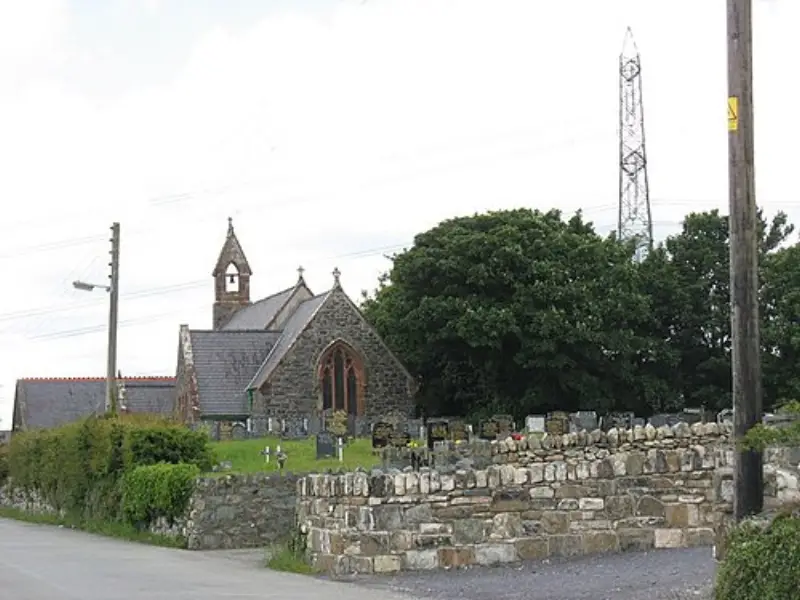
Elen, known in Welsh as Elen Luyddog, Helen of the Hosts, and sometimes in English as Saint Helen of Caernarfon, was a late fourth-century founder of churches in Wales whose memory bridges history and legend. Tradition describes her as offspring of the Romano-British ruler Octavius, remembered in Welsh story as Eudaf Hen, and as sister to Conan Meriadoc. She became the wife of Magnus Maximus, the fourth-century emperor who ruled Britain, Gaul and Spain and fell in battle in 388, and she was mother of five children, among them a son named Custennin, the Welsh form of Constantine. Because she lived some sixty years after Helena, the mother of Constantine the Great, the two women have often been confused, and Welsh writers have long been careful to keep them apart. Welsh legend remembers her above all as the woman who commanded that roads be driven across her country so that soldiers could move quickly to its defense, a service that earned her the title of the Hosts. Her patronage embraces the Gower church of Llanelan and the church at Penisa'r-waun, close to Caernarfon, where her feast is kept on 22 May.
The Complete Life
Daughter of Eudaf, Bride of an Emperor
The traditions surrounding Elen give her one of the grandest family settings in Welsh memory. In church tradition she is reckoned the offspring of the Romano-British ruler Octavius, known to Welsh literature as Eudaf Hen, and therefore sister to Conan Meriadoc, the legendary ancestor-figure of the Britons. Her marriage joined her to Magnus Maximus, the soldier who was proclaimed emperor in Britain and for a few years ruled Gaul and Spain before his armies failed him; he was killed in battle in 388, and Elen emerges from the sources as the mother of his five children, including the boy Custennin or Cystennin, whose name is the Welsh Constantine. The Dream of Macsen Wledig, one of the tales gathered with the Mabinogion, tells the meeting differently and more romantically: there Elen appears as offspring of a north Welsh chieftain called Eudaf or Eudwy, dwelling close to Segontium's old Roman fortress — today's Caernarfon — when the dreaming emperor crosses the sea to find her. Gregory of Tours and Sulpicius Severus add one historical-sounding note, recording that Maximus and his wife met Saint Martin of Tours while they were in Gaul.
§ Church tradition
The Woman Who Commanded the Roads
What set Elen apart in Welsh imagination was not her marriage but her public works. The legend remembers her for commanding that Macsen drive highways across the land, so that troops might hurry wherever its defense required, and for this service the people gave her the name by which she is still known, Elen Luyddog, Elen of the Hosts. It is a striking inversion of the usual roles of story: the emperor builds at the empress' command, and the road, not the palace, is the monument. The greatest of the ways associated with her is Sarn Helen, the long Roman route that runs from Caernarfon southward through Dolgellau, Pennal and Bremia, now Llanddewi Brefi, toward south Wales. Scholars are quick to note that the roadway far predates Elen's accepted era, and that its name must reflect a later people attributing the engineering of their ancestors to a beloved figure of story. Yet the attribution itself is the point: she became the explaining name for every ancient way across the land, and other Roman roads in Wales, such as Llwybr Elen, still carry her memory in theirs.
§ Literary tradition
Founding Churches in a Land of New Faith
Elen's ecclesial legacy rests on a pair of dedications and one great institutional claim. She is honored as patroness both of Llanelan, in West Gower, and of the church at Penisa'r-waun, close to Caernarfon; the latter keeps her feast on 22 May, and the memory of the saint has remained continuous enough that the modern calendar still marks the day. The tradition also credits her, together with her sons Cystennin and Peblig, the latter named in the calendar of the Church in Wales, with bringing into Wales the Celtic form of monastic life from Gaul. If the claim is hard to prove, it is easy to understand: a Romano-British noblewoman married to an emperor who ruled from Gaul would be precisely the sort of person through whom continental monastic practice might cross the channel. Her story has, in any case, been shaped by the needs of the Welsh church to root itself in native soil, and a saint who connected Segontium to the imperial world, Gaulish monasticism to Welsh valleys, and ancient roads to living parishes served that need almost perfectly.
§ Church tradition
Wells, Roads and a Case of Mistaken Identity
Elen's afterlife has been complicated by her name. More than twenty holy wells in Britain are dedicated to a Saint Helen, though many of these are usually taken as honoring Helena, the mother of Constantine the Great, and the two cults have shadowed one another for centuries. Elen herself lived roughly sixty years after that more famous Helena, and English writers have sometimes styled her Saint Helen of Caernarfon to keep the distinction visible. Her geographic patronage endures in unexpected places: she is hailed as heavenly patron of Britain's roadmakers and guardian of travellers, a vocation derived entirely from the legend of the roads and renewed whenever a Welsh highway passes along one of her ways. Literary tradition keeps her alive as well, for The Dream of Macsen Wledig remains one of the best-loved of the Mabinogion tales, and every retelling renews the portrait of the woman whose beauty an emperor saw in a dream and whose sense of the common good outlasted his empire. Few Welsh saints hold so secure a place in both the church's calendar and the nation's stories.
§ Legacy
The Record
- Major works
- Sarn Helen, the Roman road from Caernarfon to south Wales (traditional attribution)·Church at Penisa'r-waun near Caernarfon·Church at Llanelan in West Gower
- Patron of
- British roadbuilders·travellers·Llanelan in West Gower·the church at Penisa'r-waun
- Canonization
- Never formally canonized; venerated by longstanding tradition in the Welsh Church.
Prayer
Bibliography
Show 5 sources
- James MacKillop, "Elen 1", A Dictionary of Celtic Mythology, Oxford University Press, 2004
- David Hugh Farmer, The Oxford Dictionary of Saints, 4th ed., Oxford University Press, 1997
- "Wales, The Catholic Church In", New Catholic Encyclopedia, republished at Encyclopedia.com
- Lewis Morris and Daniel Silvan Evans, Celtic Remains, J. Parker, 1878, p. 159
- Nigel Pennick, The Celtic Saints: An Illustrated and Authoritative Guide, Sterling Pub. / Thorsons, 1997
Profile text adapted from the Wikipedia article, licensed CC BY-SA 4.0.
Pray with this saint every day
Save St. Elen to your favorites, read the full profile, and get feast-day reminders in the Saints app.
Get the Saints AppFree on the App Store for iPhone and iPad