
1850 – 1921·Feast February 25
St. Elizabeth Fedde
Norwegian deaconess and pioneer of Lutheran health care in America
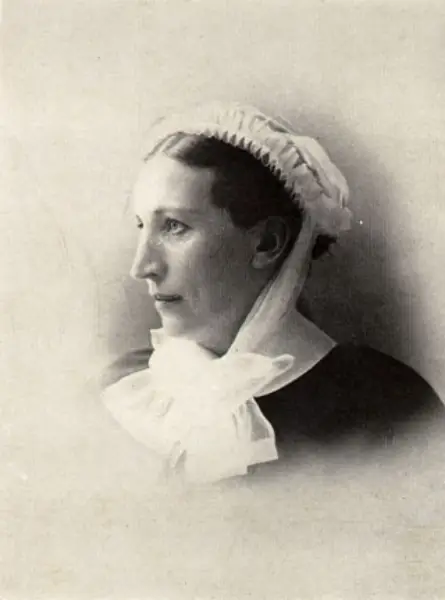
Overview
Elisabeth Fedde was a Norwegian Lutheran deaconess whose thirteen years of ministry in the United States planted the institutions of Lutheran deaconess service and hospital care among Norwegian immigrants. Born on Christmas Day 1850 at Feda in Vest-Agder, the daughter of a sea captain turned farmer, she lost both parents young and trained as a deaconess at the Lovisenberg Deaconess House in Christiania under Cathinka Guldberg, herself formed in the Kaiserswerth tradition of Germany. After serving in a harsh medical house at Tromsø, in Norway's northernmost diocese, she answered a brother-in-law's challenge to minister to Norwegian seamen in New York, arriving in 1883. Nine days later she helped found the Norwegian Relief Society, opened a boarding house for seamen near the Seaman's Church, and began the visiting of the sick that her published diary records. In 1885 she established a deaconess house and a nine-bed hospital in Brooklyn that grew into Lutheran Medical Center. Summoned by midwestern Lutherans, she moved to Minneapolis in 1888, founding the Lutheran Deaconess Home and helping establish the Hospital of the Lutheran Free Church, with further hospitals planned for Chicago and Grand Forks. Exhausted, she returned to Norway in 1895, married Ole Slettebo, and died at Egersund on February 25, 1921.
The Complete Life
A Captain's Daughter from Feda
Elisabeth Fedde entered the world on December 25, 1850, in the coastal village of Feda in Vest-Agder, Norway — a Christmas child of a sea captain's household. Her father, Andreas Willumsen Fedde, spent his active years commanding ships before retiring to farming when his wife Anne Marie Olsdatter fell ill; the family included six other children beside Elisabeth. The household knew early sorrow: her mother died in 1864, her father in 1873, leaving Elisabeth orphaned before her twenty-third birthday. For a young woman of her circumstance in nineteenth-century Norway, the options were narrow, and she turned toward the organized diaconate that was then transforming Lutheran social care. She entered the Lovisenberg Deaconess House in Christiania, training under Cathinka Guldberg — a pioneer who had studied at the Kaiserswerther Diakonie, the German mother-house of Protestant deaconess work founded by Theodore Fliedner. Through this line of formation, Elisabeth inherited the Kaiserswerth ideal: consecrated women, nursing and teaching, bound by service rather than cloister. It was a formation tested early. Her first posting took her far from the capital to Tromsø in Norway's newest and northernmost diocese, where she and another deaconess ran a medical house in conditions contemporaries described as harsh and primitive.
§ Biography
The Letter That Changed Everything
A Christmas letter of 1882, arriving on her thirty-second birthday, brought a challenge from her brother-in-law Gabriel Fedde: would she cross to New York City and minister among the Norwegian sailors landing there? The question demanded everything. She had already proven herself in the subarctic hardship of Tromsø; now the call pointed across the Atlantic, away from homeland, language, and the deaconess house that had shaped her. She was not a woman to delay. Three months after the letter she sailed for the United States, reaching New York on April 9, 1883. The speed of her response — a deaconess resigning her post and emigrating within a season — reveals the decisiveness that would characterize her whole American career. Behind the decision stood also personal cost: among the suitors she left behind was Ole Slettebo, the patient farmer she would marry only decades later. Pastor Andreas Mortensen, whom Gabriel Fedde had served as secretary, stood ready to receive her, and the Norwegian immigrant community of New York, crowded around its seafaring trades, was ripe for organized care. What began as one woman's answer to one letter would, within a decade, become a network of institutions stretching from Brooklyn to the Great Plains.
§ Biography
Building Institutions of Mercy
Nine days after landing, on April 18, 1883, Sister Elisabeth took part in founding the Norwegian Relief Society, the organizational heart of her ministry, with Pastor Mortensen presiding over the establishing service. Her first work was shelter: close to the church where Mortensen preached, she rented three modest rooms on Williams Street at nine dollars monthly for a sailors' boarding house. From that base she ranged outward among the sick and destitute of the immigrant quarter, visits she recorded in a diary later published by the Norwegian American Historical Association. In 1885 she enlarged the work in two directions at once, opening a deaconess house to train other women for service and a nine-bed hospital that steadily expanded to thirty beds and, generations later, grew into Lutheran Medical Center of Brooklyn. Correspondence with William Passavant, the great Lutheran hospital founder, urged her to Pittsburgh, but the midwestern Lutherans' invitation prevailed. In Minneapolis from 1888 she established the Lutheran Deaconess Home, and the following year helped found the Hospital of the Lutheran Free Church. Nor did her reach stop there: she assisted Mortensen in planning the Chicago house of healing that opened in 1897 and a further foundation in Grand Forks, in North Dakota — an entire landscape of Lutheran care traced to her founding hand.
§ Biography
Return and Quiet Close
Thirteen years of relentless institutional labor in America finally spent her. In November 1895 Sister Elisabeth returned to Norway, no longer the young deaconess of the Tromsø medical house but the founder of a transatlantic network of hospitals and deaconess homes. Back home she made a decision that surprises those who think of her only in diaconal dress: she married Ole Slettebo, the suitor whose patient courtship she had set aside years before to follow the call to New York. The couple settled on his farm near Egersund, in Rogaland on Norway's southern coast, where she lived for nearly a decade in the rhythms of rural life far from the tenements of Williams Street. Her ties to the American work remained: in 1904 she crossed the Atlantic once more to join the Brooklyn community in celebrating an anniversary of the ministry she had begun. She died at Egersund on February 25, 1921, at seventy years of age; Ole survived her by three years. The close of her life in a farmstead rather than a hospital chapel is itself a fitting testament — the woman who had given everything to institutional mercy ended her days in the simple domestic peace she had so long deferred.
§ Biography
Remembered on the Calendar
The institutions Fedde founded outlived her and kept growing: the Brooklyn hospital she began with nine beds endured into the modern era as Lutheran Medical Center, and the deaconess homes she planted in New York and Minneapolis seeded Lutheran diaconal service in America. But the churches moved to honor her in a more personal way. The Evangelical Lutheran Church in America and the Evangelical Lutheran Church in Canada both commemorate Elisabeth Fedde in their shared calendar of saints, keeping her memory on February 25, the anniversary of her death — the traditional date on which the church remembers those who have finished their course. On that calendar she stands among the witnesses, renewers, and servants of the church, a reminder that the Lutheran tradition counts among its saints not only theologians and martyrs but nurses, founders, and women who crossed an ocean because a letter challenged them to. Her published diary preserves her own voice for later generations — day by day accounts of the sick, the poor, and the struggling immigrants she visited — one of the few first-hand records left by the women who built American Lutheran social ministry from nothing.
§ Legacy
Timeline
- 25 Dec 1850
Born on Christmas Day at Feda in Vest-Agder, Norway, to Captain Andreas Willumsen Fedde and Anne Marie Olsdatter.
§ Biography
- 1873
After her father's death, began deaconess training at the Lovisenberg Deaconess House in Christiania under Cathinka Guldberg.
§ Biography
- 1878
Alongside a fellow deaconess, opened a medical house in Tromsø, enduring severe, under-equipped conditions.
§ Biography
- 25 Dec 1882
Received a Christmas letter, on her thirty-second birthday, from her brother-in-law Gabriel Fedde urging a ministry for Norwegian seamen in New York City.
§ Biography
- 9 Apr 1883
Sailed for the United States three months after the letter and arrived in New York.
§ Biography
- Apr 1883
Nine days after landing, helped found the Norwegian Relief Society at a service presided over by Pastor Andreas Mortensen.
§ Biography
- 1883
Took a seamen's boarding house on Williams Street by the Seaman's Church — three modest rented rooms — and visited the sick poor.
§ Biography
- 1885
Opened a deaconess house for training women and a nine-bed hospital in Brooklyn that later became Lutheran Medical Center.
§ Biography
- 1888
Moved to Minneapolis and established the Lutheran Deaconess Home.
§ Biography
- 1889
Helped found the Hospital of the Lutheran Free Church in Minnesota.
§ Biography
- Nov 1895
Returned to Norway in November after thirteen exhausting years in America and married her patient suitor Ole Slettebo.
§ Biography
- 1904
Sailed back to Brooklyn to celebrate an anniversary of her American ministry.
§ Biography
- 25 Feb 1921
Died at Egersund on Norway's southwest coast; her husband Ole survived her by three years.
§ Biography
The Record
- Major works
- Norwegian Relief Society·Lutheran Deaconess House, Brooklyn·Hospital that became Lutheran Medical Center of Brooklyn·Lutheran Deaconess Home, Minneapolis·Hospital of the Lutheran Free Church·Published diary of her ministry among the sick poor
- Patron of
- Norwegian-American immigrants·seafarers·deaconesses·the sick poor
- Symbols
- deaconess habit·diary
- Canonization
- Not canonized; commemorated on the calendars of saints of the ELCA and the Evangelical Lutheran Church in Canada
Prayer
Bibliography
Show 9 sources
- Elisabeth Fedde. Store norske leksikon.
- "Vår historie". Lovisenberg diakonale høgskole. Archived from the original on January 12, 2017. Retrieved July 15, 2016.
- "180 Jahre bewegte Geschichte". Kaiserswerther Diakonie. Retrieved July 15, 2016.
- Deaconness Elizabeth Fedde. Christianity.com.
- "Elizabeth Fedde's Diary, 1888, Translated and Edited by Beulah Folkedahl (Volume 20: Page 170)". Norwegian American Historical Association. Archived from the original on 2013-12-16. Retrieved 2009-06-15.
- Lutheran Medical Center and School of Nursing, Brooklyn, New York. Evangelical Lutheran Church in America.
- Elizabeth Fedde. Norsk biografisk leksikon.
- "Sister Elizabeth Fedde of Norway". Evangelical Lutheran Church in America. Archived from the original on 2011-07-09. Retrieved 2009-06-15.
- Rolfsrud, E. N. (1953). The Borrowed Sister: The Story of Elisabeth Fedde. Minneapolis, MN.
Profile text adapted from the Wikipedia article, licensed CC BY-SA 4.0.
Pray with this saint every day
Save St. Elizabeth Fedde to your favorites, read the full profile, and get feast-day reminders in the Saints app.
Get the Saints AppFree on the App Store for iPhone and iPad