
1876 – 1921·Feast May 29
St. Euthymios of Zela
Bishop and Ethno-Hieromartyr of the Pontus
Overview
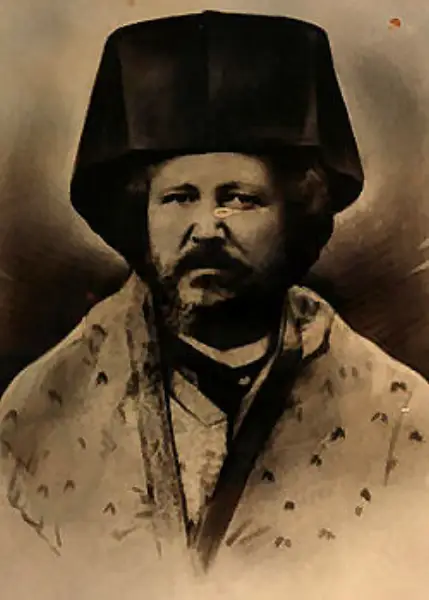
Euthymios of Zela, born Eustratios Agritellis on Lesbos in 1876, was the final bishop actually resident in the see of Zela, in Western Pontus, shepherding it from mid-June 1912 to his violent death in late May 1921 amid the Greek genocide. A monk of the Leimonos Monastery from boyhood and a graduate of the Theological School of Halki, he was renowned first as a preacher and educator in his native island before Metropolitan Germanos Karavangelis of Amasya called him to Asia Minor as assistant bishop. He governed the vast Metropolis of Amasya largely alone, building churches and schools until the persecution of the Anatolian Greeks turned his ministry into one of relief and endurance. Refusing the Kemalist order that ordered all hierarchs out of Pontus, he was arrested in January 1921, condemned to death, and subjected to isolation and torture in the prison of Amasya; he died in custody after forty-one days, and his body was hanged in the town square with the other condemned. The Church of Greece glorified him in 1992 among the New Hieromartyrs of Asia Minor.
The Complete Life
A Son of Lesbos
The future bishop was born Eustratios Agritellis on July 6, 1876, in the village of Parakila on the island of Lesbos, and it was there that his schooling began. At nine years old he entered the Leimonias school, housed within the Leimonos Monastery at the island's center, an institution founded long before as the first school established on Lesbos under Ottoman rule and for a long time the only one on the island. He graduated in 1892 and did not leave: in that same period he received the monastic tonsure from the monastery's abbot, Archimandrite Anthimos Georgiellis, who gave him the name Euthymios, and he spent the next eight years in ascetic discipline within the monastery's walls. His gifts pointed toward higher study, and in 1900 the monastery sent him to the Theological School of Halki, the great seminary of the Ecumenical Patriarchate, where he studied from 1900 to 1907. He was ordained deacon in 1906 by Metropolitan Agathangelos of Grevena, and a year later completed his thesis on the purpose of monastic life in the Christian East up to the ninth century.
§ Early life
Preacher of Methymna, Bishop of Zela
Returning to Lesbos after his graduation, Euthymios was appointed by Metropolitan Stephen Soulidis of Methymna to lead the Leimonos School and to serve as the itinerant preacher of the metropolis, an office he exercised in 1909 and 1910 with such force that he became known across the island for the power of his oratory and the richness of his sermons. During that same school year he took charge as headmaster of the schools of the Gera municipality on Mytilene. He was ordained priest in 1910 by Metropolitan Stephen and acted as the metropolis's protosynkellos until 1912. That year his life turned toward Asia Minor. Metropolitan Germanos Karavangelis of Amasya, himself a native of Lesbos and resident at Samsun, received the young priest as his general commissioner, reportedly on the introduction of Patriarch Joachim III, who had heard of the clergyman's abilities. The Great Church of Christ advanced him as assistant bishop to the Metropolitan of Amasya, conferring on him the ancient and illustrious title of Western Pontus, Bishop of Zela, and his episcopal ordination took place in Constantinople on June 12, 1912.
§ Early life
Shepherd of the Vast Metropolis of Amasya
For the decade that followed, amid circumstances that grew steadily darker, Bishop Euthymios served the Metropolis of Amasya, the most extensive see in Asia Minor, embracing 340 Orthodox communities and more than 130,000 Orthodox faithful, most of them Greek in identity though Turkish in outward appearance. Because Metropolitan Germanos traveled constantly to Constantinople and Athens, the burden of governance fell largely on the assistant bishop alone. Under his administration the metropolis showed signs of unusual revival: youth associations and community organizations took shape. In 1913 he founded numerous churches in Pafra and the surrounding villages of Western Pontus, together with schools for boys and for girls, and saw to the proper placement of priests and teachers in each. Once the great persecution of the Anatolian Greeks broke out, its fury concentrated on Samsun and Pafra, his work changed character: the labors of progress became a struggle for relief and survival. He moved untiringly from place to place, often in danger and tried by deprivation, to reach the despairing, the exiled, and the distressed Orthodox Christians of his vast diocese.
§ Bishop of Zela
Memory, Resistance, and Prayer
Euthymios's spirituality joined unshakeable memory with unsparing self-sacrifice. Across the years of the First World War he pressed the schools and people of Pontus to hold fast, every March 25, to their yearly rite of remembrance for the mass self-sacrifice of some thirty to forty girls of the village of Hazar, who in 1680 preferred leaping from the fortress of Ali down a 150-meter precipice to capture by the Turks; the memory was embodied in the local dance of Pafra, the Death Jump, whose steps imitated the girls' fall. When in April 1917 a Turkish force closed around the Theotokos monastery at Otkaya, sheltering 650 women and children with 60 armed rebels, and after six days of siege most of the besieged were killed or died by their own hands, the bishop answered in 1919 by gathering 12,000 insurgents at Çağşur on the forefeast of the Dormition, a rising that destroyed the opposing forces. And in prison, at the last, his spirituality shone brightest: he consoled his fellow captives on Pascha and chanted the memorial service for the departed on his own behalf.
§ Adversity and war
Imprisonment and Martyrdom at Amasya
In 1921 the Kemalist government ordered every metropolitan, bishop, and archimandrite of the Pontus to quit the region and vacate his seat. Only three refused: Metropolitan Chrysanthos of Trebizond, Bishop Euthymios of Zela, and Archimandrite Platon Aivazidis, protosynkellos of Amasya. On January 21, 1921, the Kemalists seized Euthymios and Platon along with many other notables of Amasya, condemned them to death, and confined them in the town's Souyia prison. Knowing the torments his fellow prisoners endured, the bishop appealed to the government at Ankara to be counted the sole culprit and the only one punished, so that the others might go free; no answer came. His captivity remained comparatively mild until April 18, the day of Pascha, when he slipped unnoticed into the hall where detained expatriates were held in isolation to console and encourage them. For this he was cast into the damp basements of the jail. Freed prisoners later testified to his sufferings, and sometimes his voice was heard chanting the burial service on his own behalf. Exhausted by hardship and torture, he died in custody on May 29, 1921, the forty-first day of his isolation. The sentence from Ankara arrived after his death, and his corpse was strung up in the central square with the other condemned men before his guards gave him quiet burial in the courtyard of the neighboring church.
§ Imprisonment and martyrdom
Numbered Among the Hieromartyrs
The Church did not forget the shepherd who had stayed at his post. Greece's Holy Synod, meeting on 4 November 1992, voted with one voice to enroll Bishop Euthymios among its saints and ethnomartyrs, ranking him in the chorus of the saints together with Chrysostomos of Smyrna and three other holy hierarchs of Asia Minor who perished in the catastrophe that befell Greek Christianity there: Ambrosios of Moschonisia, Gregorios of Kydonies, and Procopius of Iconium. The five are honored together on the Sunday that precedes the feast of the Holy Cross's Exaltation, a date moving between 7 and 13 September; the Synod made the new saints' ranking official in Encyclical 2556, dated 5 July 1993. Euthymios also keeps his own feast on May 29, the day of his martyrdom, in the Eastern Orthodox Church. His major shrine is the Leimonos Monastery on his native Lesbos, the house that took him in as a boy, educated him, gave him the monastic habit, and now guards his memory at its heart, where a chapel dedicated to him has stood since 1998.
§ Glorification
Remembrance at Leimonos and Beyond
The memory of Euthymios took visible form on his native island within a generation of his death. On May 30, 1936, the fifteenth anniversary of his martyrdom, the Leimonos Monastery unveiled a bust of the saint, whose pale features have drawn pilgrims ever since to recall a shepherd who gave his life for the flock and kept faith with them to the end. In 1998 a chapel was built in his honor at the monastery, in the Holy Metropolis of Methymna, giving his cult a liturgical home. The monastery's library preserves a more intimate relic: among its manuscripts are fifty items written in the saint's own hand, most of them notebooks from his years of study at Halki, the schoolwork of a monk who became a martyr. His see never forgot him either. After his death the Diocese of Zela became a titular see, and a line of titular bishops of Zela has carried his title through the decades, from Alexander Semenoff-Tian-Chansky in the 1970s to Sevastianos Skordallos today. With Chrysostomos of Smyrna and their fellow hierarchs he stands as a witness of the Christian world of Anatolia that was destroyed, recalled every year on the Sunday that precedes the Exaltation of the Cross.
§ Glorification
Timeline
- 6 Jul 1876
Born Eustratios Agritellis on July 6 in the village of Parakila on the island of Lesbos
§ Early life
- 1885
Entered the Leimonias school within the Leimonos Monastery at the age of nine; graduated in 1892
§ Early life
- 1892
Tonsured a monk at Leimonos by Archimandrite Anthimos (Georgiellis), receiving the name Euthymios; practiced asceticism there for eight years
§ Early life
- 1900
Despatched by his monastery to the seminary on Halki for seven years of theological formation
§ Early life
- 1906
Ordained a deacon by Metropolitan Agathangelos of Grevena
§ Early life
- 1907
Finished a scholarly treatise on the aims of Eastern monasticism through the ninth century
§ Early life
- 1909
Appointed head of the Leimonos School and itinerant preacher of the Metropolis of Methymna; famed as an orator
§ Early life
- 1910
Received priestly ordination at the hands of Metropolitan Stephen Soulidis of Methymna, becoming the chief aide (protosynkellos) of that metropolis
§ Early life
- 12 Jun 1912
Ordained Bishop of Zela on June 12 in Constantinople as assistant to Metropolitan Germanos of Amasya
§ Bishop of Zela
- 1913
Founded churches and boys' and girls' schools in the district of Pafra and villages of Western Pontus
§ Bishop of Zela
- Apr 1917
Turkish troops ringed the Theotokos monastery by Otkaya in April; when the six-day siege ended, most of the 650 women and children within were dead
§ Adversity and war
- 1919
Gathered 12,000 insurgents at Çağşur on the forefeast of the Dormition, destroying the Turkish forces; declared a wanted man by the Kemalists
§ Adversity and war
- 21 Jan 1921
Captured with Archimandrite Platon and other notables of Amasya, condemned to death, and imprisoned in the Souyia prison
§ Imprisonment and martyrdom
- 29 May 1921
Died in custody on May 29 after forty-one days of solitary confinement; his body was hanged in the town square and quietly buried
§ Imprisonment and martyrdom
- 30 May 1936
Leimonos Monastery unveiled his bust on May 30, the fifteenth anniversary of his martyrdom
§ Imprisonment and martyrdom
- 4 Nov 1992
Canonized on November 4 by the Holy Synod of the Church of Greece among the New Hieromartyrs of Asia Minor
§ Glorification
- 1998
A chapel in his honor was built at the Leimonos Monastery in the Holy Metropolis of Methymna
§ Glorification
The Record
- Major works
- Churches and schools for boys and girls founded in Pafra and Western Pontus (1913)·Thesis: The purpose of monastic life in the East until the 9th century AD (1907)
- Canonization
- Canonized on November 4, 1992, by the Holy Synod of the Church of Greece, together with Chrysostomos of Smyrna and three other hierarchs of Asia Minor
Prayer
Bibliography
Show 6 sources
- Αθαν. Γ. Τσερνογλου. "Εὐθύμιος. Ὁ Ἀγριτέλλης. Έθνομάρτυς ἐπίσκοπος Ζήλων Ἀμασείας (1912-1921)". Θρησκευτική και Ηθική Εγκυκλοπαίδεια (ΘΗΕ). Τόμος 5. Αθήναι, 1964. σελ. 1046-1048 (in Greek).
- Great Synaxaristes: "Ὁ Ἅγιος Εὐθύμιος ὁ Ἱερομάρτυρας Ἐπίσκοπος Ζήλων". ΜΕΓΑΣ ΣΥΝΑΞΑΡΙΣΤΗΣ. 29 Μαΐου (in Greek).
- Charēs Tsirkinidēs. At Last we Uprooted them: The Genocide of Greeks of Pontos, Thrace and Asia Minor through French Archives. Thessaloniki: Kyriakidis Brothers, 1999. p. 192. ISBN 9789603434788.
- "St. Efthymios Agritellis". Holy Patriarchal and Stavropegial Leimonos Monastery. Retrieved 12 August 2014.
- "The Genocide of Ottoman Greeks, 1914-1923". Rutgers, The State University of New Jersey, Newark - Center for the Study of Genocide and Human Rights. 2013.
- Κων/τίνος Β. Χιώλος. "Ο μαρτυρικός θάνατος του Μητροπολίτου Σμύρνης". Δημόσια Κεντρική Βιβλιοθήκη Σερρών. 13 Σεπτεμβρίου 2006 (in Greek).
Profile text adapted from the Wikipedia article, licensed CC BY-SA 4.0.
Pray with this saint every day
Save St. Euthymios of Zela to your favorites, read the full profile, and get feast-day reminders in the Saints app.
Get the Saints AppFree on the App Store for iPhone and iPad