
1848-1906·Feast August 19
St. Ezequiél Moreno y Díaz
Augustinian Recollect missionary and Bishop of Pasto
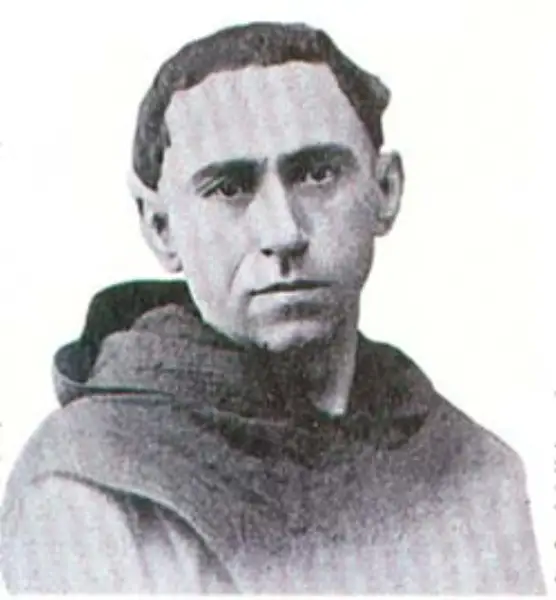
Overview
Ezequiél Moreno y Díaz was a Spanish Augustinian Recollect friar whose missionary career carried him from his birthplace in La Rioja to the Philippines and Colombia, and who ended his life as Bishop of Pasto. Born at Alfaro on April 9, 1848, the third of six children of a tailor, he followed an older brother into the Recollect novitiate at Monteagudo in Navarre in 1864. Sent to the Philippine missions in 1869, he was ordained in Manila two years later and labored in Mindoro, Palawan, Las Piñas, Santo Tomás and Cavite, helping to found settlements, tending the sick through cholera and epidemic, and earning such affection that his parishes petitioned against his transfers. Elected superior of the Recollect seminary at Monteagudo in 1885, he crossed the Atlantic again in 1888 to lead the mission in Colombia, becoming Vicar Apostolic of Casanare, bishop of Pinara, and finally Bishop of Pasto, where his charity and his promotion of the Rosary of the Dawn marked his episcopate. During the Thousand Days War he took the side of the Colombian Church in print. After his death at Montegudo on August 19, 1906, he was beatified by Pope Paul VI in 1975 and canonized by Pope John Paul II in Santo Domingo in 1992, and is invoked especially as patron of cancer patients.
The Complete Life
A Tailor's Son from Alfaro
Ezequiél Moreno y Díaz was born on April 9, 1848, in the city of Alfaro in La Rioja, Spain, into a household of modest means and strong faith. His father, Félix Moreno, worked as a tailor; his mother was María Josefa Díaz. The third of six children, the boy served at the altar for the town's Dominican sisters and there formed the devotion to Our Lady of the Rosary that would mark him for life — he later took her name into his own religious appellation. The family produced more than one witness to the faith: a nephew, Julián Moreno, is honored as a Blessed for his martyrdom at Motril. Following the example of an older brother, Ezequiél entered the Recollect house at Monteagudo in Navarre on September 21, 1864, receiving the name Fray Ezequiel Moreno de la Virgen del Rosario, and made his solemn vow a year later at Marcialla. The monastery at Monteagudo had a far reach: it had a tradition of sending friars out to the Philippine islands and across the Atlantic, and from that house the young professed friar's road to the mission fields would begin.
§ Early life and entry to the Order of Augustinian Recollects
To the Missions of the Philippines
On October 14, 1869, the young Recollect sailed from Cádiz and reached Manila on February 10, 1870. That same year he moved on to the Visayan town of Jaro in Iloilo, where he completed the minor orders of his clerical training, before returning to Manila to be raised to the priesthood. The ordination was conferred on June 3, 1871, by Archbishop Gregorio Melitón Martínez of Manila — the same prelate who, years earlier, had defended the martyred priests Gomburza against the Spanish Governor-General. The letter in which the archbishop informed the new priest of his sacerdotal ordination survives today as one of the best-preserved manuscripts of the period. Almost immediately after ordination he was dispatched to his first mission at Calapan in Oriental Mindoro. There he became so fluent in Tagalog that at his canonization, more than a century later, Filipino Catholics could remark that the language had become a language of the saints. The young friar's vocation, formed in a Navarrese cloister, had taken flesh as a life of itinerant ministry among the islands, and the fluency he won there would outlast every change of mission.
§ Arrival and ordination in Manila
Chaplain, Pastor and Preacher
About two years after reaching the colony, Ezequiél was despatched with Eustaquio, his brother, to Palawan, where he acted as military chaplain to a penal colony — the settlement that became Iwahig Prison and Penal Farm in Puerto Princesa. He is counted among those who established the town of Aborlan and the Inagawan district of Puerto Princesa, but malaria drove him back to Manila. Once recovered, he was given charge of the Calapan mission, and while still only twenty-eight he was named Vicar Forane of Mindoro by both the Archbishop of Manila and his Recollect prior. May 1876 brought him to the parish of Las Piñas, where three years of ministry were tested by an epidemic, a drought and a fire; he answered each with care for the sick and alms of money, rice and clothing for those left in destitution. The people of Las Piñas protested his removal to Santo Tomás, Batangas, in vain, and the people of Santo Tomás likewise failed to keep him when he was recalled to Manila as General Preacher of the Order, a post he assumed in October 1880, adding the parish of Santa Cruz in February 1881. A year later he took charge of the Recollect hacienda in Imus and Bacoor, Cavite, where during a cholera outbreak he administered the Last Rites so tirelessly that of 3,200 victims only three died without them.
§ Provincial assignments
The Rosary and the Cross of Sickness
The spirituality Ezequiél carried from Alfaro to the islands was Marian, pastoral and unhesitatingly practical. The Rosary stood at its center: the boy who served the Dominican nuns took the title of Our Lady of the Rosary into his religious name, and the bishop would later commend the dawn Rosary to the people of Pasto. His charity surfaced wherever suffering did. In Las Piñas he met epidemic, drought and fire with medicine, money, rice and clothing; in Cavite he moved through a cholera-stricken town night after night so that the dying would not face death unreconciled. As bishop he preached and wrote with the same directness. Aligned, like most of the Colombian hierarchy, with the Colombian Conservative Party, he used his pastoral letters and sermons during the Thousand Days War to attack the Colombian Liberal Party and to insist on the duties of a Catholic above every political allegiance. His terse verdict that liberalism is a sin remains his most contested sentence, but for him it expressed a single conviction: that faith claims the whole of life, in sickness and in public debate alike.
§ Involvement in Colombian politics
Bishop of Pasto
In 1885 Ezequiél was elected Superior of the seminary at Monteagudo, but the Atlantic was to be crossed once more. In 1888 he took charge of the Recollect mission in Colombia, serving as Vicar Apostolic of Casanare. On October 23, 1893, he was named bishop of Pinara, and on December 2 of the same year he became Bishop of Pasto, the see he would lead until his death. His episcopate was remembered for generous charity toward the faithful of the diocese and for his encouragement of the Rosary of the Dawn, a dawn devotion that gathered the whole city in prayer. It was also entangled with the storms of Colombian politics: during the Thousand Days' War he lent his writings and sermons to the defense of the Church's position against the Liberal Party, stating plainly what he believed a Catholic owed to the faith above party. Worn by decades of mission work in tropical climates, he returned to Spain and died at Montegudo in Navarre on August 19, 1906, at the age of fifty-eight, the shepherd of a diocese an ocean away from the town where his religious life had begun.
§ Colombian missions
Blessed and Saint
The fame of the Recollect bishop grew steadily after his death, resting on the testimony of the peoples he had served in Mindoro, Palawan, Las Piñas, Cavite and Pasto. On November 1, 1975, Pope Paul VI declared him Blessed, recognizing a life in which missionary endurance and episcopal courage had been joined. Seventeen years later, on October 11, 1992, Pope John Paul II canonized him in Santo Domingo, in the Dominican Republic, during a mass celebrated at Faro a Colón for the fifth centenary of the evangelization of the Americas — a setting that placed the friar from Alfaro among the great missionary figures of the Church's history on the continent he had served in Colombia. He is popularly invoked as the patron of cancer patients, an intercession born from his own closeness to the sick. In the Philippines his patronage is claimed by the Sto. Niño De Molino Parish Church in Bacoor and the Immaculate Conception Cathedral Parish in Puerto Princesa, Palawan, and by the Recoletos community; a devotional statue of the saint stands in the Basilica Minore de San Sebastián in Manila. His feast is kept on August 19, the anniversary of his death.
§ Introduction
A Language of the Saints
Ezequiél Moreno y Díaz left his mark on three countries. In the Philippines he is remembered as a founder — of towns in Palawan, of parishes that still claim his patronage — and as the pastor whose people begged to keep him. The remark of Filipino Catholics at his canonization, that the Tagalog he learned at Calapan had become a language of the saints, captures how thoroughly the Spanish friar was adopted by the people he served. In Colombia he is the bishop of Pasto who taught the diocese to pray at daybreak and who defended the Church's freedom in a time of civil war. In Spain he is the son of Alfaro and of the Recollect cloister at Monteagudo, which had sent him out and received the news of his sanctity back. Canonized in 1992, he now stands among the missionary saints of the Catholic Church, a figure claimed with particular affection by cancer patients and by the Augustinian Recollect family. His life traced the wide arc of Spanish missionary history in the nineteenth century — from a Riojan tailor's bench to the Visayan islands and the Andean highlands — and his memory binds those shores together still.
§ Introduction
Timeline
- 9 Apr 1848
Born at Alfaro, La Rioja, on April 9, third of the six children of Félix Moreno and María Josefa Díaz.
§ Early life and entry to the Order of Augustinian Recollects
- 21 Sep 1864
Entered the Recollects at Monteagudo, Navarre, on September 21, taking the name Fray Ezequiel Moreno de la Virgen del Rosario.
§ Early life and entry to the Order of Augustinian Recollects
- 22 Sep 1865
Made his solemn vow at Marcialla, Navarre, on September 22.
§ Early life and entry to the Order of Augustinian Recollects
- 14 Oct 1869
Embarked from Cádiz for the Philippines on October 14.
§ Arrival and ordination in Manila
- 10 Feb 1870
Reached Manila on February 10, then sailed to Jaro, Iloilo, where he completed his minor orders.
§ Arrival and ordination in Manila
- 3 Jun 1871
Ordained a priest in Manila by Archbishop Gregorio Melitón Martínez on June 3, and sent to his first mission at Calapan, Oriental Mindoro.
§ Arrival and ordination in Manila
- 1872
Sent with his brother Eustaquio to Palawan as military chaplain to the penal colony at Puerto Princesa; helped found Aborlan and Barangay Inagawan.
§ Provincial assignments
- 1873
Struck down by malaria and forced back to Manila; on recovery was placed in charge of the Calapan mission and, at twenty-eight, made Vicar Forane of Mindoro.
§ Provincial assignments
- May 1876
Transferred in May to Las Piñas, where for three years he nursed the sick amid epidemic, drought and fire.
§ Return to Manila and surrounding areas
- Oct 1880
Appointed General Preacher of the Order of Augustinian Recollects, assuming the post in October.
§ Return to Manila and surrounding areas
- Feb 1881
Assigned as parish priest of Santa Cruz Church in Manila in February.
§ Return to Manila and surrounding areas
- 1882
Placed in charge of the Recollect hacienda at Imus and Bacoor, Cavite, and ministered through a cholera outbreak that killed 3,200 people.
§ Return to Manila and surrounding areas
- 1885
Elected Superior of the seminary at Monteagudo, Navarre.
§ Return to Manila and surrounding areas
- 1888
Crossed the Atlantic to become head of the Recollect mission in Colombia.
§ Colombian missions
- 23 Oct 1893
Named bishop of Pinara, Colombia, on October 23 while serving as Vicar Apostolic of Casanare.
§ Colombian missions
- 2 Dec 1893
Became Bishop of Pasto, Colombia, on December 2.
§ Colombian missions
- 1895
Recorded as Bishop of Pasto from this year, noted for generous charity to his flock and for encouraging the Rosary of the Dawn.
§ Introduction
- 19 Aug 1906
Died at Montegudo, Navarre, on August 19, aged fifty-eight.
§ Introduction
- 1 Nov 1975
Beatified by Pope Paul VI on November 1.
§ Introduction
- 11 Oct 1992
Canonized by Pope John Paul II on October 11 at Santo Domingo during the mass marking the fifth centenary of the evangelization of the Americas.
§ Introduction
In Their Own Words
liberalism is a sin
The Record
- Major works
- Co-founder of the town of Aborlan and Barangay Inagawan, Palawan·Pastoral letters defending Catholic commitments during the Thousand Days War·Promotion of the Rosary of the Dawn in the diocese of Pasto
- Patron of
- Cancer patients·Sto. Niño De Molino Parish Church, Bacoor·Immaculate Conception Cathedral Parish, Puerto Princesa, Palawan·Recoletos Community
- Canonization
- Beatified November 1, 1975 by Pope Paul VI; canonized October 11, 1992 by Pope John Paul II at Santo Domingo, Dominican Republic
Prayer
Bibliography
Show 8 sources
- "San Ezequiel Moreno Díaz", Diócese Ciudad Real
- "Santa Misa en el V Centenario de la Evangelización y Canonización del Beato Ezequiel Moreno y Díaz. Homilía del Santo Padre Juan Pablo II", Faro a Colón, Santo Domingo, 11 de octubre de 1992
- "Ezequiel Moreno y Díaz (1848-1906)", Vatican News Service
- "Hoy se celebra a San Ezequiel Moreno, misionero e intercesor de los enfermos de cáncer", ACI Prensa, August 19, 2023
- "San Ezequiel Moreno", Real Academia de la Historia
- Vilches, Isabel Orellana. "San Ezequiel Moreno y Díaz", Zenit, August 18, 2016
- "Fray Ezequiel Moreno de la Virgen del Rosario", Augustinos Recoletos
- Lazcano, Rafael. Episcopologio agustiniano. Agustiniana, Guadarrama (Madrid), 2014, vol. II, 2024–2063.
Profile text adapted from the Wikipedia article, licensed CC BY-SA 4.0.
Pray with this saint every day
Save St. Ezequiél Moreno y Díaz to your favorites, read the full profile, and get feast-day reminders in the Saints app.
Get the Saints AppFree on the App Store for iPhone and iPad