
2nd century (legendary)·Feast May 26 (traditional; currently unobserved)
St. Fagan
Legendary second-century bishop and apostle of Britain
Overview
Fagan — Latin Faganus, Welsh Ffagan, in some sources Fugatius — is a legendary second-century Welsh bishop who, with his companion Deruvian, was said to have been sent by Pope Eleutherius to answer King Lucius's request for baptism and to bring Christianity to Britain. In some reckonings the pair were the apostles of Britain. The story of Lucius's letter reaches back at least to a sixth-century form of the Book of Popes, but the missionaries' names appear in no source older than the early twelfth century: they surface first in William of Malmesbury's account of Glastonbury Abbey, and decisively in Geoffrey of Monmouth's History of the Kings of Britain, from which the tale spread across Europe. The clergy of St Davids invoked the pair to argue their cathedral's independence from Canterbury, while Glastonbury wove them into its own foundation legends, and during the English Reformation both Catholics and Protestants cited them. Geoffrey's account is now considered wholly implausible, yet by the third century the Christian faith had already taken deep root in Roman Britain, and some scholars suggest the stories preserve a modest memory of a Romano-British chieftain's conversion. Fagan gives his name to the village of St Fagans near Cardiff, home of the Welsh National History Museum, though his feast is unobserved by any major Welsh church today.
The Complete Life
The Pope's Answer to King Lucius
The story that carried Fagan's name begins with a king. Lucius of Britain, a ruler of the late second century, was said to have written to the pope asking for baptism and the Christian faith, and the pope — in most tellings, Eleutherius — sent missionaries in answer. The kernel of the tale is old: a form of it appears in the sixth-century recension of the Book of Popes known as the Felician Catalog. But the missionaries themselves are another matter. Neither Bede's great eighth-century history nor the ninth-century History of the Britons credited to Nennius gives their names, and William of Malmesbury, writing in his chronicle of the English kings, would allow only the rust of antiquity may have blotted them out. The names of Fagan and his companion Deruvian first appear in the early twelfth century — in William's own book on the antiquity of the Glastonbury church, and in the letter of the clergy of St Davids to Pope Honorius II preserved by Gerald of Wales. Scholars have long suspected the Glastonbury passage: Robinson judged it a forgery slipped in among the abbey's scribal additions, while Baring-Gould, Rees and Mullins allow that the names may be genuine figures taken up and attached to the legend of Lucius.
§ Sources
Apostles of Britain
Once the names existed, the story grew around them. Gerald of Wales's letter from the clerics of St Davids makes Fagan and Duvian the first apostles of all Britain: they arrived in the year 140, baptized King Lucius, converted his subjects, replaced twenty-seven pagan leaders with as many bishops under three archbishops — one seated at St Davids — and so grounded the claim that their cathedral owed nothing to Canterbury. Geoffrey of Monmouth told a grander version still: Fagan and Duvian converted Lucius's petty kings and almost banished paganism from the island, transformed its temples into churches, and reorganized the realm under twenty-eight bishops and three archbishops at London, York and Caerleon; the pair then traveled to Rome for confirmation of their work and returned with more clerics, all before Lucius's death in 156. Glastonbury had its own account: in the florid text of On the Antiquity of the Glastonbury Church, Phagan and Deruvian came upon the community founded by Joseph of Arimathea, found it miraculously preserved, and revived it in the year 166 under the direction of the Archangel Gabriel — a tale, with its forty years of indulgences, quite profitable for the abbey. The Book of Llandaff's messengers Elvan and Medwin were later folded into the same legend, and in Wales Fagan was made first bishop of Llandaff's line.
§ Legend
A Saint Without a Feast
Fagan's veneration is of the pre-congregation kind, resting on his antiquity rather than any process: he was counted among the saints because he was reckoned an apostle. Yet his cult was always uneven. No surviving medieval Welsh calendar of the saints records his festival at all, and his day is observed today by none of the major denominations in Wales. Late and scattered sources assign him a wealth of dates — January 3, with St Dyfan, at Glastonbury; February 10 at Llandaff; August 8; and May 24 or 26, again with Dyfan, the traditional day of King Lucius's baptism — the last sometimes kept by the Eastern Orthodox diocese of Thyateira and Great Britain. The memory of his sanctity could still stir consciences centuries after the legend was written: in 1604 the Blessed John Sugar, going to death at Tyburn, invoked Fugatius from the gallows as an authority for the antiquity of British Catholicism. Whatever the historians make of the second-century mission, the Church's memory kept Fagan among its saints, and the historian must record that keeping as part of his story — a bishop venerated for thirteen centuries, honored in dedications, and left without a feast day to show for it.
§ Legacy
The Name on the Land
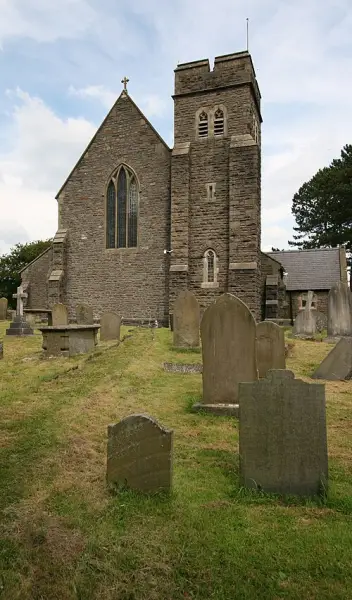
Fagan's most durable monument is topographical. The village of St Fagans near Cardiff bears his name to this day and houses the Welsh National History Museum; a parish church was newly erected there, east of the old chapel, in 1180 and dedicated to St Mary, while a chapel nearby remained dedicated to Fagan into the sixteenth century — John Leland saw it in his travels — before falling to ruin by the time of the English Civil War. St Fagan's Well close by was prized as a cure for the falling sickness. Welsh tradition made him an Italian bishop who enthroned himself at Llansantffagan, and credited him with founding the churches of Llanffagan Fawr, the present St Fagans, and Llanffagan Fach at Llanmaes near Llantwit Major, though both parishes are now dedicated to other patrons. At Trecynon near Aberdare, a new St Fagan's Church rose between 1851 and 1853, burned in 1856, was rebuilt within the year, and was established as a parish in its own right. Historians still argue over him: Rees urged that his dedication in the Llandaff region points to a real figure, Bartrum that such dedications simply followed Geoffrey's popularity. Either way, the name has outlived the history.
§ Legacy
Timeline
- 140
According to the letter of the clergy of St Davids, Fagan and Deruvian arrived in Britain, baptized King Lucius, and converted his subjects.
§ Legend
- May 140
Later tradition assigned King Lucius's baptism by the missionaries to May 24 or 26, a date sometimes kept as Fagan's feast.
§ Legacy
- 156
Geoffrey of Monmouth set the whole mission of Fagan and Deruvian before the death of King Lucius in this year.
§ Legend
- 166
In William of Malmesbury's Glastonbury account, Phagan and Deruvian found the old community miraculously preserved and revived it.
§ Legend
- 1125
The Book of Llandaff, composed around this year, named Elvan and Medwin as Lucius's messengers to the pope; the two stories were later combined.
§ Legend
- 1129
William of Malmesbury's On the Antiquity of the Glastonbury Church, written between 1129 and 1139, gave the name Phagan.
§ Sources
- 1136
Geoffrey of Monmouth's History of the Kings of Britain named Fagan and spread the story across medieval Europe.
§ Sources
- 1180
A new parish church east of the old chapel at St Fagans was dedicated to St Mary the Blessed Virgin.
§ Legacy
- 1604
The Blessed John Sugar, martyred this year, invoked Fugatius from the gallows as an authority for the antiquity of British Catholicism.
§ Legacy
- 1851
St Fagan's Church at Trecynon near Aberdare was erected as a new foundation between 1851 and 1853.
§ Legacy
- 1856
The Trecynon church was destroyed by fire and rebuilt within the year; John Griffith made it a separate parish.
§ Legacy
In Their Own Words
Where God is silent, it is wise not to speak.
the rust of antiquity may have obliterated their names
The Record
- Major works
- Church of Llanffagan Fawr at St Fagans near Cardiff (per later tradition)·Church of Llanffagan Fach at Llanmaes near Llantwit Major (per later tradition)
- Patron of
- Trecynon·St Fagans (lapsed)·Llanmaes (lapsed)
- Canonization
- Pre-congregation; venerated from the early medieval period, though his feast is now unobserved by any Welsh church
Prayer
Bibliography
Show 9 sources
- Gulielmus Malmesburiensis [William of Malmesbury]. De Antiquitate Glastoniensis Ecclesiæ. 1129–1139
- Baring-Gould, Sabine & al. The Lives of the British Saints: The Saints of Wales and Cornwall and Such Irish Saints as Have Dedications in Britain, Vol. III, pp. 9–10. Honourable Society of Cymmrodorion (London), 1911
- Galfridus Monemutensis [Geoffrey of Monmouth]. Historia Regnum Britanniae [History of the Kings of Britain], Vol. IV, Ch. xix–xx. c. 1136
- Robinson, Joseph Armitage. "William of Malmesbury 'On the Antiquity of Glastonbury'" in Somerset Historical Essays. Oxford University Press (London), 1921
- Giraldus Cambriensis [Gerald of Wales]. De Inuectionibus [On Invectives], Vol. II, Ch. X, in Y Cymmrodor, Vol. XXX, pp. 143–6 (Devizes), 1920
- Bartrum, Peter C. "Ffagan" in A Welsh Classical Dictionary: People in History and Legend up to about A. D. 1000, p. 298. National Library of Wales, 1993. Emended 2009
- Rees, Rice. An Essay on the Welsh Saints or the Primitive Christians Usually Considered to Have Been the Founders of Churches in Wales, pp. 82 ff. Longman, Rees, Orme, Brown, Green, & Longman (London), 1836
- Mullins, Daniel J. Early Welsh Saints, p. 30. Carreg-Gwalch Press, 2003
- Challoner, Richard. A memorial of ancient British piety: or, a British martyrology. W. Needham, 1761
Profile text adapted from the Wikipedia article, licensed CC BY-SA 4.0.
Pray with this saint every day
Save St. Fagan to your favorites, read the full profile, and get feast-day reminders in the Saints app.
Get the Saints AppFree on the App Store for iPhone and iPad