
9th century·Feast March 26
St. Felicitas of Padua
Ninth-Century Nun of the Paduan Convent
Overview
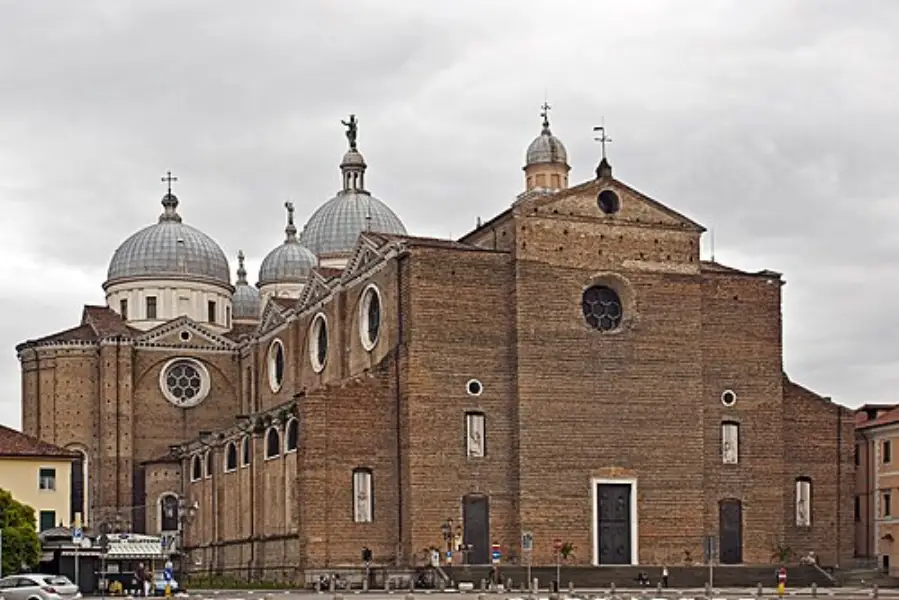
Felicitas of Padua is honoured as a saint of the Roman Catholic Church whose earthly life unfolded in the ninth century, in the northern Italian city of Padua. The surviving testimony about her is remarkably spare: she was a nun, and she probably belonged to the convent of Saints Cosmas and Damian in that city. The devotion paid to her has centred on the shrine where her remains were laid to rest. Her relics are now preserved in the Basilica of Saint Justina in Padua, one of the great pilgrimage churches of the Veneto, where they remain to this day. That final resting place, shared with other holy figures of the Paduan church, is the principal tangible witness to a woman who otherwise left no written trace. Her feast is kept on March 26, and she stands among the many unnamed or barely recorded women whose hidden fidelity sustained the monastic life of early medieval Italy.
The Complete Life
A Nun of Saints Cosmas and Damian
Everything that can be said with confidence about Felicitas begins and nearly ends with her vocation: she was a religious woman of the ninth century, living under a rule in the city of Padua. The tradition qualifies even this much with a careful probably, adding that the convent she belonged to was that of Saints Cosmas and Damian. Beyond these bare lines the sources are silent. We do not know her family, the year of her entrance, the office she held, or the circumstances of her death. What the record does show is a church that remembered her. In an age when many holy women passed entirely out of memory, Felicitas was judged worthy of lasting honour: her name was preserved, a feast day was assigned to her on March 26, and her bodily remains were gathered and kept with care. The brevity of her dossier is not a mark of obscurity so much as a witness to how much of sanctity unfolds without documentation — in the ordinary fidelity of a life given to God within a community of prayer.
§ Introduction
Relics in the Basilica of Saint Justina
The one concrete, physical link between the modern pilgrim and the ninth-century nun is the placement of her relics. They are now venerated in the Basilica of Saint Justina at Padua, the Benedictine abbey church that stands among the principal sanctuaries of the city and houses the tomb of its patroness. There Felicitas rests among the other treasures of the Paduan church, her presence marked for the faithful who come to pray. The translation of her remains into so prominent a sanctuary presupposes an earlier and living devotion: communities do not enshrine the forgotten. The church keeps her memory on March 26 each year, and the reference works of the saints continue to record her name with the little that the tradition has preserved — a line or two of text guarding an entire life of fidelity. For the visitor to Padua she offers a particular kind of companionship — the saint whose story cannot be told, whose intercession must rest on trust rather than on narrative. Her quiet basilica presence sums up the whole of what devotion to her has ever claimed: a woman faithful to God, honoured by the church that outlived her.
§ Introduction
The Record
- Canonization
- Pre-congregation; venerated in the Roman Catholic Church
Prayer
Bibliography
Show 2 sources
- Bunson, Matthew, Margaret Bunson, and Stephen Bunson. Our Sunday Visitor's Encyclopedia of Saints, p. 315. ISBN 978-1931709750
- "March 26". Archived from the original on 2016-12-21.
Profile text adapted from the Wikipedia article, licensed CC BY-SA 4.0.
Pray with this saint every day
Save St. Felicitas of Padua to your favorites, read the full profile, and get feast-day reminders in the Saints app.
Get the Saints AppFree on the App Store for iPhone and iPad