
c. 415 – 520·Feast October 12
St. Fiacc
Poet and chief bishop of Leinster
Overview
Fiacc was born around 415 and died around 520. A poet by training, he became the chief bishop of Leinster and founded two churches. His father, MacDara, ruled as prince of the Uí Bairrche in the lands about Carlow, and his mother was a sister of Dubhthach moccu Lughair, who held the office of Chief Ollam of Ireland and became the first of Saint Patrick's converts at Tara. Fiacc studied under that uncle in the bardic craft, and soon he embraced the Christian faith. When Patrick came to Leinster and stayed at Dubhtach's house, he chose Fiacc, on his uncle's recommendation, to be consecrated bishop for the converts of the province. Fiacc was then a widower with a young son, Fiacre. Patrick handed him an alphabet traced in the apostle's own hand, and Fiacc mastered with marvellous speed the learning his episcopal office required. He founded the church of Domnach-Fiech and later built a great monastery at Sletty, which he ruled as abbot while governing the surrounding country as bishop. He is reputed author of the metrical life of Saint Patrick in Irish, the earliest biography of the apostle of Ireland.
The Complete Life
A Prince's Son Among the Bards
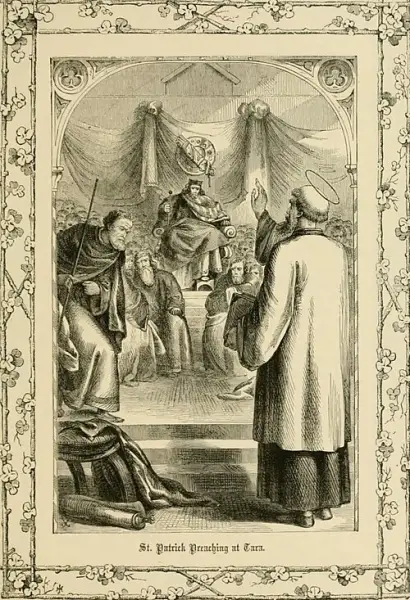
Fiacc was born around the year 415 into the noble house of the Uí Bairrche, whose lands lay in the country around Carlow. His father MacDara was prince of that people, and his mother was sister to a man of European consequence in the old Irish order: Dubhthach moccu Lughair, Chief Ollam of Ireland, the royal poet, who would pass into the Christian story as Patrick's first convert at Tara and the apostle's friend for life. The boy was placed as a pupil with his uncle in the bardic profession, learning the strict metres, genealogies, and lore of the Gaelic tradition, a formation that would later make him the earliest poet-biographer of Saint Patrick. The preaching of Patrick reached the household of Dubhthach, and Fiacc soon embraced the faith his uncle had professed. Thus in one family the old learning and the new Gospel met without violence: the chief poet of Ireland received the preaching of the apostle, and his nephew the bard grew into the first bishop of the province. In him the oldest learning of Ireland and the newest preaching of the Gospel found a single servant.
§ Life
Chosen by Patrick for Leinster
When Patrick came to Leinster on his apostolic journeys, he stayed for a time at the house of Dubhtach in Uí Ceinnselaig. The mission needed a bishop for the converts of the province, and the saint did not look far: on Dubhtach's recommendation he picked Fiacc for that office. The choice was striking, for Fiacc was then a widower, his wife having recently died and left him one son named Fiacre, whom Patrick would in later years ordain a priest. To prepare the bard for the episcopate Patrick provided him with an alphabet traced in the apostle's own hand, and Fiacc mastered, with astonishing speed, the learning his new rank demanded. Patrick consecrated him, and afterwards named him chief bishop of the province. The episode unites the two streams of Irish sanctity, the learned pagan tradition of the ollams and the new ministry of the Gospel, and it shows Patrick's method of raising native clergy: the poet became the preacher, and the nephew of the first convert became the first chief bishop of Leinster. The widower accepted the burden, and his young son grew up within the same consecrated household.
§ Life
Domnach-Fiech and the Monastery of Sletty
Fiacc's first foundation was the church called Domnach-Fiech, standing east of the River Slaney, where he lived for many years a life of austerity. At length, by what his biographers describe as angelic command, he was led to cross the River Barrow and settle on its western bank, where his resurrection would be found. The legends tell that he was told to raise his oratory where he came upon a hind, and his refectory where a boar appeared, signs of God's choice written into the landscape. He consulted Patrick, who fixed the site of the new church at Sletty, the high ground, lying a mile and a half to the northwest of Carlow. There Fiacc built a large monastery, ruling it as abbot while at the same time governing the surrounding country as bishop, a union of monastic and diocesan authority characteristic of the early Irish church. Sletty possibly numbered among the earliest scriptoriums Ireland possessed, a fitting charge for a bard turned bishop. Though that foundation does not survive, a medieval church and two undecorated crosses still mark the place.
§ Life
Austerity, Retreat, and Patience in Suffering
The spirituality of Fiacc was severe even by the standards of the age that gave Ireland its penitential tradition. His life by Jocelyn of Furness records the yearly retreat he made in Lent to Drum-Coblai's cave, and the severity of his fast in that season, sustained on five barley loaves mixed with ashes. Such discipline was not an escape from his pastoral charge but its fuel: the bishop who fasted in the cave governed the countryside and welcomed the converts of Leinster the rest of the year. In his later years the austerity was joined to a long trial: over many years he bore a painful bodily affliction. Patrick, taking pity on his weakened frame, sent him a chariot drawn by a pair of horses, easing his journeys in the visitation of his diocese, an early instance of practical charity answering bodily weakness. Fiacc bore the affliction without surrendering his work, and the memory of his endurance passed into the story of Sletty. The bard who had sung the pride of princes ended his days singing, in the prose of his life, the patience of a servant of Christ.
§ Life
Old Age and Burial at Sletty
Fiacc lived to a very old age, outliving so many of his disciples that sixty of them were gathered to their rest before him, a fact that measures both his longevity and the size of the community he had raised at Sletty. His bodily affliction stayed with him to the end, lightened by the chariot Patrick had sent for his journeys. He died around the year 520 and was laid to rest in the church he had built at Sletty. In the same grave was laid his son Fiacre, whom Patrick had ordained a priest, and the calendars of certain churches record that father and son were jointly revered together, an unusual testimony to a household consecrated across two generations. The man buried at Sletty had been prince's son, bard, widower, bishop, and abbot, and the place of his resurrection, promised in the angelic command that led him across the Barrow, held his remains and his son's beneath its church floor. His feast is kept on October 12. Thus father and son rested together under one roof of stone, a rare sign of a family wholly given to the Church.
§ Life
The Earliest Life of Saint Patrick
Fiacc's chief title to remembrance is literary. He is credited with the metrical life of Saint Patrick written in Irish, a text of the first importance, being the oldest life of the apostle of Ireland to have survived. Modern scholars generally judge that it was composed after his lifetime, in the seventh, perhaps even the eighth, century, perhaps preserving material that goes back to the bishop-poet himself; even so, the work stands at the head of the Patrician documentary tradition. A hymn on Saint Brigid, Audite virginis laudes, has sometimes been attributed to him, but on insufficient grounds. His foundations endured in the memory of the church of Leinster: Domnach-Fiech and Sletty alike testify to the planting of the faith in the province, and Sletty's possible rank among the first scriptoriums of Ireland links his name to the whole tradition of Irish learning. His feast on October 12 is kept in the Roman Catholic and Eastern Orthodox churches, and Wikisource preserves works transmitted under his name. Whatever the date of its final form, the poem rooted Patrick's story in the verse of a poet-bishop, and Ireland has never ceased to read it.
§ Legacy
Timeline
- 415
Born about this year to MacDara, prince of the Uí Bairrche, in the lands about Carlow.
§ Life
- 520
Died at a very old age at Sletty and was buried in his own church there, his son Fiacre buried in the same grave.
§ Life
The Record
- Major works
- Metrical life of Saint Patrick in Irish (attributed)·Hymn 'Audite virginis laudes' on Saint Brigid (doubtful attribution)·Church of Domnach-Fiech, east of the River Slaney·Monastery at Sletty, northwest of Carlow
- Canonization
- Pre-congregation; honoured from antiquity in the Roman Catholic and Eastern Orthodox churches.
Prayer
Bibliography
Show 4 sources
- O'Leary, Edward (1910). "Kildare and Leighlin". In Herbermann, Charles (ed.). Catholic Encyclopedia. Vol. 8. New York: Robert Appleton Company.
- Murray, Sean. "St. Fiacc of Sleaty, Co. Laois", Laois Heritage Society.
- Mulcahy, Cornelius (1909). "St. Fiacc". In Herbermann, Charles (ed.). Catholic Encyclopedia. Vol. 6. New York: Robert Appleton Company.
- Redington, N. "Fiacc: Hymn on the Life of St. Patrick", St. Pachomius Orthodox Library, voskrese.info; accessed 15 June 2017.
Profile text adapted from the Wikipedia article, licensed CC BY-SA 4.0.
Pray with this saint every day
Save St. Fiacc to your favorites, read the full profile, and get feast-day reminders in the Saints app.
Get the Saints AppFree on the App Store for iPhone and iPad