
died 7th century·Feast September 27
St. Florentius of Peterborough
Seventh-century Roman martyr venerated at Peterborough
Overview
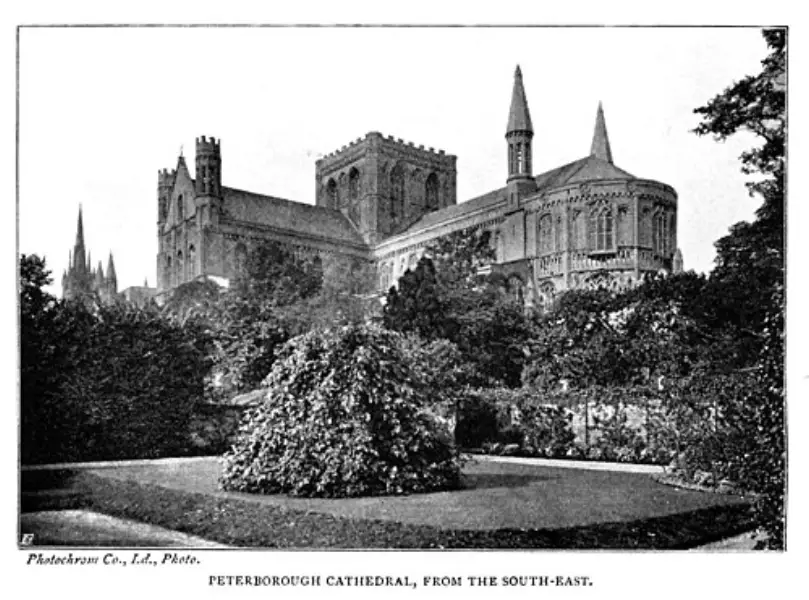
Florentius of Peterborough is remembered as a Roman saint and martyr of the seventh century. The little that can be said of him rests almost entirely on hagiographical sources, above all the Secgan Manuscript, an Old English record of the resting places of the saints preserved in the British Library as Stowe MS 944. According to manuscript E of the Anglo-Saxon Chronicle, his relics were acquired from Bonneval Abbey, a Norman house across the Channel, and were brought to Peterborough Cathedral by Abbot Ælfsi in either 1013 or 1016. There he was honored alongside the local saints Cyneswith and Cyniburg, whose abbey connections tied the cathedral's cults together. A puzzle attends his feast day. Kept on 27 September, it coincides with the commemoration of Florentinus of Sedun, a martyr of the Vandal persecution, and scholars have suggested that the Peterborough saint may in reality be that same Florentinus, his cult carried north under a variant name. Whether an otherwise forgotten Roman martyr or a misnamed Alpine one, Florentius stands among the many early saints whose memory survives through the churches that kept their bones.
The Complete Life
A Roman of the Secgan Tradition
Every life must begin somewhere, and for Florentius of Peterborough the beginning is a single sentence: he was a Roman, and a martyr of the seventh century. Beyond this the written record falls almost entirely silent. No acts of his trial survive, no early church writer names him, and the details of his mission and death have vanished. What is known comes chiefly through the hagiography of the Secgan Manuscript, a collection that records where the saints of the early English church lay buried.
The Secgan material survives in the British Library as Stowe MS 944, a manuscript preserving one of the earliest lists of the resting places of the saints. Its notice of Florentius preserves both his Roman origin and the fact of his martyrdom, though without narrative adornment. That a Roman saint should appear in an English list of holy burials reflects the movement of relics across the Christian world, by which the remains of martyrs of the imperial city were carried to distant churches and enshrined beside the local dead.
Florentius thus belongs to that large company of early martyrs whose cult outlived their story. The church remembered that he had died for Christ; what he said and suffered is now beyond recovery.
§ References
The Saint in Peterborough
Centuries after his death, Florentius entered the history of the English church in a new way: as a relic. According to manuscript E of the Anglo-Saxon Chronicle, his remains were purchased from Bonneval Abbey, a house in the Duchy of Normandy that shared a ruler with the English realm, and were brought to Peterborough Cathedral in 1013 or 1016 by Abbot Ælfsi. The translation placed him among the honored dead of a great monastic church, where he was venerated alongside Cyneswith, one of the founders of the abbey whose remains Ælfsi had reburied, and Cyniburg.
A scholarly question surrounds his feast, kept on 27 September. That date coincides with the commemoration of Florentinus of Sedun, a martyr of the Vandal persecution in the Alpine valleys, and it has been suggested that the two are one: that the saint honored at Peterborough was in reality Florentinus, his cult carried north under variant forms. The suggestion remains a conjecture, but it illustrates how the identities of early saints could shift as their cults moved from region to region.
However he is named, the martyr of Peterborough stands for the endurance of a memory that outlasted its own record, preserved by the house that kept his bones.
§ References
The Record
- Canonization
- Pre-congregation martyr; venerated as a saint from the early medieval period.
Prayer
Bibliography
Show 5 sources
- Florentius, in The Oxford Dictionary of Saints
- Stowe MS 944, British Library
- W. T. Mellows and A. Bell, The Peterborough Chronicle of Hugh Candidus (1949)
- Propylaeum, pp. 418–19; R.P.S.
- Swanton, Anglo-Saxon Chronicle, p. 144, n. 8
Profile text adapted from the Wikipedia article, licensed CC BY-SA 4.0.
Pray with this saint every day
Save St. Florentius of Peterborough to your favorites, read the full profile, and get feast-day reminders in the Saints app.
Get the Saints AppFree on the App Store for iPhone and iPad