
1681 – 1742·Feast November 29
St. Francis Anthony Fasani
Conventual Franciscan preacher and confessor of Apulia
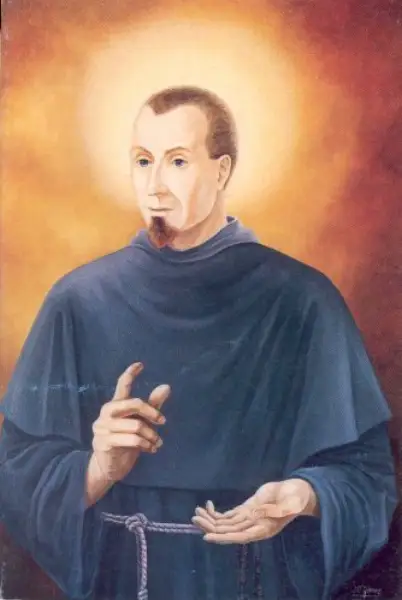
Overview
Francis Anthony Fasani, born Giovanniello Fasani at Lucera in the Kingdom of Naples on 6 August 1681, was an Italian friar of the Conventual Franciscans whose preaching and charity made him famous across Apulia. He entered the Conventual friary in his home town as a student, professed vows in 1696, and studied theology at Agnone and then at the General Study Centre in Assisi, near the tomb of St. Francis, where he was ordained a priest in 1705 alongside his friend Antonio Lucci. After completing his studies in 1707 he returned to Lucera and never left it again except in obedience to the missions. Awarded a doctorate in theology in 1709, he was known ever after as Padre Maestro, Father Master — a title Lucera still uses. He taught scholastic philosophy, directed novices and junior friars, served as guardian of the community, pastored his home town, and was elected Minister Provincial. Above all he preached: nearly forty years of fervent missions, retreats, and Lenten devotions across Apulia, Molise, and Daunia, joined to tireless work in the confessional and unstinting charity toward the poor, orphans, and prisoners. He died at Lucera on 29 November 1742, was beatified in 1951, and was canonized by John Paul II in 1986.
The Complete Life
The Boy from Lucera
Giovanniello Fasani was born on 6 August 1681 in Lucera, an old fortified town in the Province of Foggia, at that time within the Kingdom of Naples. His parents, Giuseppe Fasani and Isabella della Monaca, raised him in a region where Conventual Franciscans were a familiar presence, and the friary in Lucera itself became the boy's school: he began his studies at the Conventual house in his own town, and it was there, among the friars who taught him, that he decided to enter the order. He took the religious names of Francis and Anthony, honoring the Poverello of Assisi and the great Paduan preacher whose ministries would foreshadow his own, and in 1696, at fifteen, he professed his religious vows. The pattern of his whole life is visible already in that beginning: he never really left Lucera, and Lucera never really left him. The town that first educated him would one day bury him, take him as its patron, and still keep the title — Padre Maestro — that he earned a decade later. His boyhood gave him a Franciscan formation in miniature, rooted in one friary, one town, and one unbroken affection.
§ Early life
Studies at Assisi and the Priesthood
Professed at fifteen, Fasani was sent south to Agnone, in the Molise hills, to begin his theological studies, and from there to the General Study Centre at Assisi — the Conventual order's great school, standing close to the tomb of St. Francis himself. In that setting, at the cradle of the Franciscan movement, he was raised to the priesthood in 1705. Ordained with him, by a providence the order would later savor, was another Conventual friar, Antonio Lucci; the two became close friends, and decades later Lucci, by then a bishop, would testify at Fasani's canonization proceedings. Fasani remained at Assisi to complete his theological formation, finishing his studies in 1707. Two years later, in 1709 he took his doctorate in theology, and from that time the friars and faithful alike called him Padre Maestro — Father Master — the name by which Lucera knows him to this day. He had left home as a boy and returned as a doctor of the Church's learning: a teacher of scholastic philosophy, soon to be entrusted with the formation of the order's novices and its junior professed friars, and destined for every office the province could give.
§ Religious life
Fervent Preaching Across Apulia
From 1707 to his death in 1742 Fasani made his home in Lucera, and his ministry radiated from there across Daunia and Molise until he was famous throughout Apulia. The heart of that ministry was the word: for nearly forty years he preached constantly, conducting popular parish missions in his own town and wherever he was asked, giving retreats, and leading Lenten devotions and novenas that emptied into the confessional. The sacraments were his other pillar. He brought particular zeal to the sacrament of Penance and to the celebration of the Eucharist, regarding them as a share in the priestly mission Christ exercises unceasingly in the liturgy. A witness at his cause described the confessional scene plainly: he heard the confessions of every sort of penitent with unfailing patience and a kindly face. And the preaching was joined to works of mercy. He proved a steadfast friend of the poor, forever hunting down the money needed to meet their needs, and his charity embraced orphans and prisoners alongside the destitute of the countryside. He promoted devotion to Our Lady Immaculate wherever he preached, planting a Marian devotion that outlived the missions themselves by centuries.
§ Religious life
The Mystic of the Confessional
His contemporaries ranked Fasani among the mystics. He was known for a deep life of prayer, and it was reported by those who knew him that he would levitate while at prayer — the kind of phenomenon that drew crowds to him as confessor and preacher, and that his own order recorded without embarrassment. But the extraordinary gifts rested on an ordinary and demanding program: constant prayer, tireless sacramental ministry, and a deliberate gentleness. He justified his kindness to sinners with an admission he hoped one day to offer the Lord himself: that his indulgence toward sinners had been learned from Christ. It was a theology of mercy drawn directly from the Gospel — the master teaching the servant to forgive — and he practiced it at the cost of endless hours in the confessional, where his patience never visibly failed. Devotion to Our Lady Immaculate anchored his interior life, centuries before the dogma of the Immaculate Conception was defined. His charity completed the picture: the mystic of Lucera was also the man who hunted down money for the poor and never let a prisoner be forgotten, holding prayer and almsgiving in a single grip.
§ Religious life
The Saint Is Dead
Fasani carried his double burden — the offices of the order and the missions of Apulia — almost to the end. In the Franciscan hierarchy he had served as master of novices and of the junior professed friars, as guardian of the community, as pastor of his home town, and finally as Minister Provincial, elected to govern the whole province. Yet he kept preaching and hearing confessions throughout, so that his final decades were as crowded as his first. He died at Lucera on 29 November 1742, at sixty-one, and was buried in the parish church of the town that had borne him. What happened next entered Franciscan memory permanently: at the news of his death, children came running through the streets shouting that the saint was dead — the saint was dead! A town does not canonize its own pastor that quickly by accident; the verdict of the children was simply the public form of what Apulia had concluded across forty years of missions, confessions, and quiet alms. The tomb in the parish church became at once a place of invocation, and the cause that followed would rest on the testimony of the region he had served.
§ Religious life
Two Centuries to the Altars
The proceedings to open the cause began several years after his death, and the witnesses were the people of the region itself — among them his old friend and fellow student Antonio Lucci, who by then had become a bishop and would himself one day be beatified. But the process stalled: though the testimony was gathered, progress did not take place until the twentieth century. The delay did the cause no harm, for the memory in Lucera never cooled. On 15 April 1951 Pope Pius XII beatified him, and on 13 April 1986 Pope John Paul II canonized him, enrolling the Padre Maestro among the saints during the great spring of Franciscan causes of that pontificate. The Franciscan Order keeps his feast on 29 November, the anniversary of his death. From a boy professing vows at fifteen to a canonized saint two centuries later, his cause traced the whole arc of the modern process: local acclaim, an early and interrupted diocesan process, a long wait, and finally the judgment of Rome confirming what the children of Lucera had shouted in the streets in 1742.
§ Veneration
Padre Maestro Forever
Few saints remain so completely the possession of one town. Lucera keeps Fasani as its patron, celebrates his feast on 29 November, and still attributes to him the title Padre Maestro — Father Master — more than three centuries after he earned the doctorate that inspired it. The Conventual Franciscans count him among the glories of their order, a friar who held nearly every office the province could confer and who used each of them to preach more, confess more, and give more away. His special devotions took root wherever he labored: the promotion of Our Lady Immaculate that marked his preaching helped prepare the Marian climate of southern Italy, and the tradition of parish missions he served for forty years continued as a backbone of popular religion in Apulia, Daunia, and Molise. John Paul II held him up in 1986 as a model for confessors and preachers — the very roles for which witnesses had praised his patience and kindness. And the story the town still tells best is the smallest one: children running through the streets in November 1742, shouting the news before any tribunal had ruled, because everyone already knew.
§ Veneration
Timeline
- 6 Aug 1681
Born Giovanniello Fasani at Lucera, son of Giuseppe Fasani and Isabella della Monaca.
§ Early life
- 1696
Professed religious vows with the Conventual Franciscans, having begun his studies at the friary in his home town and taken the names Francis and Anthony.
§ Early life
- 1705
Ordained to the priesthood at Assisi, near the tomb of St. Francis, together with his friend the friar Antonio Lucci.
§ Religious life
- 1707
Completed his theological studies at the General Study Centre in Assisi and took up residence in his hometown of Lucera.
§ Religious life
- 1709
Received the degree of Doctor of Theology, becoming known thereafter as Padre Maestro, Father Master.
§ Religious life
- 29 Nov 1742
Died at Lucera and was laid to rest in the parish church there, while children ran through the streets crying that the saint was dead.
§ Religious life
- 15 Apr 1951
Beatified by Pope Pius XII after the cause, opened in the eighteenth century, finally advanced in the twentieth.
§ Veneration
- 13 Apr 1986
Canonized by Pope John Paul II.
§ Veneration
In Their Own Words
I was indulgent, I don't deny it; but it was You who taught me to be so.
The Record
- Major works
- Nearly forty years of parish missions, retreats, Lenten devotions, and novenas across Apulia, Daunia, and Molise·Teaching of scholastic philosophy and formation of novices and junior professed friars·Ministry of the confessional and the celebration of the Holy Eucharist·Fundraising and material support for the poor, orphans, and prisoners·Promotion of devotion to Our Lady Immaculate
- Patron of
- patron saint of Lucera
- Symbols
- Conventual Franciscan habit
- Canonization
- Beatified 15 April 1951 by Pope Pius XII; canonized 13 April 1986 by Pope John Paul II
Prayer
Bibliography
Show 6 sources
- "Saint Francis Anthony Fasani". Capuchin Franciscan Friars Australia.
- "Francis Anthony Fasani". Vatican News Service.
- "Blessed Antonio Lucci". Santi e Beati. Retrieved 26 October 2016.
- "Saint Francesco Antonio Fasani". Franciscan Media.
- "St. Francesco Antonio Fasani". Catholic News Service.
- "Saint Francesco Antonio Fasani". Patron Saint Index. Archived 2009-06-22 at the Wayback Machine.
Profile text adapted from the Wikipedia article, licensed CC BY-SA 4.0.
Pray with this saint every day
Save St. Francis Anthony Fasani to your favorites, read the full profile, and get feast-day reminders in the Saints app.
Get the Saints AppFree on the App Store for iPhone and iPad