
1839-1900·Feast July 9
St. Francis Fogolla
Bishop and Martyr
Overview
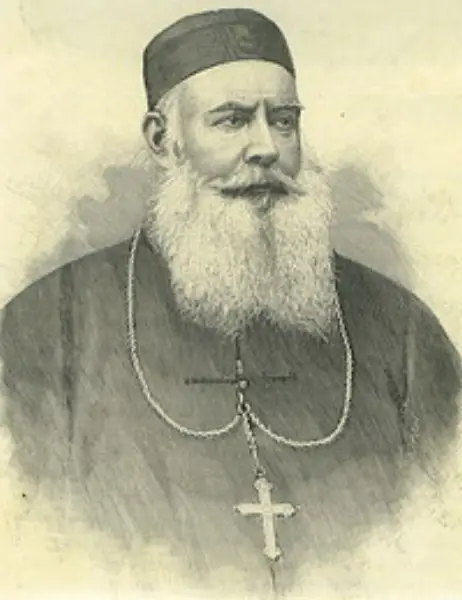
Francesco Antonio Domenico Fogolla, born to Gioacchino and Elisabetta Ferrari at Mulazzo in Tuscany on 4 October 1839, entered the Order of Friars Minor at seventeen and was ordained in September 1862 after novitiate interrupted by illness. Volunteering for the missions, he reached China in May 1867 and spent his first years among roughly seven hundred Catholics at Datong; a public sermon there even cost him two days in jail in 1870. He mastered Chinese, served across Shanxi at posts including Pingyao, and in 1877 became Coadjutor Vicar Apostolic of Southern Shanxi, with over thirteen thousand Catholics in his care. When the law made priests legal defenders of their flock, he proved a gifted advocate, winning full educational rights for Christians, and he preached at the first Chinese regional synods in 1880. Later rector of the Shanxi major seminary at Taiyuan, he built an orphanage beside it. Named titular bishop and coadjutor of Shanxi in June 1898 while in Europe for the Turin exhibition, he returned with new missionaries and nuns in May 1899. As the Boxer Rebellion spread, Yuxian's tribunal condemned him after a sham trial, and on 9 July 1900 the governor put him to death by the sword at Taiyuan.
The Complete Life
Early Life
Francesco Antonio Domenico Fogolla was born at Mulazzo in Tuscany on 4 October 1839, the son of Gioacchino Fogolla and Elisabetta Ferrari. He entered the Order of Friars Minor on 1 November 1856 at the abbey of Santa Maria del Monte, but on 14 September 1857 fell ill and was sent to live with his parents, who had by then moved to Parma. On recovery he resumed his novitiate and was ordained a priest on 19 September 1862.
§ Early life
Conversion and Vocation
In 1866 Fogolla asked to become a missionary, and on 13 December of that same year approval for service came from the Congregation for the Evangelization of Peoples. His arrival in China followed on 30 May 1867. The step moved him from a Tuscan Franciscan province to the Shanxi vicariate, where the Franciscans had carried the mission since the seventeenth century and where the position of Christians depended on the favour or hostility of the provincial officials.
§ Mission
Mission and Ministry
His first permanent assignment was the Datong mission, which he reached in December 1867; there he pastored a Catholic community numbering about seven hundred. He preached in public, and in 1870 the practice cost him two days in prison on the suspicion that his sermons caused street riots. Over the following seven years he served across Shanxi, including Pingyao, where he developed exceptional skill in Chinese. In 1877, when the Shanxi vicariate was divided in two, he was appointed Coadjutor Vicar Apostolic of Southern Shanxi, a charge of some 13,150 Catholics with seventeen European missionaries and fifteen Chinese priests. In 1879, with Roman and local support, he began the church of the Sacred Heart at Changzhi, consecrated in September 1884 and later the cathedral of the Lu'an/Changzhi diocese. When the law made priests legal defenders of those under their pastoral care, he became a skilled advocate, successfully defending the full educational rights of Christians and their access to public office; on 6 June 1880 he was chief preacher at the first Chinese regional synods. September 1885 brought him the rectorship of the Shanxi major seminary in Taiyuan, along with a professor's chair; he oversaw twenty students and built an orphanage. On 28 June 1898 came appointment as titular bishop of Bageis and as coadjutor to the bishop of Northern Shanxi. Having spent more than thirty years there, he left China in November 1897 for Turin, returning to Taiyuan on 4 May 1899 with eight new nuns and nine new missionaries.
§ Mission
Trial and Final Years
The Boxer year found him at Taiyuan. Yuxian, the governor of Shanxi, whom a contemporary described as a fanatic animated by ferocious hatred of Christians and Europeans, implemented harsh legislation against foreigners, Catholics, Protestants and Orthodox alike. From May 1900 the Christians of Shanxi were accused of bringing rats into the towns, of violence against children, of desecrating corpses and selling Chinese children into slavery in Europe; Fogolla was among those who defended them in court, to little avail. On 2 July 1900 more than two hundred orphans were seized from the seminary orphanage and imprisoned. On the night of 5 July an army of Boxers took Fogolla, Bishop Gregorio Grassi, and all the friars, seminarians and servants from the Taiyuan mission; after a fixed trial the whole group was convicted. On 9 July 1900 Fogolla, hands bound behind his back, was brought before Yuxian, a second summary trial confirmed the sentences, and he was put to death with the rest at the Taiyuan Massacre, sixty years old.
§ Death
Canonization
The martyrs of Taiyuan entered the cause of the Chinese martyrs as a group. Fogolla was beatified by Pius XII in November 1946 and canonized by John Paul II on 1 October 2000 among the Martyr Saints of China. His feast is kept on 9 July, the day of the massacre.
§ Introduction
Legacy
Fogolla's thirty-three years in Shanxi cover the whole arc of the late Qing missions: preaching that could cost imprisonment, the building of churches and seminaries, legal defense of Christian rights under the new statutes, and the catastrophe of 1900. The seminary and orphanage he directed at Taiyuan, and the companies of missionaries and nuns he recruited in Italy, were the immediate setting of his death, which made him one of the best-known figures of the Taiyuan group. He is invoked as patron of booksellers.
§ Introduction
Timeline
- 4 Oct 1839
Born Francesco Antonio Domenico Fogolla in the Tuscan town of Mulazzo.
§ Early life
- 1 Nov 1856
Admitted into the Order of Friars Minor at the Abbey of St Maria del Monte.
§ Early life
- 14 Sep 1857
Fell ill and was sent to live with his parents, then settled in Parma.
§ Early life
- 19 Sep 1862
Ordained a priest after resuming his novitiate.
§ Early life
- 13 Dec 1866
The Congregation for the Evangelization of Peoples approved his request to serve as a missionary.
§ Mission
- 30 May 1867
Arrived in China, later taking up his first permanent post at the Datong missions that December.
§ Mission
- 1870
Imprisoned for two days after public preaching was blamed for street riots.
§ Mission
- 1877
Appointed Coadjutor Vicar Apostolic of Southern Shanxi, overseeing 13,150 Catholics.
§ Mission
- 1879
Began building a church dedicated to the Sacred Heart at Changzhi with backing from Rome and local laity.
§ Mission
- 6 Jun 1880
Served as chief preacher when the first Chinese regional synods convened.
§ Mission
- 8 Sep 1884
Was present when the Church of the Sacred Heart, later the cathedral of Lu'an/Changzhi, was consecrated.
§ Mission
- 28 Sep 1885
Named to lead and teach at Shanxi's major seminary in Taiyuan, where he also oversaw an orphanage.
§ Mission
- 2 Nov 1897
Sailed from China for Turin, his first return to Europe in more than three decades.
§ Mission
- 28 Jun 1898
Received in Paris his appointment as titular bishop of Bageis and as coadjutor of the Shanxi mission.
§ Mission
- 12 Mar 1899
Departed Marseille for China with eight new nuns and nine new missionaries.
§ Mission
- 4 May 1899
Returned to Taiyuan to resume mission work.
§ Mission
- 5 Jul 1900
Boxers stormed the Taiyuan Mission by night and carried off Fogolla, Bishop Grassi, and the friars and seminarians.
§ Death
- 9 Jul 1900
Killed in the Taiyuan Massacre after a second false trial confirmed the death sentences during the Boxer Rebellion.
§ Introduction
- 24 Nov 1946
Beatified by Pope Pius XII together with his companions Grassi and Fantosati.
§ Veneration
- 25 Feb 1949
The cause for the canonization of the blessed martyrs was opened.
§ Veneration
- 1 Oct 2000
Declared a saint by Pope John Paul II.
§ Veneration
The Record
- Symbols
- Franciscan habit·Bishop's cross of the Shanxi mission
- Canonization
- Beatified by Pope Pius XII on 24 November 1946; canonized by Pope John Paul II on 1 October 2000 among the Martyr Saints of China
Prayer
Bibliography
Show 9 sources
- ↑ "Bishop St. Francesco Antonio Domenico Fogolla, O.F.M." Catholic Hierarchy .
- 1 2 3 4 5 6 Giuseppe, Brancaccio. "FOGOLLA, Francesco" . Treccani (in Italian).
- ↑ Valli, Mario (1905). Gli avvenimentiin Cina nel 1900 e l'azione della R. Marina italiana (in Italian). Milan: Urico Hoepli. p. 192.
- ↑ Garcia Jordan, Pilar (22 September 2014). "UNA REPRESENTACIÓN VISUAL DE LOS CHIRIGUANO EN LA EXPOSICIÓN MISIONAL DE TURÍN, 1898". Hispania Sacra (in Spanish). 68 : 736– 739.
- ↑ "Bishop St. Grégoire Grassi, O.F.M. Obs" . Catholic Hierarchy .
- ↑ Manini qtd. in Valli, Mario (1905). Gli avvenimenti in Cina Nel 1900 e l'azione della R. Marina Italiana . Milan. p. 236. {{ cite book }} : CS1 maint: location missing publisher ( link )
- ↑ Valli, Mario (1905). Gli avvenimentiin Cina nel 1900 e l'azione della R. Marina italiana . Milan. pp. 258– 259. {{ cite book }} : CS1 maint: location missing publisher ( link )
- ↑ Valli, Mario (1905). Gli avvenimentiin Cina nel 1900 e l'azione della R. Marina italiana . Milan. p. 260. {{ cite book }} : CS1 maint: location missing publisher ( link )
- 1 2 Index ac status causarum beatificationis servorum dei et canonizationis beatorum (in Latin). Typis polyglottis vaticanis. January 1953. p. 87.
Profile text adapted from the Wikipedia article, licensed CC BY-SA 4.0.
Pray with this saint every day
Save St. Francis Fogolla to your favorites, read the full profile, and get feast-day reminders in the Saints app.
Get the Saints AppFree on the App Store for iPhone and iPad