
1743 – 1815·Feast January 31
St. Francis Xavier Bianchi
Barnabite scholar and Apostle of Naples
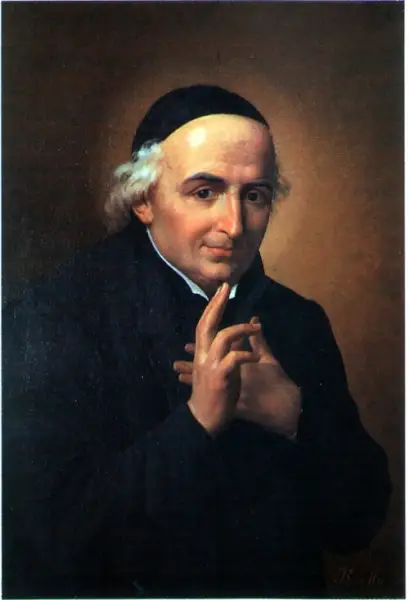
Overview
Francis Xavier Mary Bianchi, born at Arpino in the Papal States on 2 December 1743, was an Italian Barnabite priest, celebrated scholar, and the man the Catholic Church has declared Apostle of Naples. Raised by a pious mother who ran a small clinic for the needy in the family home, he resisted a pious boyhood, later admitting he pilfered from his parents, and at fifteen was packed off to a minor seminary at Nola while he studied law at Naples. Under the spiritual direction of Alphonsus de Liguori his vocation settled: he entered the Barnabite novitiate at Zagarolo in 1762, professed vows the next year, and was ordained a priest in 1767 after studies at Macerata, Rome, and Naples. For twelve years he superior-ed the College of Santa Maria in Cosmedin at Portanova, then spent the rest of his life at the monastery of Santa Maria di Caravaggio, while holding a professorship from 1778 and membership in a royal academy. Director and confessor to St. Mary Frances of the Five Wounds, he was the center of a golden circle of Neapolitan holiness. A Pentecost ecstasy in 1800 left him with twisted, ulcerated legs; he presided at daily Mass in agony until his death on 31 January 1815, and was canonized in 1951.
The Complete Life
A Thief Who Became a Saint
Francesco Saverio Maria Bianchi was born on 2 December 1743 at Arpino in Lazio, then a town of the Papal States, to a loving and pious family. His mother formed him chiefly by example: she opened a small clinic in the family house where she personally nursed as many as sixteen needy people, teaching her son from infancy that the poor had first claim on the household. The boy did not live up to it. He was, by his own later confession, far from a standard pious child — he admitted that he would now and then pilfer money from his parents. What changed him was neither punishment nor sudden conversion but a slow, steady resolve to master his own will, the ascetic program that would define his whole life. As he grew he sensed a religious calling, which his parents, faithful themselves, at first resisted; they enrolled the fifteen-year-old in a minor seminary at Nola while letting him begin the study of law at the University of Naples Federico II — two roads running side by side. During those years he came under the spiritual guidance of Alphonsus de Liguori, founder of the Redemptorists, and by the time he finished the seminary in 1762, his parents at last gave way.
§ Early life
The Barnabite Scholar
In 1762, the year he finished the seminary, Bianchi was admitted by the Barnabite Order to their novitiate at Zagarolo and professed vows the following year. His superiors sent him through the full circuit of Barnabite learning: philosophy and theology first at Macerata, then at Rome, and finally at Naples, where priestly ordination came in 1767. Before that ordination he had already returned to teach at the Barnabite college in his hometown of Arpino, the schoolboy now master of the schoolroom. His administrative gifts showed at once: he was immediately appointed Superior of the Santa Maria in Cosmedin college at Portanova, an office he filled for twelve years. His superiors then assigned him to the Barnabite monastery adjoining the church of Santa Maria di Caravaggio at Naples, his home for the rest of his life. In 1778 came academic honors of the first rank: appointment as a professor at Regia University, now the University of Palermo, and membership in the kingdom's Royal Academy of Science and Letters. He wore his learning with the order's old double vocation — the Barnabites being clerics regular, priests who joined scholarship with parish-style ministry — and Naples would receive both halves in full measure.
§ Barnabite
Apostle of a City of Saints
Naples in the late eighteenth century was a crucible of holiness, and Bianchi stood at its center. He became spiritual director and confessor to the Franciscan tertiary Mary Frances of the Five Wounds, who lived amid one of the city's most crime-plagued neighborhoods and is honored today as a saint herself; around him gathered Placido Baccher, Mariano Arciero, the fellow Barnabite and student Francesco Maria Castelli, Giovanni Battista Jossa, and Agnello Coppola. He kept up frequent correspondence with Vincent Romano, another future blessed of the Naples church, and — remarkably — with King Charles Emmanuel IV of Sardinia and with his niece, Princess Maria Clotilde of Savoy, then in exile at Naples, who sought his counsel from their royal retirement. His ministry to the city's poor was constant, rooted in his mother's example and in the Barnabite ideal of apostolic service. Alongside it ran his academic mission: lectures at the university, learned correspondence in the academies, and the formation of students like Castelli. Naples responded by giving him the title it reserves for its Church-makers — Apostle of the city — a designation Leo XIII would later confirm when he raised him to the altars.
§ Barnabite
Ecstasy, Trembling, and the Two Philips
His brother Barnabites saw beneath the academic honors a deeply ascetic man: a life of austerity, a deeply contemplative prayer life, and constant concern for the poor of whatever city he lived in. The mystical element broke into the open in 1800, when mystical ecstasy took hold of him in prayer before the exposed Blessed Sacrament at Pentecost. The grace left a wound: shortly afterward an illness developed that twisted his legs and left open sores that never healed. His prayer now carried a bodily signature — he began to tremble and to suffer huge palpitations of the heart whenever he prayed, in a manner strikingly similar to St. Philip Neri two centuries before. The parallel did not escape his friends: Mary Frances of the Five Wounds observed that the city now had two Philips, one white and one black, a pun on their Italian family names, Bianchi and Neri. He accepted the comparison with the humility that had begun when he confessed his boyhood thefts, and it became part of Neapolitan devotion. His spirituality joined the Barnabite intellectual tradition to a mysticism of suffering, taught not from a lectern but from a sickbed, where he deepened his inner life even as his body failed.
§ Barnabite
The Standing Mass
The last fifteen years of Bianchi's life tested everything his earlier asceticism had built. After the Pentecost ecstasy of 1800, his twisted, ulcerated legs made walking an ordeal, and he was mostly bedridden — yet he refused to surrender the altar. Through the last three years remaining to him he kept presiding each day at Mass, though standing through the rite was an agony, offering the pain as part of the sacrifice, and using the hours between liturgies to deepen his spiritual life still further. The world added its own trials. In 1809 the Napoleonic Kingdom of Naples suppressed all monasteries and religious houses, and the Barnabite monastery where he lay ill was closed; he was permitted to remain in the city, a stateless religious in his own home, and there he died on 31 January 1815, at seventy-one. He had outlived his century, the kingdom that had honored him, and the religious liberty of his order, dying as the occupying powers departed and the Congress of Europe reassembled. Naples, which had watched him stand daily in agony at the altar, regarded his death as the passing of its apostle, and the Church in the city began at once to remember him as one.
§ Barnabite
Leo XIII's Apostle, Pius XII's Saint
The cause of the Barnabite of Naples succeeded on the momentum of the city's devotion. On 22 January 1893, Pope Leo XIII beatified him in Rome, and with the beatification Leo also formally declared him the Apostle of Naples, ratifying with the Church's authority the title the city had used for decades. The twentieth century completed the work: on 21 October 1951, Pope Pius XII canonized him in Rome, enrolling among the saints the scholar-confessor who had linked Liguori's generation to the Neapolitan spring of the nineteenth. His remains lie enshrined at the Neapolitan church of Santa Maria di Caravaggio, the monastery church where he had spent most of his priesthood and where the faithful had venerated him even before his death. The Barnabites and the Catholics of Naples celebrate his feast on January 30, while the calendar of his death, January 31, marks the day in the universal record. The stretch from beatification to canonization — fifty-eight years — spanned two world wars, and the canonization of 1951 presented him to a shattered Europe as a model of learning joined to suffering, the professor who preached best from a bed of pain.
§ Veneration
Naples Keeps Its Apostle
Bianchi's legacy is bound to the city he served for half a century. He is honored in the Roman Catholic Church particularly by the Barnabite Order and the Archdiocese of Naples, and the title Apostle of Naples, bestowed by Leo XIII, remains his defining epithet — carved into the memory of a city that has produced few saints of his intellectual rank. His shrine at Santa Maria di Caravaggio draws the faithful of the neighborhoods he once visited, and his feast in late January keeps him in the Neapolitan cycle of holy men and women that includes his own directee, Mary Frances of the Five Wounds, canonized like him in the twentieth century. His circle of friends reads like a litany — Baccher, Arciero, Castelli, Jossa, Coppola, Romano — a network of directors, confessors, and correspondents through whom his influence entered countless other causes. For the Barnabites he remains the exemplar of their dual vocation, the priest-scholar whose academy medals weighed less than his care for the poor. And for every gifted young person tempted to theft of soul — ambition without surrender — his life stands as the record of a will conquered slowly, at fifteen, at thirty, at sixty, until agony itself became prayer.
§ Veneration
Timeline
- 2 Dec 1743
Born at Arpino in Lazio, at the time within the Papal States, to a loving and pious family.
§ Early life
- 1762
Completed the seminary after his parents relented, and was admitted to the Barnabite novitiate at Zagarolo.
§ Barnabite
- 1763
Professed religious vows as a member of the Barnabite Order.
§ Barnabite
- 1767
Ordained a priest in Naples after studies of philosophy and theology at Macerata, Rome, and Naples.
§ Barnabite
- 1778
Appointed professor at Regia University and elected to the kingdom's Royal Academy of Science and Letters.
§ Barnabite
- 1800
Fell into mystical ecstasy during prayer before the exposed Blessed Sacrament at Pentecost; a crippling illness followed soon after.
§ Barnabite
- 1809
The Barnabite monastery in Naples where he lived was closed under the suppression of religious houses in the Napoleonic Kingdom of Naples, though he was allowed to remain in the city.
§ Barnabite
- 31 Jan 1815
Died in Naples at the age of seventy-one.
§ Veneration
- 22 Jan 1893
Beatified by Leo XIII, who with the beatification declared him the Apostle of Naples.
§ Veneration
- 21 Oct 1951
Canonized by Pope Pius XII in Rome.
§ Veneration
The Record
- Major works
- Twelve years as Superior of the College of Santa Maria in Cosmedin in Portanova·Professorship at Regia University from 1778 and membership in the Royal Academy of Science and Letters·Spiritual direction and confessorship of Mary Frances of the Five Wounds·Ministry to the poor of Naples from the monastery of Santa Maria di Caravaggio·Teaching at the Barnabite college in his hometown of Arpino
- Patron of
- honored as Apostle of Naples
- Symbols
- Barnabite clerical habit·crucifix of the Neapolitan confessor
- Canonization
- Beatified 22 January 1893 by Pope Leo XIII, who named him Apostle of Naples; canonized 21 October 1951 by Pope Pius XII
Prayer
Bibliography
Show 3 sources
- Butler, Alban, Herbert Thurston, and Donald Attwater (1956). Butler's Lives of Saints: Vol. 1. Christian Classics. ISBN 9780870611377.
- "San Francesco Saverio Maria Bianchi". Santi e Beati (in Italian).
- "Venerabile Francesco Maria Castelli". Santi e Beati (in Italian).
Profile text adapted from the Wikipedia article, licensed CC BY-SA 4.0.
Pray with this saint every day
Save St. Francis Xavier Bianchi to your favorites, read the full profile, and get feast-day reminders in the Saints app.
Get the Saints AppFree on the App Store for iPhone and iPad