
1623 – 1708·Feast May 6
St. François de Laval
First bishop of Quebec and father of the Canadian Church
Overview
François de Laval, born François de Laval de Montmorency, stands as the planter of the Catholic faith in New France. He first saw light in 1623 at Montigny-sur-Avre in the French province of Perche to a noble but not wealthy family of the House of Laval, he received the tonsure at eight, studied at the Jesuit College of La Flèche, and renounced his rights as heir so that he might pursue an ecclesiastical career. Ordained a priest in 1647, he served as archdeacon of Évreux, overseeing some 155 parishes, before resigning in 1654 in hope of Asian missionary work that never materialized. Three years of retreat at the Hermitage of Caen formed his spirituality. On 8 December 1658 he was consecrated titular bishop of Petra and apostolic vicar of New France, landing at Quebec on 16 June 1659. For fifteen years he governed the colony's church as vicar, battling the liquor trade with the Indigenous peoples, founding the Major Seminary of Quebec in 1663, and helping constitute the Sovereign Council. In 1674 the vicariate was raised to the Diocese of Quebec and Laval became its first bishop. Broken in health, he resigned in 1688 but kept working among the poor of the colony until his death at Quebec on 6 May 1708. Pope Francis canonized him in 2014.
The Complete Life
A Noble Boy of Perche
François de Laval de Montmorency was born on 30 April 1623 at Montigny-sur-Avre, in the old province of Perche, and baptized the same day in the parish church of St. Martin. His father, Hugues de Laval, was Seigneur of Montigny, Montbaudry, Alaincourt and Revercourt; his mother, Michelle de Péricard, came from a family of hereditary royal officers in Normandy and was the sister of the bishop of Évreux. Though of illustrious lineage, the family was not rich. The boy was named for Francis Xavier, canonized the year before his birth, and his mother's piety and insistence on charity toward the poor left a permanent mark on him. Admitted to the Jesuit Congregation of the Holy Virgin, he received the tonsure and minor orders at eight and entered the College of La Flèche in 1631, where accounts of the Jesuit missions to the Huron in Canada planted in him the dream of becoming a missionary like his patron. In 1637 he was made a canon of Évreux; the prebend funded his studies after his father's death left the family straitened. The loss of his two eldest brothers in battle made him head of the family, and his mother, his uncle-bishop and a cousin all pressed him to abandon the clerical path. He refused, settled the family's affairs, renounced his rights of primogeniture in favour of his brother Jean-Louis, and returned to Paris, where he was ordained on 1 May 1647. Appointed archdeacon of Évreux that December, he administered 155 parishes with such fervour that the bishop of Bayeux later praised his piety and his unusual competence in business affairs. In 1654 he resigned to seek missionary work in Asia; when the project collapsed, he spent three years in retreat at the Hermitage of Caen founded by Jean de Bernières-Louvigny, reforming monasteries and serving the poor.
§ Early life
Vicar Apostolic of a Mission Church
New France had existed for half a century without a bishop. Spiritual affairs had been run by Recollects and Jesuits, and since 1646 nominally under the Archbishop of Rouen, whose authority amounted to little more than granting faculties to travelling clergy. When the question of appointing a bishop finally matured, the Jesuits and the newly arrived Sulpicians each put forward a candidate: the Sulpicians proposed Gabriel de Queylus, while the Jesuits backed Laval and easily secured royal approval through the queen mother, Anne of Austria. Rome, however, hesitated to set a French diocese down in the colony; the missionary congregation in Rome wanted the young church kept under its own immediate hand. On 3 June 1658 the papal bulls therefore named Laval not bishop of New France but vicar apostolic, with the title of bishop of the ancient abandoned see of Petra in Palestine. His consecration followed at Paris on 8 December 1658, in the abbey church of Saint-Germain-des-Prés, at the hands of Cardinal Celio Piccolomini, the papal nuncio, two bishops assisting. After swearing loyalty to the king, he sailed from La Rochelle on 13 April 1659 and reached Quebec on 16 June, where his ministry began before he had even unpacked: that very day he baptized a young Huron and brought the last sacraments to a dying man. He faced at once a scattered, thinly settled population chafing under strict church discipline, and the continuing claims of de Queylus, who asserted his own jurisdiction for nearly two years before Laval's appeals to the king and the Holy See prevailed.
§ Vicariate of New France
Church, State, and the Liquor Trade
Laval's vicariate was a long struggle to defend the church's independence against the colonial state. He asserted his primacy over the governor from the moment of his arrival and quarrelled with Governor d'Argenson over protocol and, more substantively, over the trade in brandy to the Indigenous peoples, which he believed degraded them and endangered the whole colony. He threatened excommunication against those engaged in it, an intrusion into state affairs that d'Argenson abhorred. Under the next governor, d'Avaugour, harsh civil penalties replaced church censure; Laval considered excommunication the more humane remedy, and when the trade resumed openly he sailed for France in August 1662 to lay the matter before Louis XIV. He returned with his authority enlarged: the king promised him a bishopric, asked him to establish a Sovereign Council at Quebec, and even let him choose the next governor. Laval selected his friend from the Hermitage of Caen, the Chevalier de Mézy, and with him briefly allied against the liquor traffic, until council politics set the two at odds. After Mézy's death and the addition of Intendant Jean Talon, Laval withdrew from state affairs and gave himself to ecclesiastical ones. His great monument was educational: the Major Seminary of Quebec, opened on 26 March 1663 and affiliated with the Séminaire des Missions Étrangères in Paris, conceived as a true home for all the colony's priests, its paymaster and its refuge in sickness and old age. To sustain it he gave most of his own fortune and persuaded the king to grant the revenues of three French abbeys. In October 1668 he added a minor seminary for French and Indigenous boys, beginning with eight French and six Huron students, and about the same time he founded a trades school at Saint-Joachim and named his old companion Henri de Bernière to lead the seminary.
§ Vicariate of New France
Piety of a Colonial Bishop
The spirituality Laval carried to Canada had been forged in the reforming circles of seventeenth-century France. As a boy he belonged to the Congregation of the Holy Virgin, a Jesuit society that trained the young in habitual prayer, and his mother's example of practical charity toward the poor became the pattern of his whole life. The decisive school of his interior life was the Hermitage near Caen, the retreat house of Jean de Bernières-Louvigny, a lay leader of the French church's renewal. There Laval spent three years free of all office, giving himself to prayer and works of mercy, reforming a monastery whose discipline had slackened, and administering two convents of nuns. The bishop of Bayeux, François de Servien, judged him a priest of great piety and prudence who set fine examples of virtue. These years explain the bishop he became: austere with himself, exact in governance, relentless in the affairs of his church, yet personally attached to the poor. In retirement not one Mass, not one fast day slipped him even as his strength ebbed, and he went on to visit and support the needy with his presence and his gifts. He regarded the seminary he founded not as a school alone but as a spiritual household in which every priest of the colony had a lifelong place, and he wished its teachers to instil charity and love of religion rather than a new yoke of authority. His heart, literally, was left to that household: while his body was buried in the cathedral, his heart went to the chapel of the seminary, the institution on which he had lavished his life and fortune.
§ Early life
Diocese, Resignation, and a Quiet Death
In 1674, fifteen years after his arrival, Laval petitioned for the vicariate to be elevated, and on 1 October the Holy See created the Diocese of Quebec with Laval as its first bishop. He returned once more to the scourge of the brandy trade: in 1675, over the protests of Governor Frontenac, he excommunicated all who sold alcohol to the Indigenous peoples, and on 24 May 1679 his campaign bore fruit in a royal decree banning the trade outright. In 1678 he secured a royal edict providing for permanent curacies in the colony, and in 1681 he drew the boundaries of its parishes, giving the vast territory — stretching from Acadia to Lake Michigan — its enduring pastoral geography. His health, however, could no longer sustain so immense a charge. In 1688 he handed his episcopal responsibilities to Jean-Baptiste de La Croix de Chevrières de Saint-Vallier and withdrew from administration. Retirement for Laval meant neither silence nor self-care: he continued to work alongside the colony's religious authorities to the end of his life, and above all he gave himself to the poor, helping them with his personal presence and with gifts of charity drawn from what remained to him. He missed neither Mass nor a day of fasting despite his steady decline. By 1707 an ulcer had developed which could not be cured, and he died of it at Quebec on 6 May 1708, aged eighty-five. His body was laid in a coffin in the cathedral; his heart was separated and kept in the chapel of the seminary that had been the great work of his life.
§ Retirement
From Servant of God to Saint
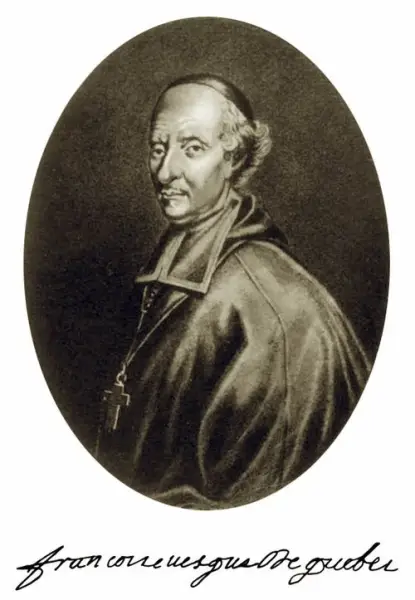
Veneration of Laval began in the cathedral where he was buried. His remains now lie in a veneration shrine within the Basilica-Cathedral of Notre-Dame de Québec. The cause opened formally on 24 September 1890, bestowing on him the title Servant of God, but the process moved slowly through the twentieth century. On 22 June 1980 Pope John Paul II beatified him in Saint Peter's Basilica, holding up to the universal Church the first bishop of Quebec. Thirty-four years later, on 3 April 2014, Pope Francis declared him a saint by equivalent canonization, in a decree promulgated at the Apostolic Palace, joining him to the ranks of the missionary saints of the Americas. His feast is kept on 6 May, the anniversary of his death, and he is honoured in particular as patron of the bishops of Canada, whose church he was considered to have founded. His attributes in iconography are simply those of a bishop: the episcopal attire of a prelate of the old regime. Pilgrims find him at the basilica in Quebec City, where his tomb remains a centre of prayer, and his memory is woven into the very geography of the province.
§ Veneration
Institutions and a Name on the Map
Few colonial churchmen left institutional monuments as durable as Laval's. The Major Seminary of Quebec, which he founded in 1663 and sustained with his own fortune, became the nursery of the French-Canadian clergy for centuries. It was renamed Université Laval in 1852 in his honour, binding his name to higher education in Canada. The minor seminary he added in 1668 to prepare French and Indigenous boys for possible priesthood, and the school of arts and crafts he established at Saint-Joachim for craftsmen and farmers, anticipated a whole tradition of Catholic education in the colony. His parochial mapping of 1681 and the royal edict of 1678 establishing permanent curacies shaped the pastoral structure of New France into the modern era. His memory is fixed on the land itself: the city of Laval, immediately north of Montreal, bears his name, alongside the university in Quebec City. Within the Catholic Church he is remembered among the missionary saints, listed with figures from Patrick of Ireland to Junípero Serra, and honoured as patron of the Canadian episcopate. Historians debate his battles with governors and intendants over the respective rights of church and state, but even the quarrels testify to the standing he won: he built in the wilderness a governed, educated, financially secure church, defended its Indigenous converts against exploitation, and did so while giving away his inheritance to the institution that outlived him.
§ Veneration
Timeline
- 30 Apr 1623
Born at Montigny-sur-Avre in Perche and baptized the same day in St. Martin's Church, named for Francis Xavier.
§ Early life
- 1631
Entered the College of La Flèche at the age of eight, where Jesuit reports of the Huron missions awakened his missionary hopes.
§ Early life
- 1637
Received a canonry at the cathedral of Évreux from its diocesan bishop.
§ Early life
- 1 May 1647
Ordained a priest in Paris after completing studies in philosophy and theology at the Collège de Clermont.
§ Early life
- Dec 1647
Named archdeacon of Évreux, with oversight of 155 parishes and four chapels.
§ Early life
- 1654
Resigned as archdeacon to pursue missionary service in Asia, a project ultimately abandoned.
§ Early life
- 3 Jun 1658
Papal bulls appointed him apostolic vicar of New France and titular bishop of Petra in Palestine.
§ Vicariate of New France
- 8 Dec 1658
Consecrated bishop at the Abbey of Saint-Germain-des-Prés in Paris by Cardinal Celio Piccolomini.
§ Vicariate of New France
- 13 Apr 1659
After swearing loyalty to the king, sailed from La Rochelle for New France.
§ Vicariate of New France
- 16 Jun 1659
Arrived at Quebec after sailing from La Rochelle, and baptized a young Huron the same day.
§ Vicariate of New France
- Aug 1662
Departed for France in despair over the liquor trade to consult King Louis XIV, returning with increased powers.
§ Vicariate of New France
- 26 Mar 1663
Opened the Major Seminary of Quebec, to which he later donated most of his personal fortune.
§ Vicariate of New France
- 18 Sep 1663
The Sovereign Council he had helped establish held its first session at Quebec.
§ Vicariate of New France
- Oct 1668
Added a minor seminary for boys of French and Indigenous origin, opening with eight French and six Huron students.
§ Vicariate of New France
- 1 Oct 1674
The Holy See established the Diocese of Quebec and named Laval its first bishop.
§ Diocese of Quebec
- 1675
Excommunicated all who sold alcohol to the Indigenous peoples, over the objections of Governor Frontenac.
§ Diocese of Quebec
- 1678
Won a royal edict from the king guaranteeing that settled pastorates would be created throughout the colony.
§ Diocese of Quebec
- 24 May 1679
Obtained a royal decree banning the liquor trade with the Indigenous peoples.
§ Diocese of Quebec
- 1681
Drew up the boundaries of the parishes of his vast diocese.
§ Diocese of Quebec
- 1688
Surrendered governance of the vast diocese to his successor, Jean-Baptiste de Saint-Vallier, because of failing health.
§ Retirement
- 6 May 1708
Died at Quebec from an ulcer; his heart was placed in the chapel of the seminary he had endowed.
§ Retirement
- 24 Sep 1890
His cause was formally opened, granting him the title of Servant of God.
§ Veneration
- 22 Jun 1980
Beatified by Pope John Paul II in Saint Peter's Basilica.
§ Veneration
- 3 Apr 2014
Canonized by Pope Francis in the Apostolic Palace by equivalent canonization.
§ Veneration
The Record
- Major works
- Séminaire de Québec (Major Seminary, 1663)·Minor seminary of Quebec (1668)·School of arts and crafts at Saint-Joachim·Diocese of Quebec
- Patron of
- Bishops of Canada
- Symbols
- Episcopal attire
- Canonization
- Cause opened 24 September 1890; beatified by John Paul II on 22 June 1980; canonized by Pope Francis on 3 April 2014 by equivalent canonization.
Prayer
Bibliography
Show 8 sources
- Bégin, Émile (1959). François de Laval. Quebec: Presses Universitaires Laval.
- Campeau, Lucien (1973). "Mgr de Laval et le Conseil souverain 1659–1684". Revue d'Histoire de l'Amérique Française. 27 (3): 323–359.
- Choquette, Robert (2004). "The Development of the Catholic Church". Canada's Religions. Ottawa: University of Ottawa Press.
- Leblond de Brumath, Adrien (1906). Bishop Laval. Toronto: Morang & Co.
- Walsh, Henry Horace (1966). The Church in the French era from colonization to the British conquest. Toronto: Ryerson Press.
- Langevin, Edmond (1874). Notice biographique sur François de Laval de Montmorency: 1er évêque de Québec. La Compagnie d'impression et de publication de Lovell.
- Vachon, André. "Laval, François de". The Dictionary of Canadian Biography Online.
- Grandbois, Michèle (2025). Quebec City Art & Artists: An Illustrated History. Toronto: Art Canada Institute.
Profile text adapted from the Wikipedia article, licensed CC BY-SA 4.0.
Pray with this saint every day
Save St. François de Laval to your favorites, read the full profile, and get feast-day reminders in the Saints app.
Get the Saints AppFree on the App Store for iPhone and iPad