
1739 – 1822·Feast May 11
St. Anthony of St. Ann Galvão
Franciscan friar and first Brazilian-born saint
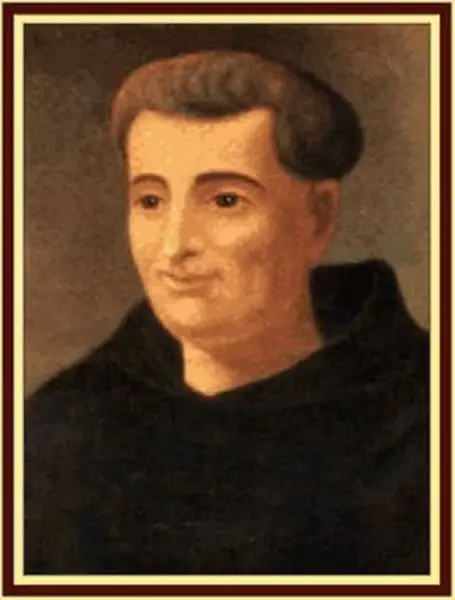
Overview
Anthony of St. Ann Galvão, universally known as Frei Galvão, was a Franciscan friar of colonial Brazil whose reputation for holiness made him one of the best-known religious figures of his country. Born at Guaratinguetá on 13 May 1739, the fourth of ten children in a prominent and devout family, he studied with the Jesuits at Colégio de Belém in Bahia before anti-Jesuit persecution under the Marquis of Pombal steered him into the Franciscan Order. He professed solemn vows in 1761, adding a personal vow to defend the doctrine of the Immaculate Conception, and was ordained a priest in 1762. His ministry in São Paulo embraced preaching, confession, and above all the direction of a community of women Recollects, whose house, Our Lady of the Conception of Divine Providence, he founded in 1774 with the visionary Helena Maria of the Holy Spirit and led for nearly half a century. The church he raised for them took twenty-eight years to complete. Renowned for prayer, mystical phenomena, and his famous paper pills bearing a Latin invocation of Our Lady, he died at São Paulo on 23 December 1822. Declared Venerable in 1997 and beatified in 1998, he was canonized by Pope Benedict XVI in São Paulo on 11 May 2007 — the first saint born in Brazil.
The Complete Life
A Son of Guaratinguetá
Antônio de Sant'Anna Galvão was born on 13 May 1739 in the parish of Santo Antonio of Guaratinguetá, in the captaincy of São Paulo, into a family that joined high social and political standing to deep religious practice. He was the fourth of ten children. His father, Antônio Galvão de França, captained the village; active in politics and commerce, he nonetheless belonged to the Third Order of Saint Francis and was noted for generosity. His mother, Isabel Leite de Barros, came from a farming family and counted the famed bandeirante explorer Fernão Dias Pais, the 'Emerald Hunter', among her great-grandfathers. Eleven children she had borne when she died young in 1755, only thirty-eight years old, and the family discovered at her death that she had given away every garment she owned to the poor. Their son's path to the altar was prepared early: at thirteen his father sent him to the Jesuit-run Colégio de Belém in Cachoeira, Bahia, where his brother José was already studying, and there, between 1752 and 1756, he advanced in the humanities and in Christian practice. He aspired to join the Jesuits himself, but the persecution of the order mounted by Sebastião José de Carvalho e Melo, the Marquis of Pombal, closed that door; on his father's advice he turned instead to the Franciscans.
§ Early life
Into the Franciscan Habit
At sixteen Galvão walked away from a promising worldly future and his family's social influence, entering the novitiate of the St. Bonaventure Friary in Vila de Macacu, in Rio de Janeiro. There he took the religious name Anthony of Saint Ann, honouring the devotion to Saint Ann practised in his family. His novice masters found in him piety, zeal and exemplary virtue, and on 16 April 1761 he professed solemn vows, appending to them a personal vow to defend the title of the Immaculate Conception of the Blessed Virgin Mary, then still a contested doctrine. He was ordained a priest on 11 July 1762 and moved to the St. Francis Friary in the city of São Paulo to complete his studies in theology and philosophy. As his formation drew to a close in early 1766, he made a gesture that revealed the inner architecture of his spirituality: on 9 March he signed, in his own blood, a document consecrating himself as a 'servant and slave' of the Blessed Mother. In 1768 he was entrusted with the triple office of preacher, confessor and porter of the friary — the porter's post, in Franciscan tradition, meant that he stood at the meeting point of the city's need and the friars' charity. From 1769 to 1770 he served as confessor to the Recollection of St. Teresa, a house of women recluses in São Paulo who lived in common without religious vows.
§ Franciscan friar
Founder of a House of Providence
At the Recollection of St. Teresa Galvão met Sister Helena Maria of the Holy Spirit, a recluse who claimed visions in which Jesus asked for the founding of a new Recollect house. As her confessor he studied these messages and sought outside judgment; those consulted recognised them as valid and supernatural. The outcome was the house of Our Lady of the Conception of Divine Providence, established on 2 February 1774 in São Paulo and modelled on the Conceptionist nuns, offering girls who wished for religious life without vows a home of consecrated widowhood. When Helena Maria died suddenly on 23 February 1775, Galvão assumed leadership of the community and guided it as its spiritual father for the rest of his life. Trials followed. A change in provincial government brought an official who ordered the hermitage closed; Galvão submitted, but the recluses refused to leave, and popular pressure joined to the efforts of the Bishop of São Paulo soon reopened the house. Growth then demanded more space, and Galvão spent twenty-eight years building the hermitage and its church, inaugurated on 15 August 1802. For the community he composed Statutes, a guide to the interior life and religious discipline. Twice more authority tested him: the Captain General exiled him for defending a soldier condemned to death over a slight against his son, and popular clamour had the sentence revoked; and in 1781, when he was appointed novice master at Cachoeiras de Macacu, the Recollects and the bishop protested so vigorously that he was returned to São Paulo. He was named Guardian of St. Francis Friary in 1798 and again in 1801, and in 1811 founded St. Clare Friary at Sorocaba before settling in his final years at the Recollect house, where he died on 23 December 1822.
§ Franciscan friar
The Mystic of the Paper Pills
Galvão's interior life was marked by intense and constant prayer, and the traditions surrounding him include mystical phenomena of every kind: telepathy, premonitions, even levitation. He was said, at times, to be present in two places at once in order to reach the sick and dying who had begged his help. His most famous gift, however, was almost ostentatiously humble — the paper pills. On a scrap of paper he wrote a Latin invocation drawn from the Little Office of Our Lady, 'Post partum Virgo permansisti: O Mater Dei, pro nobis intercede' — a plea that the ever-Virgin Mother of God stand before God for us — rolled it into a small cylinder like a pill, and gave it to the suffering. A young woman agonised by kidney stones swallowed one and at once felt the pain cease, expelling a large quantity of stones; women in difficult childbirth received them, and one husband carried a pill home to his labouring wife, who delivered without complication. As the fame of these remedies spread, Galvão taught the Recollect Sisters to prepare the pills themselves, and they make them to this day, distributing them without charge to some 300 petitioners daily. The Church has officially certified as miracles two healings connected with the pills: the 1990 recovery of four-year-old Daniella Cristina da Silva from hepatitis doctors judged incurable, and the birth of baby Enzo to Sandra Grossi de Almeida, whose uterine malformation should have made pregnancy beyond four months impossible. Doctors, and some clergy, dismiss the pills as placebos, and the Church counselled that only the gravely ill should take them — a controversy that has never dimmed the devotion.
§ Mysticism
Brazil's First Saint
Galvão's cause advanced in the lifetime of those who still remembered the paper pills. He was declared Venerable on 8 March 1997, and on 25 October 1998 Pope John Paul II beatified him in Rome — the first Brazilian-born person ever beatified. The canonization followed under a different pope, on Brazilian soil. On 11 May 2007, during Benedict XVI's five-day visit to the country, the friar was proclaimed a saint at an open-air Mass at the Campo de Marte military airport near the centre of São Paulo; the ceremony ran more than two hours before a crowd that official estimates put at 800,000. It was the first canonization celebrated by Benedict XVI outside Vatican City, and it made Galvão the first Brazilian-born saint — the second Brazilian to be canonized, after the sixteenth-century Jesuit José de Anchieta, who was born in Spain. His proclamation rested on the Church's acceptance of two miracles worked through his intercession, the healings of Sandra Grossi de Almeida and Daniella Cristina da Silva already tied to his paper pills. His feast is kept on 11 May, the day of his canonization, and he was named a patron of World Youth Day 2013, held in Rio de Janeiro.
§ Mysticism
Pilgrims, Pills, and a Heritage Site
Galvão was buried in the Recollection Church in São Paulo, and his tomb has never ceased to draw pilgrims who ask for graces through his intercession. The community he founded endured and flourished: in 1929 the Convent of Our Lady of the Conception of Divine Providence was raised to the dignity of a monastery and incorporated into the Order of the Immaculate Conception. The building — today called the Monastery of Light — carries UNESCO world cultural heritage designation and shelters the Museum of the Sacred Arts of São Paulo — a working monument in which the friar's church, his sisters, and the art of colonial Brazil are preserved together. The paper pills remain the most intimate part of his legacy: prepared by the Recollect Sisters just as he taught them, they are still handed out free each day to hundreds of the faithful who queue for them, linking the twenty-first-century city to an eighteenth-century friar's handwriting. A monument stands in his native Guaratinguetá, and in the cathedral of St. Anthony there his image keeps watch over the town of his birth. In the great urban landscape of São Paulo — a city that did not exist in its present form when he died — his monastery grounds are among the few places where colonial religious life remains physically intact, and his canonization in 2007 fixed him permanently in Brazil's national story as the first of its own children to be raised to the altars.
§ Mysticism
Timeline
- 13 May 1739
Born in the parish of Santo Antonio at Guaratinguetá, fourth of the ten children of Antônio Galvão de França and Isabel Leite de Barros.
§ Early life
- 1752
Sent at thirteen to the Jesuit Colégio de Belém in Cachoeira, Bahia, where he studied until 1756.
§ Early life
- 1755
His mother Isabel died prematurely at thirty-eight, having given away all her clothes to the poor.
§ Early life
- 16 Apr 1761
Professed solemn vows at the St. Bonaventure Friary in Vila de Macacu, adding a vow to defend the Immaculate Conception.
§ Franciscan friar
- 11 Jul 1762
Ordained a priest and transferred to the St. Francis Friary in São Paulo for studies in theology and philosophy.
§ Franciscan friar
- 9 Mar 1766
Inscribed with his own blood a consecration of himself to the Mother of God as her bond-servant.
§ Franciscan friar
- 1768
Given the triple duty of preaching, hearing confessions and keeping the friary gate, a significant charge in the city.
§ Franciscan friar
- 1769
Began serving as confessor to the Recollection of St. Teresa in São Paulo, where he met the recluse Helena Maria.
§ Franciscan friar
- 2 Feb 1774
Established the Recollect house of Our Lady of the Conception of Divine Providence in São Paulo.
§ Franciscan friar
- 23 Feb 1775
Upon Helena Maria's sudden death, became superior and spiritual leader of the Recollect community.
§ Franciscan friar
- 1781
Appointed novice master at Cachoeiras de Macacu, but was recalled after appeals from the Recollects and the Bishop of São Paulo.
§ Franciscan friar
- 1798
Named Guardian of the St. Francis Friary in São Paulo, and reappointed to the office in 1801.
§ Franciscan friar
- 15 Aug 1802
Inaugurated the church of the Recollect house, the crowning work of twenty-eight years of construction.
§ Franciscan friar
- 1811
Founded St. Clare Friary at Sorocaba, returning to São Paulo eleven months later.
§ Franciscan friar
- 23 Dec 1822
Died at the Recollect house in São Paulo at the age of eighty-three; his tomb there draws pilgrims to this day.
§ Franciscan friar
- 1929
The Convent of Our Lady of the Conception of Divine Providence became a monastery of the Order of the Immaculate Conception.
§ Mysticism
- 8 Mar 1997
Declared Venerable by the Catholic Church.
§ Mysticism
- 25 Oct 1998
Beatified in Rome by Pope John Paul II, the first Brazilian-born person raised to the altars.
§ Mysticism
- 11 May 2007
Canonized by Pope Benedict XVI at Campo de Marte Airport in São Paulo before a crowd estimated at 800,000.
§ Mysticism
In Their Own Words
Post partum Virgo permansisti: O Mater Dei, pro nobis intercede.
None of the inhabitants of this city will be able to bear the absence of this Religious for a single moment.
The Record
- Major works
- Our Lady of the Conception of Divine Providence (Recollect house, 1774)·Statutes of the Recollects·St. Clare Friary, Sorocaba (1811)·Church of the Recollection (1802)
- Patron of
- World Youth Day 2013
- Canonization
- Declared Venerable 8 March 1997; beatified by John Paul II on 25 October 1998; canonized by Pope Benedict XVI on 11 May 2007 in São Paulo.
Prayer
Bibliography
Show 8 sources
- "Fr. Anthony of Saint Anne Galvão (1739 - 1822) - Biography". Vatican.va.
- "Profile: Saint Antonio Galvao". BBC News. May 11, 2007.
- Duffin, Jacalyn (2009). Medical Miracles: Doctors, Saints, and Healing in the Modern World. Oxford University Press. ISBN 978-0-19-533650-4.
- "Pope names Brazil's first saint". BBC News. May 11, 2007.
- Alves, Lise. "Brazilians in need, physical or spiritual, seek St. Galvao's pills". Catholic News Service. May 13, 2007.
- Rother, Larry. "Amid Burst of Fervor, Pope Canonizes a Brazilian". The New York Times. May 12, 2007.
- de Vries, Lloyd. "Pope Canonizes First Brazilian Saint". CBS News. May 11, 2007.
- "Bl. Antonio de Sant'Anna Galvao - Saints & Angels".
Profile text adapted from the Wikipedia article, licensed CC BY-SA 4.0.
Pray with this saint every day
Save St. Anthony of St. Ann Galvão to your favorites, read the full profile, and get feast-day reminders in the Saints app.
Get the Saints AppFree on the App Store for iPhone and iPad