
1st century BC – mid-1st century AD·Feast August 2
St. Gamaliel
Pharisee doctor of the law and teacher of Paul
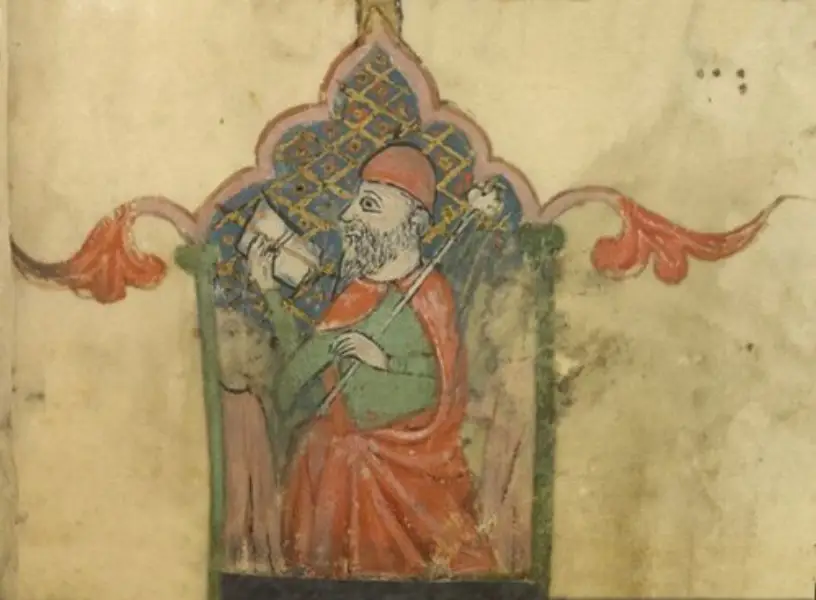
Overview
Gamaliel the Elder, honored in Jewish memory as Rabban Gamaliel I, was a leading authority of the Sanhedrin in the first century AD and the president of the Great Sanhedrin in Jerusalem. Grandson of the great teacher Hillel the Elder and son of Simeon ben Hillel, he bore the exalted titles Nasi, or prince, and Rabban, our master. The Mishnah ranks him among the greatest teachers in the annals of Judaism, lamenting that with his death reverence for the law, purity, and piety alike declined. In the Acts of the Apostles he appears as a Pharisee celebrated as a doctor of the Mosaic Law, standing up in the Sanhedrin to counsel leniency toward the apostles of Jesus, and later Acts records that Saul of Tarsus, the future Paul the Apostle, was educated at his feet in Jerusalem. Rabbinic tradition credits him with rulings protecting women in divorce and with three official epistles announcing religious rulings to Galilee, the southern Judean hill country, and the diaspora. Ecclesiastical tradition holds that he secretly embraced Christianity, was baptized by the apostles, and that his relics were discovered together with those of Stephen the Protomartyr and Nicodemus. He is venerated as a saint in East and West.
The Complete Life
Heir of the House of Hillel
Gamaliel was born into the most distinguished teaching lineage of first-century Judaism. His father was Simeon ben Hillel; his grandfather, the renowned Hillel, whose school of interpretation stood, together with that of Shammai, at the center of Pharisaic learning. Rabbinic literature transmits the thought of the Hillelian school collectively, and through that collective transmission Gamaliel inherited both a method of lenient, humane interpretation and a position of standing among the Pharisees that few could contest. His own family continued the line: his son Simeon ben Gamliel bore the name of Gamaliel's father, while a daughter became the wife of the priest Simon ben Nathanael. The sources do not preserve the circumstances of his birth, his youth, or his formation; what they attest is the outcome, a man recognized in the highest court of Jerusalem as a senior authority on the law of God. In Christian memory that recognition would take a particular form: Luke's Acts of the Apostles introduces him as a Pharisee and a celebrated doctor of the Mosaic Law, a teacher whose reputation was such that his voice could turn the course of a capital proceeding in the Sanhedrin.
§ In Jewish tradition
Nasi and Rabban in Jerusalem
In the Talmud Gamaliel bears the two most august titles rabbinic tradition could confer: Nasi, prince, the president of the Great Sanhedrin in Jerusalem, and Rabban, our master. Scholars do not doubt that he occupied a senior position in the highest court of the Jewish nation. Rabban Gamaliel I is credited with leading that body from about 30 to about 50, an office his son would afterward inherit. The Mishnah preserves his reputation in a single, solemn sentence: when Rabban Gamaliel the Elder passed away, it laments, reverence for the law vanished with him, and purity and piety perished alongside it. Two Mishnaic anecdotes show the king and queen of the day seeking his advice on matters of ritual, conversations generally thought to involve Herod Agrippa with his wife Cypros, or Herod Agrippa the Second with his sister Berenice. Curiously, because the school of Hillel is presented collectively in rabbinic literature, Gamaliel is not counted in the formal chain that transmitted the Mishnaic tradition, which passes from Hillel directly to Yohanan ben Zakkai; yet his rulings on divorce and on the testimony of a single witness in matters of remarriage entered the settled law of Israel.
§ In Jewish tradition
Teacher of Paul, Defender of the Apostles
The Acts of the Apostles assigns Gamaliel a decisive role at a moment of mortal danger for the young church. When Peter and the apostles were brought before the Sanhedrin for preaching the gospel despite a standing prohibition, and the court was minded to put them to death, Gamaliel, a Pharisee honored by all the people, rose to speak. He reminded his colleagues of earlier agitators, Theudas and Judas of Galilee, whose movements collapsed when the men themselves perished, and argued that if the Christian enterprise were of human origin it would fail of itself, but if it were of God, no power could overthrow it without fighting against God. His counsel prevailed; the apostles were flogged and released. Acts later has Paul the Apostle recall that, though a native of Tarsus, his youth was spent in Jerusalem studying under Gamaliel, instructed in the ancestral law with the exactness of the fathers' tradition. Scholars debate the extent of that instruction: Helmut Koester has questioned whether Paul studied under Gamaliel at all, while Richard Bauckham defends the connection. Outside the New Testament, no other record of Gamaliel teaching publicly survives.
§ In the New Testament and in Apocrypha
A Doctrine of Measured Judgment
The teaching voice that survives from Gamaliel is quiet and practical. In Pirkei Avot, the Chapters of the Fathers, he is credited with a threefold counsel: secure a teacher for oneself, withdraw from doubt, and do not tithe by estimation more than the law requires. Each clause counsels a soul against self-sufficiency, against paralysis of conscience, and against a scrupulosity that exceeds the measure of the commandment. His most famous image compares his students to classes of fish: the ritually impure fish, who memorizes everything by study but understands nothing, the son of poor parents; the ritually pure fish, who has learned and understood everything, the son of rich parents; the fish of the Jordan, who has learned everything but cannot answer; and the fish of the Mediterranean, who has learned everything and knows how to respond. Underneath the wit lies a theory of learning in which memory, understanding, wealth, and readiness to speak are distinct gifts, and no single one of them is the whole of wisdom. Rabbinic tradition also remembered him as the author of humane rulings: the law, he argued, should protect women in divorce, and mercy should temper procedure.
§ In Jewish tradition
Death and the Silence After It
Gamaliel died in the middle of the first century, at the close of a presidency dated from about 30 to about 50, and was succeeded as Nasi by his son Shimon ben Gamliel. The Mishnah marked his passing as an epochal loss, declaring that his departure took reverence for the law with it, purity and piety expiring in the same hour. Later centuries wove stranger threads around his memory. In some manuscripts of the tenth-century Hebrew commentary on the Sefer Yetzirah by Dunash ibn Tamim, the author identifies Gamaliel with the great physician Galen, asserting that he had encountered, rendered from Hebrew into Arabic, a medical treatise ascribed to Gamaliel the Prince and known among the Greeks as Galenos; the identification fails on chronology, since Galen lived in the second century while Gamaliel died in the middle of the first. Curiously, because rabbinic literature presents the school of Hillel as a collective body, Gamaliel's own doctrine is scarce, and the chain of Mishnaic transmission runs from his grandfather Hillel directly to Yohanan ben Zakkai without naming him. The man whom the Mishnah placed among the very greatest teachers Judaism ever produced thus left the lightest written footprint.
§ In Jewish tradition
The Hidden Disciple and His Relics
Ecclesiastical tradition from an early date claimed Gamaliel for the church, explaining by a secret conversion his tolerance toward the first Christians. According to Photios I of Constantinople, he received baptism from Saint Peter and Saint John the Apostle, together with his son Abibon and with Nicodemus. The Clementine literature portrays him maintaining secrecy about his conversion, remaining within the Sanhedrin so as to aid his fellow Christians covertly, though some scholars judge these traditions spurious, noting that the passage in question never states explicitly that he became a Christian. The Eastern Orthodox Church venerates Gamaliel as a saint on August 2, the day sacred tradition holds that his relics were discovered together with those of Stephen the Protomartyr, of Abibon his son, and of Nicodemus; the traditional Catholic liturgical calendar keeps the corresponding feast of the relics' discovery on August 3. Pious legend adds that in the fifth century his body was found and carried by a miracle to Pisa Cathedral. A statue of Gamaliel stands in the Chapelle Saint-Nicodème de Pluméliau in Brittany, and a fifteenth-century Catalan document, the Acts of Llàtzer, still names him.
§ Veneration
A Gospel Attributed, a Debate Enduring
Gamaliel's afterlife in Christian imagination proved remarkably fertile. Some scholars have proposed the existence of a hypothetical Gospel of Gamaliel, perhaps belonging to the Pilate apocrypha; the theory, first advanced by Paulin Ladeuze and Carl Anton Baumstark in 1906, rests on the Lament of Mary, a homily by a bishop named Cyriacus, which critics believe quotes the lost gospel extensively. Sections of the Lament open with the words I, Gamaliel, and the work shows him witnessing a healing miracle at the empty tomb, where the abandoned burial shrouds of Jesus work wonders, and conversing with Pontius Pilate, who is portrayed sympathetically as a Christian. Other scholars answer that Cyriacus was simply writing in Gamaliel's voice, not plagiarizing a lost book. Reasonably complete manuscripts of the Lament survive in Ge'ez and Garshuni versions. Beyond the apocrypha, Gamaliel endures as the face of prudence in the New Testament: the teacher who schooled Paul, the counselor who stayed an execution, and the rabbi whose death, the Mishnah says, took the reverence of the law with it. He is listed among the biblical figures identified in extra-biblical sources, and his name remains attached to principles of community organizing and to the vineyards of Beit Jimal.
§ Alleged Gospel of Gamaliel
Timeline
- 30
Assumed the office of Nasi, heading the Great Sanhedrin in Jerusalem, an incumbency the sources date from about this year.
§ In Jewish tradition
- 50
His presidency as Nasi ended about this year, and his son Shimon ben Gamliel succeeded him in the office.
§ In Jewish tradition
- 1906
Scholars Paulin Ladeuze and Carl Anton Baumstark first proposed that a Gospel of Gamaliel had once existed.
§ Alleged Gospel of Gamaliel
In Their Own Words
Make a teacher for yourself and remove yourself from doubt; and do not excessively tithe by estimation.
Refrain from these men, and let them alone: for if this counsel or this work be of men, it will come to nought: But if it be of God, ye cannot overthrow it; lest haply ye be found even to fight against God.
The Record
- Major works
- Three official epistles announcing new religious rulings, sent to Galilee, the Darom, and the diaspora·Laws on community welfare and conjugal rights recorded in the Mishnah
- Canonization
- Pre-congregation; venerated from earliest Christian memory by the Catholic and Eastern Orthodox churches
Prayer
Bibliography
Show 7 sources
- Schechter, Solomon; Bacher, Wilhelm. "Gamliel I". Jewish Encyclopedia.
- "Gamaliel". Catholic Encyclopedia.
- Köstenberger, Andreas J.; Kellum, L. Scott; Quarles, Charles (2009). The Cradle, the Cross, and the Crown: An Introduction to the New Testament. B & H Publishing Group. p. 389. ISBN 978-0-8054-4365-3.
- Brown, Raymond E. A Once-and-Coming Spirit at Pentecost, page 35 (Liturgical Press, 1994). ISBN 0-8146-2154-6.
- Bauckham, Richard (2016). "4 Gamaliel and Paul". Earliest Christianity within the Boundaries of Judaism. pp. 85–106. doi: 10.1163/9789004310339_006. ISBN 978-90-04-31032-2.
- Suciu, Alin (2012). "A British Library Fragment from a Homily on the Lament of Mary and the So-Called Gospel of Gamaliel". Aethiopica. 15: 53–71. doi: 10.15460/aethiopica.15.1.659. ISSN 2194-4024.
- Buechler, Adolph. Das Synhedrion in Jerusalem, p. 129. Vienna, 1902.
Profile text adapted from the Wikipedia article, licensed CC BY-SA 4.0.
Pray with this saint every day
Save St. Gamaliel to your favorites, read the full profile, and get feast-day reminders in the Saints app.
Get the Saints AppFree on the App Store for iPhone and iPad