
1786 – 1837·Feast October 21
St. Gaspar del Bufalo
Apostle of Rome and founder of the Missionaries of the Precious Blood
Overview
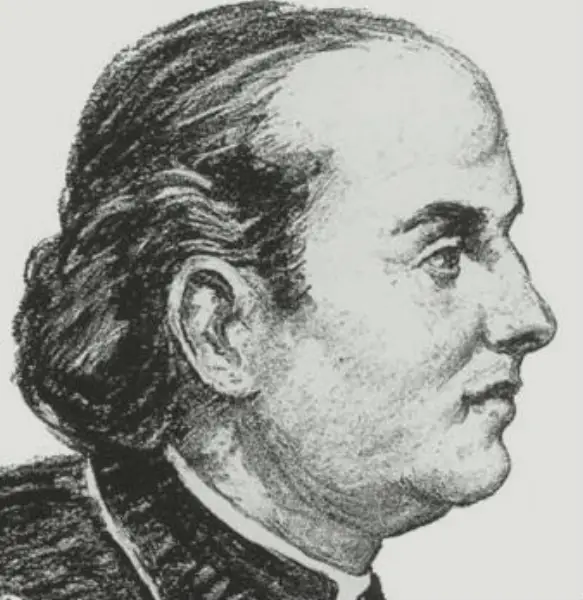
Gaspar Melchior Balthazar del Bufalo was a Roman priest, preacher, and prisoner for the faith who founded the Missionaries of the Precious Blood. Born in Rome on the feast of the Epiphany in 1786, the son of the chef of a noble household, he recovered as an infant from a threatened blindness through prayers to Francis Xavier, whom he afterward took as patron of his congregation. Ordained in 1808, he ministered to the sick, the poor, orphans, and the homeless country folk who crowded into Rome. For refusing the oath of allegiance to Napoleon in 1809 he was exiled and imprisoned for four years. Returning in 1814 at the request of Pope Pius VII, he gave himself to preaching parish missions, and in 1815 founded the Missionaries of the Precious Blood at the abandoned abbey of San Felice in Giano, Umbria. From 1821 his missionaries confronted the bandits who terrorized the Papal States, preaching in the mountains until brigands laid their guns at his feet. He endured ecclesiastical opposition with humility, re-evangelized central Italy with a preaching his contemporaries likened to a spiritual earthquake, and died at Rome on 28 December 1837, exhausted by service to the cholera-stricken.
The Complete Life
The Child of the Epiphany
Gaspar del Bufalo was born in Rome on 6 January 1786, the feast of the Epiphany, and was baptized the same day with the names Gaspar Melchior Balthazar, the traditional names of the three magi who brought gifts to the child Jesus. His father, Antonio, a man of varied fortunes who had dabbled in the theater before taking a position as chef in the household of the Altieri family, raised his son in the servants' quarters of a noble palace across from the church of the Gesù; his mother was Annunziata. It was she, a pious woman, who had the delicate child confirmed at eighteen months and who prayed for him when an incurable malady of the eyes threatened blindness. Her prayers were directed to Francis Xavier, whose relic stood on an altar of the Gesù, and in 1787 the boy recovered. The mother's devotion passed permanently to her son: Gaspar cherished a special love for the Apostle of India all his life and would one day place him at the head of his own congregation as its chosen patron. A saint's first school, in his case as in many, was the faith of a praying mother in a humble Roman apartment.
§ Life
Priest of Rome, Prisoner of Napoleon
Ordained to the priesthood for the diocese of Rome in 1808, Gaspar threw himself into the works of the city's suffering: he visited the sick and the poor, founded a young persons' religious organization whose members prayed and performed charitable works together, gathered the country laborers who brought their goods to Roman markets into an evening fellowship, taught catechism to orphans and the children of the destitute, and opened a refuge where the homeless could sleep at night. The storm of the age soon tested him. After the deportation of Pope Pius VII in 1809, the Napoleonic regime demanded an oath of allegiance; Gaspar, with other clergy who refused, was sent into exile in northern Italy and imprisoned for four years. When the fall of Napoleon brought him back to Rome in 1814, he considered entering the newly reestablished Society of Jesus, but the pope, who knew the misery of the abandoned Roman countryside, asked instead for missions. At the view of the needs of the time, Gaspar declined his own preference and took up the itinerant preaching that would consume the rest of his life, a priest shaped by charity in youth and by the prison for the liberty of the church.
§ Life
San Felice, the Bandits, and the Hammer of the Carbonari
In 1815, despite considerable difficulties, Gaspar brought into being at the old abbey of San Felice, at Giano in Umbria, a company of priests — the Missionaries of the Precious Blood — whose first labor, undertaken with the help of the local people, was the repair of the abandoned tenth-century monastery. Five years later Providence opened an unexpected mission field: the year 1821 found the Papal States overrun by lawlessness, whole towns of the coastal provinces subject to brigand bands. Cardinal Cristaldi, the papal treasurer, proposed that Gaspar and his missionaries establish mission houses in the bandit country, preaching the Word, building churches and chapels, and providing continuing instruction. Between 1821 and 1823 six new houses were opened. Gaspar's men preached on street corners at night, instructed children, and, armed with nothing but the crucifix, went into the hills, where Gaspar himself negotiated a peace with the brigands. Penitent outlaws flocked to him by the score, piling their weapons at his feet once his preaching had reached them in their haunts among the mountains, and his success provoked the fury of officials who profited from brigandage through bribes; these enemies nearly induced Pope Leo XII to suspend him. His contemporaries titled him the Apostle of Rome and the hammer of the Carbonari, and Bishop Vincent Strambi described his preaching as like a spiritual earthquake.
§ Missionaries of the Precious Blood
The Devotion to the Precious Blood
The center of Gaspar's spiritual universe was the Blood of Christ, shed for the salvation of the world, and he spent his life spreading that devotion by sermon, mission, and congregation. His society bore the name openly, at a cost: the title Society of the Precious Blood was denounced by critics as unecclesiastical, the mission cross and chain worn by his men was called untraditional, and he was accused of disregarding canon law. The opposition, beginning around 1820 under Pius VII, who had earlier favored the foundation, hardened under Leo XII, precisely while Gaspar grew ever bolder in denouncing the abuses he saw in the ecclesiastical and civil administration of the day. Believing the attack to be aimed at his person, Gaspar offered to resign as moderator of the community so that peace could be restored; the offer proved unnecessary, for a meeting between the pope and the founder dissolved the adversity. His interior life was otherwise marked by his devotion to Francis Xavier, the patron of his congregation, by friendship with Saint Vincent Pallotti, who assisted at his deathbed, by his care for the Santa Galla Hospice of Rome, and by a charity that sought the conversion of the most violent men of his age.
§ Missionaries of the Precious Blood
Exhausted in the Service of the Plague-Stricken
Until his death Gaspar worked tirelessly to re-evangelize central Italy, above all the Papal States, sustained by a reputation for eloquence in the pulpit and by his devotion to the poor. In 1836 his forces began to wane. The mission he preached at Rome's Chiesa Nuova in 1837 proved his last, and then, though fatally ill, he hastened to the city when cholera raged there, to administer to the spiritual needs of the plague-stricken. He withdrew to Albano to recover but went back to Rome a final time in December 1837, urged on by Cardinal Franzoni, protector of the Congregation; the effort was too much, and his strength gave out in the very midst of that service on 28 December 1837. His funeral took place at the Roman church of Sant'Angelo in Pescheria, beside the Teatro di Marcello, and burial followed at Albano, though his remains were afterwards brought to the Missionaries' house on the Via dei Crociferi, at Santa Maria in Trivio, where they rest today. He had lived fifty-one years, four of them in prison for the pope, and had died, as he had lived, on the road to the suffering.
§ Life
From Beatification to the Altar
The church moved deliberately to recognize the holiness of the founder of the Precious Blood family. In 1904 Pope Pius X beatified him at Saint Peter's Basilica, and the cause for his canonization was formally opened on 12 July 1949. Five years later, on 12 June 1954, Pope Pius XII canonized Gaspar a saint of the Catholic Church in Saint Peter's Basilica in Vatican City, an act celebrated in the presence of the congregation he had founded a hundred and thirty-nine years before. His liturgical memory had been kept originally on 29 December, the day after his death; in 1962 the feast was transferred to 21 October, and on that day it is celebrated in the city of Rome and throughout the Missionaries of the Precious Blood. His relics are venerated by his spiritual family: a first-class relic from his forearm is displayed at Saint Charles Seminary in Carthagena, Ohio, and his statue stands in the Collegio Preziosissimo Sangue in Rome. From prison to the basilica, the trajectory of his canonization retraced the whole arc of a life given for the church's freedom and the people's conversion.
§ Veneration
A Family of the Blood of Christ
Gaspar's congregation endured and multiplied. The Missionaries of the Precious Blood carried his missionary method, his crucifix-bearing confidence, and his devotion to the Blood of Christ into the world, honoring him on 21 October and treasuring his letters as spiritual patrimony. His influence flowed through other channels as well: he shaped decisively the calling of Maria De Mattias, who founded the Adorers of the Blood of Christ, a second congregation born of the same devotion, though it was the Venerable Giovanni Merlini of Gaspar's own society who worked most directly with Saint Maria in establishing her community. The titles his contemporaries gave him have become his historical portrait: Il Santo, the holy one; the Apostle of Rome, for his tireless evangelization of the city and the Papal States; and the hammer of Italian Freemasonry, for the vehemence with which he confronted the secret societies of his day. Historians of the nineteenth-century papal restoration remember him as the priest who pacified the bandit country without a soldier's weapons. His body rests at Santa Maria in Trivio in Rome, in the house of his sons, where pilgrims to the city of the popes may still kneel at the tomb of the prisoner who became a saint.
§ Legacy
Timeline
- 6 Jan 1786
Born in Rome on the feast of the Epiphany and baptized the same day with the names of the magi.
§ Life
- 1787
Recovered from an incurable disease of the eyes after prayers to Francis Xavier, to whom he became devoted for life.
§ Life
- 1808
Ordained to the priesthood for the diocese of Rome.
§ Life
- 1809
Refused the oath of allegiance to Napoleon, suffering exile in the north of the peninsula and four years' imprisonment.
§ Life
- 1814
Returned to Rome after his imprisonment and, at the request of Pope Pius VII, took up the preaching of missions.
§ Life
- 1815
Established at Giano in Umbria, within the old abbey of San Felice, the society he called the Missionaries of the Precious Blood.
§ Missionaries of the Precious Blood
- 1820
Opposition to his young society arose at the curia, challenging the community's very name, its canonical regularity, and the uncustomary mission cross and chain worn by its members.
§ Missionaries of the Precious Blood
- 1821
At Cardinal Cristaldi's urging, sent missionaries into the bandit-ridden towns of the Papal States, opening six mission houses by 1823.
§ Missionaries of the Precious Blood
- 1836
His strength began to fail after decades of missionary labor.
§ Life
- 28 Dec 1837
Died in Rome, exhausted by ministering to the victims of the raging cholera epidemic.
§ Life
- 1904
Beatified by Pope Pius X at Saint Peter's Basilica.
§ Veneration
- 12 Jul 1949
The cause for his canonization was formally opened.
§ Veneration
- 12 Jun 1954
Canonized by Pope Pius XII at Saint Peter's Basilica in Vatican City.
§ Veneration
- 1962
His feast, first kept on 29 December, was moved to 21 October.
§ Veneration
In Their Own Words
From your open side, ark of salvation, furnace of charity, came blood and water, a sign of the sacraments and tenderness of your love, O Christ, who loved us and washed us in your blood!
O blood of Jesus Christ, balm of our souls, source of mercy, let my tongue, purple with blood in the daily celebration of Mass, bless you now and always.
I must not, I cannot, I do not want to.
The Record
- Major works
- Founded the Missionaries of the Precious Blood at San Felice, Giano, 1815·Opened six mission houses in the bandit-infested provinces of the Papal States, 1821–1823·Founded a young persons' religious organization of prayer and charitable work in Rome·Established an evening society for laborers and farm workers, catechism for orphans, and a night shelter for the homeless
- Symbols
- Priest's cassock
- Canonization
- Canonized by Pope Pius XII on 12 June 1954 at Saint Peter's Basilica, Vatican City; beatified by Pope Pius X in 1904
Prayer
Bibliography
Show 6 sources
- "St. Gaspar del Bufalo", Precious Blood Parish Missions. Archived from the original on 2015-04-02. Retrieved 2013-03-08.
- "St. Gaspar del Bufalo: A Saint in Motion", Cincinnati Province of the Missionaries of the Precious Blood. Archived from the original on 2011-10-13.
- Müller, Ulrich. "St. Gaspare del Bufalo." The Catholic Encyclopedia. Vol. 6. New York: Robert Appleton Company, 1909.
- "Our Founder Saint Gaspar del Bufalo", Missionaries of the Precious Blood.
- Butler, Alban, and Burns, Paul. Butler's Lives of the Saints. United Kingdom, Burns & Oates, 1995, p. 223.
- Attwater, Donald and Catherine Rachel John. "The Penguin Dictionary of Saints," 3rd edition, New York: Penguin Books, 1993. ISBN 0-14-051312-4.
Profile text adapted from the Wikipedia article, licensed CC BY-SA 4.0.
Pray with this saint every day
Save St. Gaspar del Bufalo to your favorites, read the full profile, and get feast-day reminders in the Saints app.
Get the Saints AppFree on the App Store for iPhone and iPad