
fl. late 4th – early 5th century·Feast January 22
St. Gaudentius of Novara
First Bishop of Novara and Companion of Eusebius
Overview
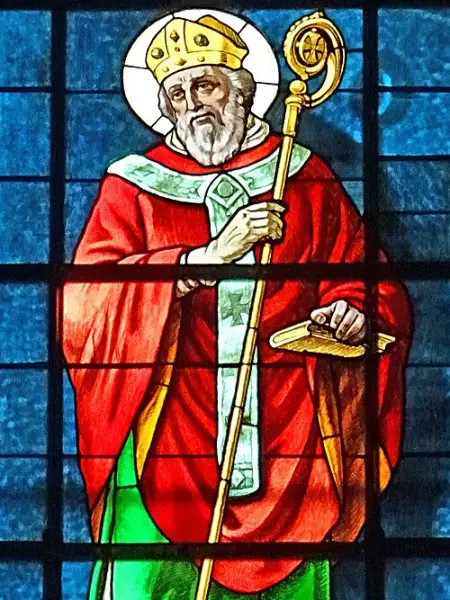
Gaudentius flourished at the close of the fourth and the opening of the fifth century and is honoured as the first bishop of Novara. Tradition makes him a child of a pagan household at Ivrea, won over to Christianity by Eusebius of Vercelli, by whom some sources say he was ordained priest and sent to Novara to aid a Christian priest named Laurence. When the synod of Milan brought Eusebius exile in 355, Gaudentius is reported to have shared his banishment, and he returned north only at his master's command, after Laurence had been killed. Backed by Ambrose, bishop of Milan, he reorganized the flock of Novara, and in 398 Simplician, Ambrose's successor in the Milanese see, consecrated him bishop. As bishop he preached tirelessly and ordained a large body of clergy, giving the young church its native ministry. A marvel told of his passing holds that his head went on speaking once life had left it, letting the clergy commit his discourses to writing and proclaim them again. The Basilica of San Gaudenzio in Novara and many churches of the region are dedicated to him, and he is portrayed holding the model of a church.
The Complete Life
Early Life and Conversion
The sources place the beginnings of Gaudentius at Ivrea, in the northwestern Italian lands where the Po valley rises toward the Alps. He was born, tradition holds, to a pagan family, and the faith reached him not through birthright but through the mission of Eusebius of Vercelli, the great champion of Nicene orthodoxy in that region. Under Eusebius the convert of Ivrea passed from baptism into ministry, and some sources record that his master ordained him priest. His formation was thus rooted in the strictest theological school of fourth-century northern Italy, the circle of the confessor-bishop who would soon face exile rather than sign an Arian formula. From that circle Gaudentius received his first assignment: Eusebius sent him to Novara to assist a Christian priest named Laurence who was labouring there. The young missionary thus learned the episcopal craft in a mission station, serving under an older clergyman among a people only partly won to the gospel. When exile and martyrdom broke that first partnership, the training proved to have been providential, for the assistant would be the one to carry the mission forward.
§ Biography
Exile and Return to Novara
The crisis that shaped Gaudentius's maturity came with the synod held at Milan in 355, which Emperor Constantius II used to break the resistance of the Nicene bishops. Eusebius of Vercelli refused to conform and was sent into exile, and some sources state that Gaudentius accompanied his master into banishment, sharing the hardships that tested so many of the orthodox clergy of that generation. The school of suffering completed the work of conversion: the pagan-born priest of Ivrea became a confessor's companion, formed in the conviction that the faith was worth the loss of home and liberty. In time Eusebius ordered him back to Novara, for circumstances there had grown desperate, with Laurence killed and the flock left without a shepherd. The return was not an easy reinstatement but a re-founding, undertaken against the grief of separation from his exiled master. Yet the returning missionary did not stand alone: a powerful new ally took up his cause in Ambrose, bishop of Milan, whose protection gave the Novarese church standing in the eyes of the metropolitan authority and prepared the way for Gaudentius's own elevation.
§ Biography
Bishop of Novara
In 398 Simplician, who had succeeded Ambrose in the see of Milan, consecrated Gaudentius bishop of Novara, making him in the estimation of tradition the first occupant of that see. The new bishop gave the young church the two gifts it most needed: preaching and clergy. He proclaimed the gospel through the city and its territory, and he ordained many new clergymen, so that the mission station of Laurence's day matured into a self-perpetuating local church with a native ministry at its altars. The affection of his people outlived him by centuries, expressing itself in the strange and tender legend attached to his death: as the saint lay lifeless his head went on speaking, so that the clergy were able to write out and proclaim again the discourses he had given while alive. Whatever the tale's literary character, its meaning is plain, that Novara could not believe its teacher silenced. The region crowned his memory with dedications: the Basilica of San Gaudenzio in Novara bears his name, as do numerous churches throughout the surrounding country, and his images show him holding the model of a church, the classic emblem of a founder bishop.
§ Biography
Legacy
The honour in which Novara has held its first bishop may be measured in stone and in art. The great Basilica of San Gaudenzio, which still defines the skyline of the city, is dedicated to him, and through the surrounding region numerous churches carry the same title, a map of the devotional reach of his memory across the diocese he founded. Iconographers gave him a distinctive emblem: his images give him the model of a church in his hands, emblem of the bishop who raised up a young church from mission preaching and ordained the clergy who would sustain it. His feast is kept on January 22, and he is venerated in both the Roman Catholic and Orthodox Churches, one of the undivided church's confessors of the Arian crisis. Historians of early medieval Italy continue to cite him among the patron saints of the region, and the studies of scholars such as Maurice and Wilfrid Drake and Nicholas Everett preserve his story for modern readers. The convert of Ivrea thus remains what his people proclaimed him by these tributes: the father and founder of Novara's faith.
§ Biography
Timeline
- 355
Eusebius of Vercelli was exiled after the synod of Milan; some sources say Gaudentius accompanied him.
§ Biography
- 398
Consecrated bishop of Novara by Simplician, successor of Ambrose at Milan.
§ Biography
- 418
Died at Novara; Vatican authority records date his death to about 418.
§ External links
The Record
- Symbols
- Model of a church
- Canonization
- Pre-congregation, venerated in the Roman Catholic and Orthodox Churches
Prayer
Bibliography
Show 3 sources
- "San Gaudenzio"
- Drake, Maurice and Drake, Wilfrid. Saints and their emblems, Dalcassian Publishing Company, 1916, p. 52
- Nicholas Everett, Patron Saints of Early Medieval Italy AD c.350-800 (PIMS/ Durham University Press, 2016), pp.14-38.
Profile text adapted from the Wikipedia article, licensed CC BY-SA 4.0.
Pray with this saint every day
Save St. Gaudentius of Novara to your favorites, read the full profile, and get feast-day reminders in the Saints app.
Get the Saints AppFree on the App Store for iPhone and iPad