
1873 – 1954·Feast December 4
St. Giovanni Calabria
Veronese founder who served the poor and the sick
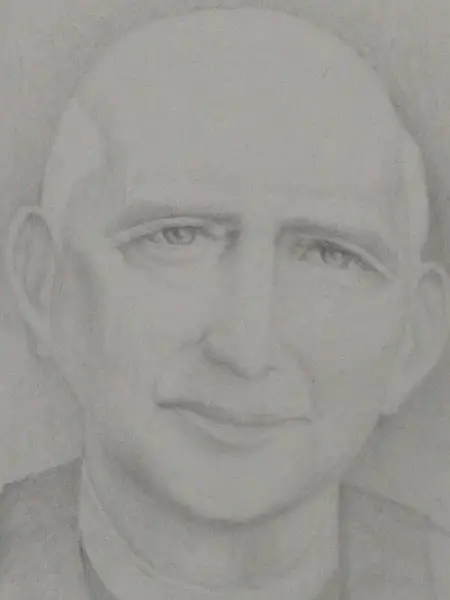
Overview
Giovanni Calabria was an Italian priest of Verona who spent his whole life answering the needs of the poor and the sick. Born on 8 October 1873, the youngest of seven sons, he lost his father while still a schoolboy and had to fight poverty for his own education, working as an apprentice and enduring military service before he could follow his vocation. Ordained on 11 August 1901, he served as confessor and curate at Saint Stephen's and later as rector of San Benedetto del Monte. In 1907 he founded the Poor Servants of Divine Providence, and in 1910 he added a female branch, the Poor Sisters Servants of Divine Providence, so that poor and abandoned children across Italy, and eventually abroad, might be cared for and taught the Gospel. During the German occupation he risked his life to shelter a Jewish doctor disguised as a sister, and in old age he carried on a remarkable correspondence in Latin with C. S. Lewis. He died on 4 December 1954, having offered his life for the ailing Pius XII, and was beatified and canonized by John Paul II.
The Complete Life
The Youngest of Seven
Giovanni Calabria was born at Verona on 8 October 1873, the youngest of the seven sons of Luigi Calabria and Angela Foschi. His mother, a woman of formed piety, had herself been taught by Nicola Mazza, a priest whose educational and charitable work marked the Church of Verona in that generation, and from her the boy received the faith that would direct his whole life. The household's security collapsed in 1882, when his father died and the family was left without its head. The boy's schooling was interrupted: he had to leave his studies and become an apprentice to help sustain himself. It was at this low point that Pietro Scapini, the rector of San Lorenzo, noticed the youth's ability and took him on as a private tutor, preparing him for the examination that would admit him to studies for the priesthood. Even this hope was deferred, for military service called him away from his books. Yet Calabria turned even the barracks into a apostolate: he laboured to convert his fellow soldiers, and his faith and his public devotions made him conspicuous among them. Poverty, bereavement, and conscription each in turn delayed the goal, and each in turn shaped the compassion that would define him.
§ Life
A Doorstep Child and a Priest's Calling
The decisive direction of Calabria's life can be read in a single night of November 1897. Coming home cold from the hospital, where he had been visiting the sick, he found a child waiting on his doorstep; the boy said he was running from those who would beat him. Calabria did not look for a more convenient charity: he took the child in and shared his own room with him. The following year, 1898, this instinct for personal shelter hardened into institutions, as he founded a charitable institution for the assistance of poor sick people and began opening homes for abandoned teenagers. His own road to ordination, meanwhile, was completed after long struggle. Priestly ordination came to him on 11 August 1901, and at once he was named confessor and curate at Saint Stephen's church, duties that kept him close to the ordinary sufferings of the people of Verona. In 1907 his pastoral responsibilities grew when he became rector of San Benedetto del Monte. The pattern of his life was now set: a priest of the poor, who visited the ill, welcomed the unwanted, and built structures so that welcome would outlast his own strength.
§ Life
Two Congregations for Divine Providence
On 26 November 1907, in the quarter of Case Rotte, Calabria founded the congregation he called the Poor Servants of Divine Providence, a community of men bound to the care of the poor and the proclamation of the Gospel to them. Within a year the foundation moved to Via San Zeno, and from Verona it would spread to other Italian cities and eventually beyond Italy. Bishop Bartolomeo Bacilieri encouraged him to extend the same work to women, and on 17 April 1910 Calabria established the Poor Sisters Servants of Divine Providence. On 13 December 1911 the institute's first sisters pronounced their vows, naming Maria Galbraith, who died young in 1917, as their first superior. Official recognition came slowly and in stages: the men's institute received diocesan approval from the Bishop of Verona, Girolamo Cardinale, on 11 February 1932, the decree of praise followed on 25 April 1949, and at the last came full pontifical approval from Pope Pius XII on 15 December 1956, two years after the founder's death. The sisters received diocesan approval on 25 March 1952 and papal approval on Christmas 1981. Through these communities Calabria built a durable answer to the plight of poor and abandoned children in town after town.
§ Life
Providence, Latin Letters, and Hidden Courage
Calabria's spirituality was summed up in the name he gave his foundations: trust in Divine Providence, the conviction that God provides for the poor through those willing to be provided for in turn. He underlined always that material help had to be joined to the preaching of the Gospel, so that the bodies and the souls of the poor were served together. His courage was tested in the darkest hours of the twentieth century. On 8 September 1943, in the middle of the Second World War and the persecution of the Jews in occupied Italy, he gave shelter near Verona, inside his community of sisters, to the Jewish doctor Mafalda Pavia, who passed there as Sister Beatrice for eighteen months in disguise. In the anti-fascist priest Giulio Facibeni he found a great friend and admirer, a friendship of kindred spirits in an age of compromise. Perhaps most surprisingly, the ageing Veronese founder became a correspondent of C. S. Lewis: knowing no English, Calabria wrote to the Oxford don in Latin, and their exchange of Latin letters became celebrated enough to be published as a book. A man of the poor, he conversed as an equal with one of the great Christian writers of the century, in the tongue of the old Church.
§ Life
Dying in Another's Place
Calabria's death carried the signature of his whole life: the offering of self for another. On 3 December 1954, with Pope Pius XII gravely ill, the eighty-one-year-old founder consecrated to God the remainder of his own life, begging to die in the pontiff's stead. On the following day, 4 December 1954, he died at Verona, the city of his birth and of all his labours. The pope, against expectation, recovered, and when word reached him of the priest's death he sent an official telegram of condolence, a public tribute from the man whose life Calabria had begged to take upon himself. His congregations mourned their father, though by then his institutes were firmly established: the men's branch stood on the verge of pontifical approval, which Pius XII would grant in December 1956, and the sisters continued their work among the poor. The accounts of his final act spread quickly and fixed in popular devotion the image of Calabria as a man who had learned to give everything, even the remainder of his own life, as a gift for someone else. It was a fitting close to a vocation that had begun with a shivering child admitted to his own room on a November night more than half a century before.
§ Life
From Servant of God to the Altars
The journey of Calabria's cause through the Congregation for the Causes of Saints was long and methodical. Informative and apostolic processes gathered documentation and witness testimony, and theologians examined his writings for doctrinal soundness, approving them on 1 June 1968. The cause was formally constituted on 6 March 1981, when he became a Servant of God. The two processes were validated in Rome on 31 March 1984, and the Positio went to the Congregation shortly afterwards, in 1985. The theologians approved it on 8 October 1985, the cardinal and bishop members followed on 10 December, and on 16 January 1986 Pope John Paul II declared him Venerable, having confirmed his heroic virtue. The miracle required for beatification ran the same careful course: validated on 31 March 1984, approved by the medical board on 2 July 1986, by the theologians on 19 December 1986, and by the Congregation on 17 February 1987, with the pope's assent given on 16 March 1987. John Paul II beatified him in Saint Peter's Square on 17 April 1988. The second miracle was validated on 10 February 1995, passed the medical board on 4 July 1996, the theologians on 10 January 1997, and the Congregation on 8 April 1997; the pope's final approval came on 7 July 1997, and on 18 April 1999 he canonized Calabria in Saint Peter's Basilica.
§ Sainthood
A Family That Still Serves
Calabria's most visible legacy is the living family of his two congregations. The Poor Servants of Divine Providence and the Poor Sisters Servants of Divine Providence carry his work into Italian cities and far beyond them, continuing the twofold mandate he gave them: care for the poor and the ill, and the preaching of the Gospel to those same poor. The institution he began in 1898 for the assistance of poor sick people, and the homes he opened for abandoned teenagers, grew under his successors into a network of schools, homes, and missions that treats no case as hopeless, in the spirit of the child he once took into his own room. His name is honoured each year on 4 December, the anniversary of his death, which the Church keeps as his feast. Historians of twentieth-century Christianity remember him too for the human breadth of his holiness: the founder who conversed in Latin with C. S. Lewis, and the priest whose congregation sheltered a hunted Jewish doctor through the Nazi occupation. Beatified in 1988 and canonized in 1999, he stands among the modern saints of charity, an example for Verona, for his institutes, and for all who would serve Christ in the poorest.
§ Sainthood
Timeline
- 8 Oct 1873
Born in Verona, the youngest of the seven sons of Luigi Calabria and Angela Foschi.
§ Life
- 1882
His father died, interrupting his education and forcing him to leave school for an apprenticeship.
§ Life
- Nov 1897
Took into his own room a frightened child who had fled from those who would beat him.
§ Life
- 1898
Founded a charitable institution to assist poor sick people and opened homes for abandoned teenagers.
§ Life
- 11 Aug 1901
Ordained a priest and appointed confessor and curate of Saint Stephen's church.
§ Life
- 1907
Became rector of San Benedetto del Monte.
§ Life
- 26 Nov 1907
Founded the Poor Servants of Divine Providence at Case Rotte.
§ Life
- 1908
The new congregation relocated from Case Rotte to Via San Zeno.
§ Life
- 17 Apr 1910
Established the Poor Sisters Servants of Divine Providence, the female branch of his work.
§ Life
- 13 Dec 1911
The first sisters made their vows, with Maria Galbraith appointed the congregation's first superior.
§ Life
- 11 Feb 1932
His congregation of men received diocesan approval from Girolamo Cardinale, Bishop of Verona.
§ Life
- 8 Sep 1943
Concealed the Jewish doctor Mafalda Pavia among his sisters, where she lived disguised as Sister Beatrice for eighteen months.
§ Life
- 25 Apr 1949
The men's congregation received the decree of praise.
§ Life
- 4 Dec 1954
Died at Verona after offering his life to God on the previous day in place of the gravely ill Pope Pius XII.
§ Life
- 15 Dec 1956
Pope Pius XII granted the Poor Servants of Divine Providence full pontifical approval.
§ Life
- 6 Mar 1981
The cause for his canonization was formally opened and he was titled Servant of God.
§ Sainthood
- 25 Dec 1981
The Poor Sisters Servants of Divine Providence received papal approval at Christmas.
§ Life
- 16 Jan 1986
Pope John Paul II declared him Venerable, confirming his life of heroic virtue.
§ Sainthood
- 17 Apr 1988
Beatified by Pope John Paul II in Saint Peter's Square.
§ Sainthood
- 18 Apr 1999
Canonized by Pope John Paul II in Saint Peter's Basilica.
§ Sainthood
The Record
- Major works
- Poor Servants of Divine Providence·Poor Sisters Servants of Divine Providence·Charitable Institution for the assistance to poor sick people·Homes for abandoned teens
- Patron of
- Poor Servants of Divine Providence·Poor Sisters Servants of Divine Providence
- Symbols
- Priest's attire
- Canonization
- Beatified 17 April 1988 by Pope John Paul II; canonized 18 April 1999 by Pope John Paul II.
Prayer
Bibliography
Show 5 sources
- Ann. Pont. 2007, p. 1490.
- "Saint Giovanni Calabria". Saints SQPN. 3 December 2015. Retrieved 23 September 2016.
- "St. Giovanni Calabria", Vatican News Service.
- "St. Giovanni Calabria", Archdiocese of Baltimore.
- Moynihan, Martin (ed.). The Latin Letters of C. S. Lewis: C. S. Lewis & Don Giovanni Calabria. Indiana: St. Augustine's Press, 1998.
Profile text adapted from the Wikipedia article, licensed CC BY-SA 4.0.
Pray with this saint every day
Save St. Giovanni Calabria to your favorites, read the full profile, and get feast-day reminders in the Saints app.
Get the Saints AppFree on the App Store for iPhone and iPad