
1649 – 1713·Feast January 1
St. Giuseppe Maria Tomasi
The Saintly Duke and Prince of Roman Liturgists
Overview
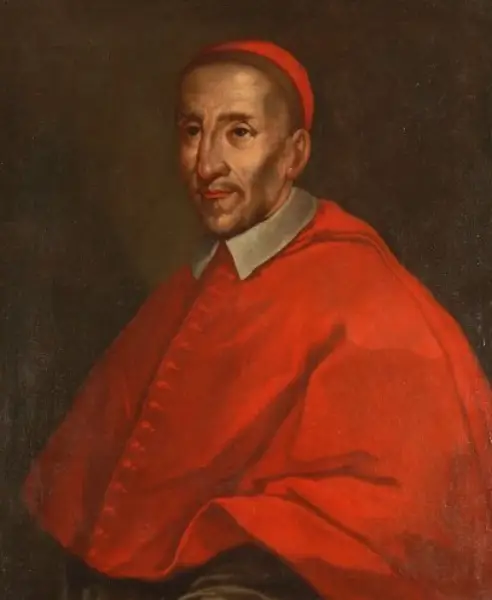
Giuseppe Maria Tomasi, remembered as the Saint Duke, was an Italian Theatine priest, scholar, and cardinal whose lifelong labors on the ancient liturgical texts of the Church made him a principal forerunner of twentieth-century liturgical reform. Born in 1649 at Licata in Sicily, heir to the princely Tomasi family and destined by his father for the Spanish court, he renounced his titles and inheritance by notarized act and entered the Theatines, the reform order founded by St. Cajetan. Professed at Palermo in 1666 and ordained a priest in 1673, he mastered Greek, Ethiopic, Arabic, Syriac, Aramaic, and Hebrew, and devoted himself to recovering the Church's ancient discipline and worship from libraries, archives, and monuments. His editions of old sacramentaries, psalters, and antiphonaries earned him the title of Prince of the Roman Liturgists, and many norms he desired were later enacted by the popes and the Second Vatican Council. Pope Clement XI, whose confessor he was, made him a cardinal in 1712 against his reluctance. He died in Rome on 1 January 1713, mourned by all, and was buried in his titular church; his relics rest today at Sant'Andrea della Valle.
The Complete Life
A Prince Born for Another Kingdom
Giuseppe Maria Tomasi was born at Licata in the Kingdom of Sicily, then part of the Crown of Aragon, on 12 September 1649, into one of the island's great noble houses. His father, Giulio Tomasi, was the first Prince of Lampedusa, and his mother was Rosalia Traina. The household lacked neither riches nor moral formation, and the boy gave early evidence of a mind open to study and a heart inclined to piety. His parents took his education seriously, forming him at home and instructing him in classical and modern languages, especially Spanish, for a definite purpose: as heir to his father he would bear the title of Grandee of Spain and was destined for the royal court at Madrid. Everything in his upbringing pointed toward worldly prominence. Yet from boyhood Tomasi's spirit reached for littleness in God's kingdom; his longing was to wait upon heaven's King, not upon the rulers of the earth. He harbored this desire quietly in his heart until at length he won his father's consent to pursue a religious vocation, choosing the harder path of renunciation over the brilliant future his family had arranged.
§ Early life
Renunciation and the Theatine Life
Tomasi's entry into religious life was marked by an act of deliberate renunciation. By a notarized document he surrendered the principality that belonged to him by birth in favor of his younger brother, together with his very large inheritance, and was admitted to the Theatines, the congregation St. Cajetan of Tiene had begun in 1524 as an instrument of reform in the Church, renowned for the simplicity of life its members practiced. He joined on 24 March 1665 and pronounced his vows at the Theatine house of St. Joseph in Palermo a year later, on 25 March 1666. His studies ranged widely: philosophy first at Messina, then, because of poor health, at Ferrara and Modena, and theology in Rome and Palermo. Ordained a priest on 23 December 1673, he joined to his broad command of Greek the languages Ethiopic, Arabic, Syriac, Aramaic, and Hebrew; from the psalters of these tongues he gathered the titles of the Psalms. His scholarship bore fruit even beyond the academy: he brought about the conversion to Christianity of his own teacher, a Jewish rabbi. His devotion settled on Scripture and the Fathers, and on the ancient ecclesiastical discipline and liturgy he traced through the chief libraries, archives, and monuments of the Church.
§ Theatine
Reform by Returning to the Sources
Tomasi's program of reform worked by conservative means: he strove to revive and uphold what was ancient rather than devise what was new. He was certain that bringing out rare liturgical books and ancient texts in a spirit of faith would itself advance his growth in religion, he brought to light materials long hidden in libraries. With piety joined to scholarship he produced the Codices sacramentorum nongentis annis antiquiores in 1680, a psalter in 1683 under the pen-names Giuseppe Maria Caro and J. M. Carus in which he revived Origen's symbols after nine centuries of disuse, editions of the antiphonary of Pope Gregory I, a Latin rendering of the Greek Good Friday office, and the three-volume Indiculus institutionum theologicarum veterum Patrum drawn from original patristic sources. His zeal was not always appreciated, and he was sometimes rebuked for it. Yet the papacy came to rely on him: Pope Innocent XII named him examiner of bishops and clergy, and Pope Clement XI appointed him confessor, consultor of the Theatine Order, theologian of the congregation for regulars, consultor to the Sacred Congregation of Rites, and qualificator for the Holy Office.
§ Reformer
Scholarship Animated by Faith
Tomasi's learning was never separated from his interior life. He considered the publication of the Church's ancient liturgical books itself a work of faith, and contemporaries who called him the Prince of the Roman Liturgists and the Liturgical Doctor were acknowledging the union of devotion and erudition in everything he printed. That union showed itself in concrete pastoral habits. In his titular church he himself gave catechism lessons to the poor children and brought the congregation to the use of Gregorian chant. Many of the reforms later enacted by the Roman pontiffs and the Second Vatican Council had been proposed and ardently desired by him: today's Liturgy of the Hours in its present shape, the separation of Missal and Lectionary at the Eucharist, several prescriptions of the Roman Pontifical and of the Ritual, and vernacular prayer in place of Latin beyond the liturgy itself, a practice he recommended for private devotions and common prayer of the faithful. All of these, in his vision, aimed at a single end: that the faithful might take part in the Church's celebration more intimately and personally, so that the ancient prayer of the Church would be prayed and not merely preserved.
§ Works
The Cardinal Who Would Not Refuse
The final phase of Tomasi's life brought honors he had not sought. Pope Clement XI, whose confessor he had long been and whose sanctity he so admired that he had consulted him even before accepting the papacy, named him Cardinal Priest of the title of Santi Silvestro e Martino ai Monti on 18 May 1712, commanding him to accept the dignity. He was appointed and installed on 11 July of that year. Even as cardinal he continued the humble pattern of his life, teaching catechism to poor children in his titular church and fostering Gregorian chant among its people. He did not hold the dignity long. He died in Rome on 1 January 1713, aged sixty-three, mourned by all, and by Pope Clement most of all. He was buried in his titular church. Nearly three centuries later his body was moved again: in 1971 his relics were transferred from Santi Silvestro e Martino ai Monti to the Theatine basilica of Sant'Andrea della Valle in Rome, where the faithful may venerate them, in the city whose ancient liturgy he had spent his life restoring.
§ Reformer
From Beatification to the Altars
Recognition of Tomasi's sanctity came slowly but decisively. He was beatified by Pope Pius VII on 29 September 1803, almost a century after his death, as Europe was emerging from the convulsions of the revolutionary era and the Church was beginning to gather up its wounded memory. His canonization followed much later, in the modern period: on 12 October 1986, Pope John Paul II enrolled him among the saints, connecting the old liturgical scholar with the era of the liturgical reform his scholarship had prepared. His feast is kept on 1 January, the anniversary of his death, with 3 January observed by the Theatines. He is honored as a patron of Catholic liturgy, and his iconographic attribute is the cardinal's attire, the purple eminence he accepted only under obedience and wore without worldly pride. The dates of his passage through the Church's calendar of the blessed bookend the history of the liturgical movement: beatified as scholars were rediscovering the ancient sources, canonized after the Second Vatican Council had translated those sources into the Church's daily prayer, he stands as the saint who taught the modern Church to love its oldest worship.
§ Life
Father of the Liturgical Movement
Tomasi's most enduring legacy is the reform of the Catholic liturgy itself. His publications, issued chiefly from ancient codices preserved in the Vatican and Vallicellian libraries and in the library of Christina of Sweden, were praised by the academies of Europe; in 1753 Antonio Francesco Vezzosi collected his works in eleven quarto volumes, and his last opuscula were published by G. Mercati in Rome in 1905. Far more consequential than academic esteem, however, was the influence of his ideas on the Church's official worship. Norms laid down by the Roman pontiffs and by the conciliar texts of Vatican II, and followed today, had already been proposed and ardently desired by him centuries earlier. His edition of the ancient sacramentary was partly transcribed by Mabillon in his Liturgia Gallicana, carrying his erudition into the wider scholarly world. Even in polemics he left a trace: Pope Benedict XIV, writing against freemasonry, cited a prayer from Tomasi's Mass against slanderers, which begs the grace to disregard the calumnies of perverse minds. The Church now keeps him as a saint whose patient scholarship reshaped how all the faithful pray.
§ Works
Timeline
- 12 Sep 1649
Born at Licata in the Kingdom of Sicily, son of Giulio Tomasi, first Prince of Lampedusa, and Rosalia Traina.
§ Early life
- 24 Mar 1665
Joins the Theatines, having renounced by notarized act his principality and inheritance in favor of his younger brother.
§ Theatine
- 25 Mar 1666
Makes his religious profession at the Theatine house of St. Joseph in Palermo.
§ Theatine
- 23 Dec 1673
Ordained a priest by Giacomo de Angelis, having studied philosophy and theology in Italy and Rome.
§ Theatine
- 1679
Publishes the Speculum, his first work issued under his own name.
§ Works
- 1680
Publishes the Codices sacramentorum nongentis annis antiquiores, part of which Mabillon transcribes.
§ Works
- 1683
Brings out the Psalterium in Roman and Gallican editions under a pen name, plus devotional and psalter works.
§ Works
- 1686
Publishes the Responsalia et Antiphonaria of the Roman Church under his pen name.
§ Works
- 1688
Publishes the Sacrorum Bibliorum Tituli and the tract Fermentum in Rome.
§ Works
- 1691
Publishes the Antiqui libri Missarum, the Gregorian antiphonary known as the Comes.
§ Works
- 1695
Publishes a Latin translation of the Greek Officium Domicinae Passionis used on Good Friday.
§ Works
- 1697
Publishes the Psalterium cum canticis in Rome.
§ Works
- 1709
Begins issuing the Indiculus institutionum theologicarum, a three-volume patristic exposition completed by 1712.
§ Works
- 18 May 1712
Created Cardinal Priest by Pope Clement XI, receiving the title of Santi Silvestro e Martino ai Monti.
§ Reformer
- 11 Jul 1712
Appointed and installed as Cardinal-Priest of Santi Silvestro e Martino ai Monti.
§ Reformer
- 1 Jan 1713
Dies in Rome, mourned by all and especially by Pope Clement XI, and is buried in his titular church.
§ Reformer
- 29 Sep 1803
Beatified by Pope Pius VII.
§ Introduction
- 1971
His relics are moved from Ss. Silvestro e Martino ai Monti to the Theatine Basilica of Sant'Andrea della Valle.
§ Reformer
- 12 Oct 1986
Canonized by Pope John Paul II.
§ Introduction
In Their Own Words
not to heed the calumnies of perverse minds
The Record
- Major works
- Codices sacramentorum nongentis annis antiquiores (Rome, 1680)·Psalterium according to the Roman and Gallican editions (1683)·Exercitium Fidei, Spei et Caritatis (Rome, 1683)·Antiqui libri Missarum Rom. Eccl., the antiphonary of Pope Gregory I (Rome, 1691)·Officium Domicinae Passionis, translated into Latin (Rome, 1695)·Indiculus institutionum theologicarum veterum Patrum (3 vols., Rome, 1709–1712)·Codici Tommasiani, editions of ancient codices from the Vatican, Vallicellian, and Christina of Sweden libraries
- Patron of
- Catholic liturgy
- Symbols
- Cardinal's attire
- Canonization
- Canonized by Pope John Paul II on 12 October 1986, after beatification by Pope Pius VII on 29 September 1803.
Prayer
Bibliography
Show 4 sources
- Herbermann, Charles, ed. (1913). "Bl. Giuseppe Maria Tommasi". Catholic Encyclopedia. New York: Robert Appleton Company
- Joseph Mary Tomasi (1649-1713) Cardinal, of the Order of Clerics Regular Theatine – Biography of Giuseppe Maria Tomasi
- Pope Benedict XIV, Bolla Providas Romanorum, in Italian, paragraph 5, published on 18 March 1751, accessed on 14 June 2026
- Biography at The Cardinals of the Holy Roman Church
Profile text adapted from the Wikipedia article, licensed CC BY-SA 4.0.
Pray with this saint every day
Save St. Giuseppe Maria Tomasi to your favorites, read the full profile, and get feast-day reminders in the Saints app.
Get the Saints AppFree on the App Store for iPhone and iPad