
1880 – 1927·Feast November 16
St. Giuseppe Moscati
Doctor of the Poor and Pioneer of Biochemistry
Overview
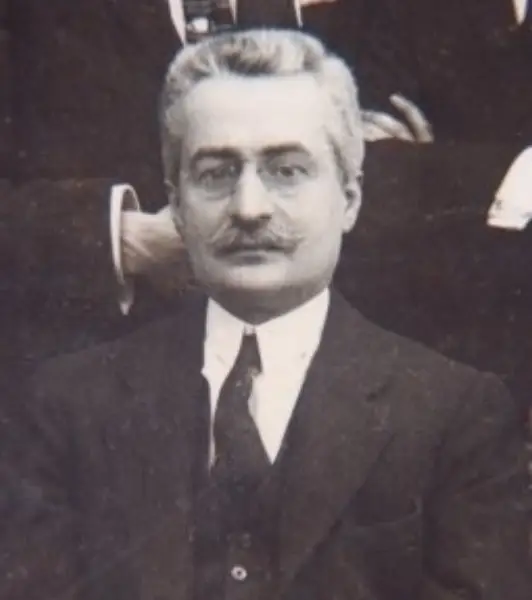
Giuseppe Moscati was an Italian physician, scientific researcher, and university professor celebrated both for pioneering work in biochemistry and for heroic piety. Born at Benevento in 1880 into a noble family, he was drawn to medicine by the incurable injuries of his brother Alberto, and he came to regard the doctor's work as a kind of priesthood. After graduating with honors from the University of Naples in 1903, he served at the Ospedale degli Incurabili, where his evacuation of a hospital at Torre del Greco during the 1906 eruption of Vesuvius saved every patient just before the roof collapsed. A forerunner of modern diabetology and endocrinology, he brought insulin therapy into Italian practice before anyone else and entered the Royal Academy of Surgical Medicine in 1911. He refused payment from the poor, slipped money into their prescriptions, and used the faith and the sacraments as part of his treatment. He died suddenly at his home in Naples on 12 April 1927, after attending Mass that morning. Beatified in 1975 and canonized in 1987 following recognized miracles of healing, his tomb in the Gesù Nuovo church remains a center of pilgrimage.
The Complete Life
A Noble Childhood Between Benevento and Naples
Giuseppe Maria Carlo Alfonso Moscati came into the world, so the record runs, at one o'clock in the morning of 25 July 1880, in Benevento's Rotondi Andreotti Leo Palace, the seventh of nine children of a noble Beneventene family with roots in the village of Santa Lucia in Serino near Avellino. His father, Francesco, was a well-known lawyer and magistrate who had become president of the Benevento court; his mother, Rosa De Luca dei Marchesi di Roseto, was noble by birth. Baptised six days into his life, the boy called Peppino grew up amid the kinds of Catholic surroundings that would form him for life: he received his First Communion in December 1888 at the Sanctuary of the Handmaids of the Sacred Heart, where he would later often meet Blessed Bartolo Longo, and the family developed a spiritual bond with Caterina Volpicelli, later canonized, who became one of the most important spiritual guides of his maturity. Family moves followed the father's career, from Benevento to Ancona and back to Naples, where the household finally settled on Via Cisterna dell'Olio. Summers in Avellino gave the boy the image of his father serving at the altar in the chapel of the Poor Clares.
§ Youth
Medicine as a Priesthood
Moscati finished elementary school in 1889 and entered Naples's Liceo Vittorio Emanuele II, numbered among whose professors was the vulcanologist Giuseppe Mercalli; he took his honours diploma in 1897. That year brought two decisive events. His brother Alberto, injured in 1892 by a fall from a horse during military service, lay at home with incurable head trauma, and the care Giuseppe observed around him awakened his desire to study medicine. In the same year his father died of a cerebral haemorrhage, leaving the young man with enlarged responsibilities. His biographer Marini records that Giuseppe saw the doctor's work as a sort of priesthood, a conviction that would govern his entire career. He received confirmation in March 1900 from the Auxiliary Bishop of Naples while still pursuing his medical studies, and on 4 August 1903 he graduated with honors from the Faculty of Medicine of the University of Naples, presenting a thesis on hepatic ureogenesis judged worthy of print. Within months he won the competitions for ordinary and extraordinary assistant posts at the Ospedale degli Incurabili, ranking second in the former, and began the hospital career in which his faith and his science would grow together.
§ Studies
Scientist and Servant of the Sick
Moscati's career advanced on both fronts of research and charity. When Mount Vesuvius erupted on 8 April 1906, he was responsible for a hospital at Torre del Greco only a few miles from the crater; its patients were largely elderly and many were paralyzed, and he oversaw the evacuation so effectively that all were out before the roof fell under the ash. He then wrote to the director of the Neapolitan hospital service to thank his helpers, omitting his own name. In 1908 he became assistant professor of Physiological Chemistry and took up research at the Institute of Physiology of the Domenico Cotugno Hospital. The year 1911 crowded in achievements: he attended the International Physiology Conference in Vienna and visited Budapest, collaborated on the newspaper La Riforma Medica, conducted the civic government's public-health inspection and research during the cholera outbreak, joined the Royal Academy of Surgical Medicine, and received his doctorate in physiological chemistry. Insulin therapy entered Italy through him, making him a forerunner of modern diabetology and endocrinology, and he grew famous for studies of blood quantity in experimental nephritis that distinguished the nephritic from the nephrotic syndrome. In the autopsy room of the Institute of Anatomical Pathology he directed, he placed a crucifix inscribed with the words of Hosea: O death, I will be thy death.
§ Medical career
Faith and Science Without Contradiction
Moscati kept a vow of chastity from his youth and practiced daily prayer, daily Mass, and regular retirement for recollection. He regarded medicine as a means of alleviating suffering rather than of profit: he charged the poor nothing, sometimes sent patients home with a prescription and a fifty-lira note in the envelope, and bought milk each morning to carry personally to undernourished children and the destitute in Naples's poorest neighborhoods. He even used a patient's faith and the sacraments as part of his treatment. He held that science and faith could never stand in contradiction or antithesis, for each must serve the good of man. His reasoning as a researcher was characteristic: precisely because faith alone holds contents certain beyond doubt, all other human knowledge must be continually subjected to critical scrutiny, as he wrote to his former pupil Agostino Consoli in 1922, reserving the name of science without wavering for the science revealed by God. The Eucharist was the center of his life, and he was deeply devoted to the Virgin, fasting through the year in preparation for her feasts. Even before his death, people claimed he could diagnose patients from a mere list of symptoms and credited him with impossible cures.
§ Faith
The Last Rounds
During the First World War Moscati tried to enlist but was rejected, the military authorities judging that tending the wounded was the greater service he could render; the army requisitioned his hospital, and among the soldiers he made nearly three thousand visits. He deputized in the official physiological chemistry course between 1916 and 1917, substituted for Filippo Bottazzi, the father of Italian biochemistry, in teaching clinical chemistry from 1917 to 1920, and gave up his university professorship in 1917 to devote himself to hospital work. In 1919 he became chief physician of the Incurabili, and in 1922 he obtained the libera docenza in clinical medicine after the ministry's commission unanimously waived the usual examinations. In the early 1920s he also turned to the history of medicine, publishing studies of Giovanni Alfonso Borelli, whom he called the first father of the new medicine, and of Domenico Cotugno, founder of the Neapolitan medical school. On 12 April 1927, after attending Mass and receiving Communion as he always did, spending the morning at the hospital, and attending to patients at home until about three in the afternoon, he sat down tired in the armchair of his office and died there. The funeral was crowded with the people of Naples.
§ Medical career
Miracles and the First Modern Doctor Saint
Moscati's cause moved steadily after his death. Theologians approved his spiritual writings on 11 May 1945; the cause was formally opened on 6 March 1949, making him a Servant of God; and Pope Paul VI beatified him in Saint Peter's Square on 16 November 1975. Two healings supported the beatification: Costantino Nazzaro, a marshal of the Penitentiary Police afflicted with a tubercular infection and Addison's disease, dreamed in the spring of 1954 that the Benevento doctor was operating on him and awoke perfectly healed; and Raffaele Perrotta recovered suddenly and completely from meningococcal meningitis in February 1941 after his mother sought Moscati's intercession, remissions physicians judged scientifically inexplicable. For canonization the Church examined the case of Giuseppe Montefusco, a young man of Somma Vesuviana dying of acute myeloblastic leukaemia at the Cardarelli hospital in Naples. His mother dreamed of a doctor in a white coat, recognized him in a photograph at the Gesù Nuovo, and after collective prayers the young man was cured in June 1979, returning to his work as a blacksmith. The Congregation promulgated its decree on 27 March 1987, and Pope John Paul II canonized Moscati on 25 October 1987, the first modern doctor to be canonized.
§ Veneration
The Saint of the Gesù Nuovo
Moscati's tomb draws pilgrims to the Gesù Nuovo church in Naples. His body, first buried in the Cemetery of Poggioreale in a bronze urn by the sculptor Amedeo Garufi, was exhumed three years later and reinterred at Gesù Nuovo; then on 16 November 1977 — precisely two years after beatification — the body, once canonically recognized, was laid beneath the altar of the Visitation chapel. A silver reliquary holds a toe of his right foot, displayed at solemn celebrations and taken on peregrinatio to churches that request it, and other relics are kept from Aversa to Piacenza and in the family's birthplace of Santa Lucia di Serino, where his childhood house can be visited. Hospitals in Avellino, Aversa, and Statte and the outpatient clinic of Rivello bear his name, and in 2007 Rai Uno aired a television film about him, directed by Giacomo Campiotti, that presented the saint as physician of the destitute. His liturgical memorial, originally fixed on 16 November, was restored by the Roman Martyrology of 2001 to his dies natalis of 12 April. He remains the enduring model of the physician-saint: scientist, professor, and man of the Eucharist who saw in every patient the figure of Christ.
§ Relics
Timeline
- 25 Jul 1880
Born at one o'clock in the morning in the Rotondi Andreotti Leo Palace in Benevento.
§ Youth
- 31 Jul 1880
Baptised six days after birth by the priest Innocenzo Maio.
§ Youth
- 8 Dec 1888
Received his First Holy Communion from Monsignor Enrico Marano at the Sanctuary of the Handmaids of the Sacred Heart.
§ Youth
- 1892
Alberto, his brother, was left with an incurable head injury after a fall from a horse, and the care around him awakened Giuseppe's interest in medicine.
§ Studies
- 1897
Awarded his honours high school diploma at the Liceo Vittorio Emanuele II; his father died of a cerebral haemorrhage the same year.
§ Studies
- 3 Mar 1900
Received the sacrament of confirmation from Pasquale de Siena, Auxiliary Bishop of Naples.
§ Studies
- 4 Aug 1903
Graduated with honours in medicine from the University of Naples with a thesis on hepatic ureogenesis.
§ Medical career
- 2 Jun 1904
Albert, his brother, died of complications stemming from that riding injury.
§ Medical career
- 8 Apr 1906
Oversaw the evacuation of the Torre del Greco hospital before the eruption of Mount Vesuvius collapsed its roof, saving all the patients.
§ Medical career
- 1908
Won the competition for assistant professor of Physiological Chemistry and began research at the Domenico Cotugno Hospital for Infectious Diseases.
§ Medical career
- 1911
Sent to the International Physiology Conference in Vienna, charged with cholera public-health inspections in Naples, elected to the Royal Academy of Surgical Medicine, and earned a doctorate in physiological chemistry.
§ Medical career
- 25 Nov 1914
His mother, who suffered from diabetes, died.
§ Medical career
- 1919
Made director of a local men's school and appointed chief physician by the board of the Incurabili Hospital.
§ Medical career
- 6 Jun 1922
Qualified as a free lecturer in General Medical Clinic, the commission unanimously exempting him from the usual examinations.
§ Medical career
- 12 Apr 1927
Died suddenly in the armchair of his office in Naples after attending Mass and a morning at the hospital.
§ Death
- 6 Mar 1949
His cause formally opened, granting him the title of Servant of God, after theologians approved his spiritual writings in 1945.
§ Veneration
- 16 Nov 1975
Beatified by Pope Paul VI in Saint Peter's Square.
§ Veneration
- 16 Nov 1977
Body laid beneath the altar of the Visitation chapel at the Gesù Nuovo following its canonical recognition.
§ Relics
- Jun 1979
Giuseppe Montefusco, a young leukaemia patient, was cured after prayers to Moscati, the miracle of his canonization.
§ Veneration
- 27 Mar 1987
The Congregation for the Causes of Saints promulgates the decree confirming the cure of Giuseppe Montefusco as miraculous.
§ Veneration
- 25 Oct 1987
Canonized by Pope John Paul II in Saint Peter's Square as the first modern doctor raised to the altars.
§ Veneration
In Their Own Words
The sick are figures of Jesus Christ; immortal and divine souls who, according to the Gospel rule, must be loved as themselves.
Pain is not to be treated as a tic or a muscular contraction, but as the cry of a soul to which another brother rushes with the fire of love and mercy.
Progress lies in a continuous critique of what we learn. Only one science is unwavering and uncontrolled, the science revealed by God, the science of the beyond.
Love the truth, show yourself what you are, and without pretense and without fear and without consideration. And if the truth cost you persecution, and you accept it; and if torment, and you endure it. And if by truth you should sacrifice yourself and your life, and you are strong in sacrifice.
And then what can we other doctors do? Very little! And therefore, not being able to help the body, we help the soul, and in the face of wretched cases, we remember the duties of the spirit that come to us from the faith of our fathers!
Not science, but charity has transformed the world, in some periods; and only very few men have gone down in history for science; but all may remain imperishable, a symbol of the eternity of life, in which death is but a stage, a metamorphosis for a higher ascent, if they devote themselves to good.
We love God without measure, without measure in love, without measure in pain.
I visited you more as a friend than as a doctor.
The Record
- Major works
- Pioneering introduction of insulin therapy in Italy·Studies on the determination by light microscopy of blood amount in experimental nephritis·Public health research on the 1911 Naples cholera outbreak·Historical studies of Giovanni Alfonso Borelli and Domenico Cotugno·Collaboration on the newspaper La Riforma Medica
- Patron of
- biochemistry·bachelors·doctors·physicians·people rejected by religious orders
- Symbols
- white coat·stethoscope·cross
- Canonization
- Canonized by Pope John Paul II in Saint Peter's Square on 25 October 1987, after beatification by Pope Paul VI on 16 November 1975; the first modern doctor to be canonized.
Prayer
Bibliography
Show 7 sources
- Marini, Ercolano (1930). Il prof. Giuseppe Moscati della Regia Università di Napoli (in Italian). Napoli: Tip. F. Giannini e Figli
- Marranzini, Alfredo (2003). Giuseppe Moscati, modello del laico cristiano di oggi (in Italian). Roma: Edizioni ADP
- Marranzini, Alfredo (2004). Giuseppe Moscati, un esponente della scuola medica napoletana (in Italian). Roma: Edizioni ADP
- Miller, Michael J. (2004). "Joseph Moscati: Saint, doctor, and miracle-worker". Catholic Education Resource Center
- Ponti, Giovanni; d'Onofrio, Felice; Ruini, Cristel; Muscatello, Umberto; Tomasi, Aldo (2015). "Giuseppe Moscati: A Man, A Physician and a Scientist". Amha – Acta medico-historica Adriatica. 13 (1): 171–180. PMID 26203546
- Farmer, David Hugh (1978). The Oxford Dictionary of Saints. Clarendon Press. p. 349. ISBN 0198691203
- Immediata, Beatrice (2008). Giuseppe Moscati un uomo un medico un santo. Paoline Editoriale Libri. ISBN 88-315-3421-1
Profile text adapted from the Wikipedia article, licensed CC BY-SA 4.0.
Pray with this saint every day
Save St. Giuseppe Moscati to your favorites, read the full profile, and get feast-day reminders in the Saints app.
Get the Saints AppFree on the App Store for iPhone and iPad