
died c. 676·Feast February 21
St. Gondelbert
Founder of Senones Abbey in the Vosges
Overview
Gondelbert, whose name appears in many forms including Gondelbertus, Gundebert, Gumbert, Gombert, and Gondeberg, was the founder of the Benedictine Senones Abbey in the Rabodeau valley of the Vosges mountains, an establishment he planted around 640 AD. The Benedictine monks of Senones preserved an eleventh-century tradition that before his monastic career he had served as archbishop of Sens, and they explained the name of his foundation by it: the new monastery took its title from the diocese of Sens, Senonis in Latin, transplanted into the mountain valley. His work drew royal recognition. In 661 Childeric II, king of Austrasia, granted the Val de Senones to 'Gumbertus Episcopus,' a donation both generous and calculating, for it honored a man of God and advanced the Christian faith while planting a civilizing center in one of the poorest corners of the kingdom. Gondelbert's first concern was a church for his community, dedicated to Notre-Dame, with monastic buildings gathered under the patronage of St. Peter and placed under the Rule of St. Benedict. He was also remembered as the confessor of Itta of Metz and credited with raising the first church at Itteville. He died around 676 while on pilgrimage to Moyenvic, and his feast is kept on February 21.
The Complete Life
From the See of Sens to the Vosges
The man the monks of Senones knew as their founder came to them, by their own account, from one of the most ancient sees of Gaul. A tradition preserved at Senones Abbey from the eleventh century holds that Gondelbert had been archbishop of Sens before he withdrew to the Rabodeau valley, trading the government of a great diocese for the silence of the Vosges mountains. The date of his arrival falls around 640 AD, when he established the monastery that would make his name endure. In a gesture that joined his two lives, he named the new house for the diocese he had served, taking Senonis, the Latin name of Sens, as the seed of the name Senones. The story of his life reaches us chiefly through a biography written by Richer, a monk of the abbey, composed some three centuries after the events it describes, so that the details are those which the community judged worth remembering. What they chose to remember is telling: not the administration of an archdiocese but the decisive turning, the moment a prelate of the old Roman order became a founder in the wilderness, carrying the memory of his church into a valley that had none.
§ Life
Building the Abbey of Senones
Gondelbert's foundation soon attracted the attention of the crown. In 661 the Austrasian king Childeric II made over the Val de Senones to 'Gumbertus Episcopus,' as the record names him, and the chronicler of the event judged the gift with clear eyes: it was at once generous and self-serving. The young king pleased himself by obliging a man of God and by favoring the spread of the Christian faith in the region, but he also grasped that an abbey would plant a civilizing center in the poorest district of his realm. For his part, Gondelbert ordered his priorities with a founder's practicality. His first concern was a church for the community, dedicated in honor of Notre-Dame; around it there rose in time the monastic offices, set beneath the patronage of St. Peter. The whole group followed the Rule of St. Benedict, making Senones one of the Benedictine houses of the Vosges. Beyond the valley, his name was attached to other works: he is remembered as the confessor of Itta of Metz, and he is credited with building the first church at Itteville, a token of a wider ministry that reached beyond his own foundation.
§ Life
Pilgrimage and Death
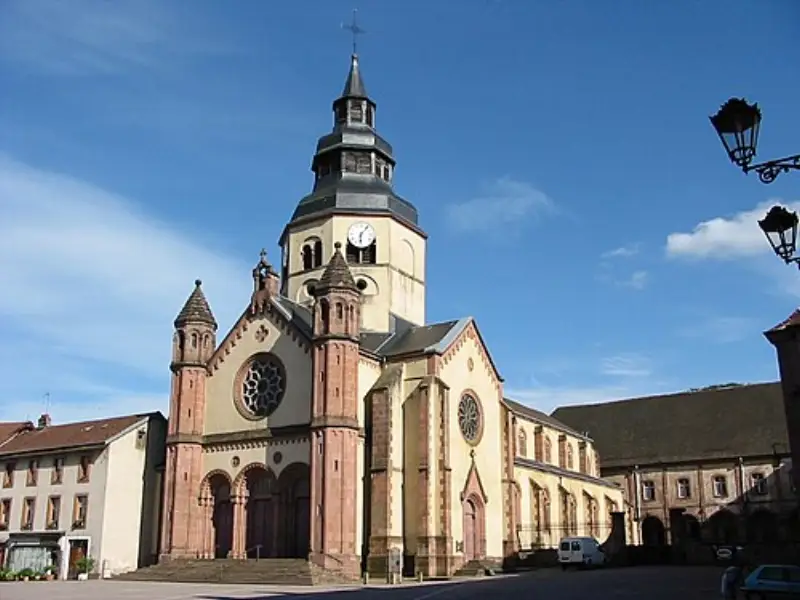
Gondelbert's life ended as it had been spent, in motion toward the things of God. Around 676, some thirty-five years after his arrival in the valley, he set out on a pilgrimage to Moyenvic and died in the course of it, far from the abbey whose founder and first father he had been. The place of his death, a pilgrimage destination rather than his own monastery, suggests a man who kept his own counsel about holiness to the end, going to pray at the shrines of others rather than resting on what he had built. The community he left behind carried his memory forward with the double devotion of sons and heirs. The monks of Senones kept the traditions of his episcopal origin and his royal charter, and a monk of the house, Richer, eventually wrote the life that transmitted both to later centuries. The abbey grew into one of the great religious houses of Lorraine, the fulfillment of Childeric's hope that a foundation in the poor valley would become a source of order and faith. Gondelbert himself was venerated as a Catholic saint from the age before formal canonization, and the parish church at Senones still stands dedicated to him.
§ Life
The Abbey and the Saint's Memory
Senones Abbey became the principal monument of Gondelbert's life, and the ways his memory was kept reveal how the community understood him. The dedication of his first church to Notre-Dame and of the monastic offices to St. Peter bound the house to the two great pillars of heavenly patronage, while the Rule of St. Benedict gave it its daily shape for the centuries of its existence. His feast was assigned to February 21, and the Church of both the Roman and Eastern traditions has numbered him among the saints. The parish church of Senones is dedicated to St. Gondelbert to this day, so that the town that grew up around his abbey keeps his name at the heart of its worship. Beyond the valley, the tradition of his connection with Itta of Metz tied the founder of Senones to one of the great spiritual families of the age, and the church he raised at Itteville marked his influence in another region entirely. Historians approach the details with care, since the written life postdates its subject by three centuries, but the outline stands: an archbishop or bishop who became a hermit-founder, a royal charter of 661, a Benedictine community planted in poor country, and a cult that endured.
§ Life
Timeline
- 640
Founded the Benedictine Senones Abbey in the Rabodeau valley of the Vosges mountains.
§ Life
- 661
Received the Val de Senones as a donation from Childeric II, king of Austrasia.
§ Life
- 676
Died around this year while making a pilgrimage to Moyenvic.
§ Life
The Record
- Major works
- Senones Abbey·Church of Notre-Dame at Senones·First church at Itteville
- Canonization
- Pre-congregation; canonized before the establishment of the formal process
Prayer
Bibliography
Show 7 sources
- "Abbay of Senones", Agence Régionale du Tourisme Grand Est | Destination Lorraine
- "Saint Gondelbert", Diocèse de Saint-Dié
- Goyau, Georges. "Sens" The Catholic Encyclopedia. Vol. 13. New York: Robert Appleton Company (1912)
- "Saint Gombert", Nominis
- "2H: Abbaye de Senones", p. 32, Vosges-Archives.com (in French)
- Saint Gundebert of Sens, Saints.SQPN.com. 19 February 2010
- "Eglise Saint-Gondelbert", Diocèse de Saint-Dié
Profile text adapted from the Wikipedia article, licensed CC BY-SA 4.0.
Pray with this saint every day
Save St. Gondelbert to your favorites, read the full profile, and get feast-day reminders in the Saints app.
Get the Saints AppFree on the App Store for iPhone and iPad