
died c. 375·Feast February 23
St. Gorgonia
Married saint of the Cappadocian family of Nazianzus
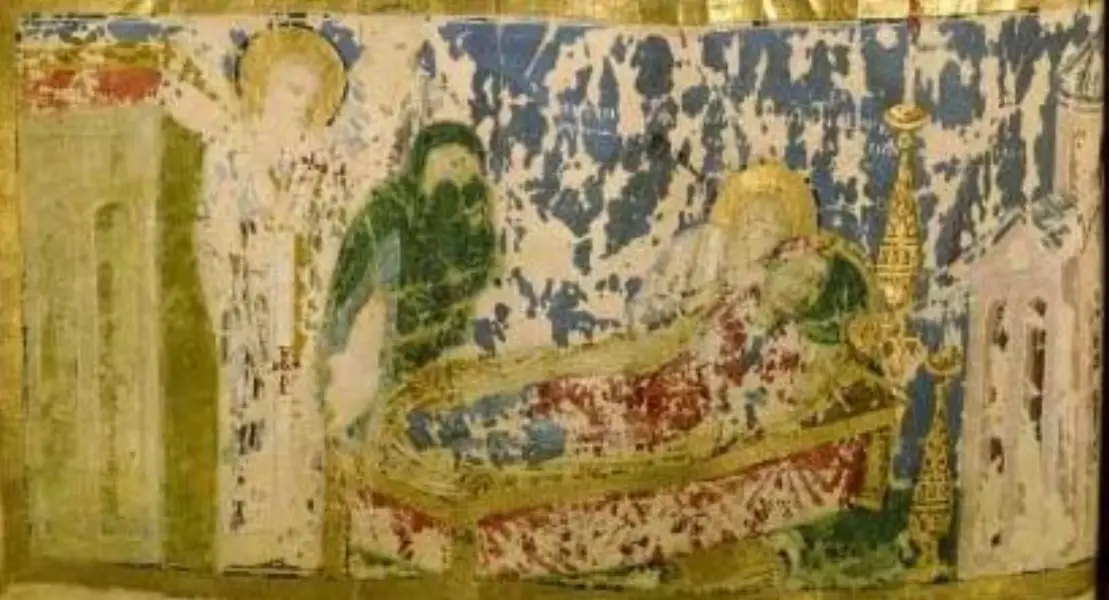
Overview
St. Gorgonia, who died around 375, was born into one of the most celebrated families of the early Church: daughter of St. Gregory the Elder and St. Nonna, sister of St. Gregory of Nazianzus, and formed in the Christian household at Nazianzus in Cappadocia. She wed a husband of standing in Pisidia — Alypius, by the testimony of her brother's Epitaph, though other accounts name him Vitolian or Meletius — and was remembered by at least one writer as the pattern of a married saint. She bore a number of sons and three daughters, among whom Alypania was the best known; in her later years she brought her husband to the faith and was baptized together with him, her sons, and her grandsons. Twice she was miraculously cured of grave illness: once after being trampled by a team of mules, when she refused the help of a physician as indecent and was healed, it was said, through her very modesty; and once from a life-threatening disease by applying to her body the consecrated gifts of the altar blended with tears she had wept upon it. Her brother Gregory preached her funeral eulogy, hailing her as a model Christian spouse and mother, the paragon of women and the diamond of her sex.
The Complete Life
Daughter of Nazianzus
Gorgonia was born at Nazianzus in Cappadocia, a small city whose Christian importance far exceeded its size, and her family became a school of sanctity for the whole Church. Her father, Gregory the Elder, served as bishop of Nazianzus; her mother, Nonna, was the persuasive faith whose prayers won her husband to the Gospel; her brother Gregory would be numbered among the greatest theologians and orators of the age. In such a household Gorgonia received the formation of a Christian woman of the fourth century, where the liturgy of the domestic church was celebrated with the same seriousness as that of the cathedral. In her family the faith was an inheritance and a daily discipline together. Of her childhood the ancient writers say little, for her distinction lay elsewhere: not in offices held or books written, but in the holiness she would bring to the vocation that followed. She stands among the first married women of the Cappadocian circle whose sanctity the Church recorded, the daughter and sister of bishops who proved by her life that the same grace sanctifies the marriage bed and the episcopal throne.
§ Biography
The Pattern of a Married Saint
Gorgonia was joined in marriage to a man of standing in Pisidia, known to the sources by differing names — Vitolian in some accounts, Meletius in others, while her brother's Epitaph, preserved in the Greek anthology, gives the name Alypius. To the responsibilities of a great house she brought the discipline of her parents' home, and at least one writer called her the pattern of a married saint. She bore a number of sons and three daughters, Alypania standing out among them, and raised the children within the faith of her family. The crowning act of her married life was the conversion of her husband: later in life she brought him to belief, and she was baptized together with him, her sons, and her grandsons, an entire household gathered into the font through a wife's and mother's constancy. For a fourth-century aristocratic marriage this was no small victory, and it made her a model for every Christian spouse whose faith must win a family where preaching cannot. Gregory of Nazianzus, who knew her intimacy better than any, drew from her life his most tender picture of domestic holiness.
§ Biography
Two Cures and the Modesty of Faith
Twice in her life Gorgonia was delivered from grave illness in ways her family regarded as miraculous. The first came when she was trampled by a team of mules and left with broken bones and crushed internal organs. Refusing the help of a doctor — she thought it indecent that a man should attend her injuries — she abandoned herself to prayer alone, and by the account of the tradition it was this very modesty that cured her, the virtue that shunned a physician's hands drawing down the hand of God. The second illness was desperate, marked by headache, fever, paralysis, and fits of coma. This time she went to the altar itself, and laying her head upon it she wept; mixing her tears with the sacred elements of the Eucharist, she anointed her body with them, and every symptom vanished, as she had been cured of the first, through the strength of her prayer. These two cures, remembered by her brother, reveal the character of her spirituality: a retiring purity joined to an absolute confidence in the presence of Christ upon the altar.
§ Biography
The Eulogy of Her Brother
Gorgonia died around the year 375 of natural causes, in the midst of a family that grief would soon strike repeatedly. Her father and mother were still alive, though extremely old, when death came to their daughter before them — an inversion of nature's order that deepened the mourning of Nazianzus. At her funeral her brother Gregory of Nazianzus the Younger preached the eulogy that has preserved her memory ever since, declaring her a model Christian spouse and mother and bestowing upon her the titles by which later generations have known her: the Paragon of Women and the Diamond of Her Sex. From a rhetor whose praise was rarely extravagant, these words carry their full weight; he had watched his sister govern a great household, convert her husband, bear her sufferings without complaint, and die a quiet death, and he judged it a life of heroic sanctity. Her passing, mourned within the triple generation of her family, fixed her image in the Church's memory as the saint who needed neither virginity nor martyrdom to reach the altars — only fidelity in the state to which God had called her.
§ Biography
Patroness of the Sick
The veneration of Gorgonia passed to both the great traditions of the Church: she is honored as a saint in the Eastern Orthodox Church and the Roman Catholic Church alike, her feast observed in the West on 9 December and in the East on 23 February, the Eastern date being held to mark the day she died. In the Greek Orthodox tradition the sick invoke her as their heavenly advocate, an intercession drawn directly from the two wonderful cures her own lifetime had known. The charity she practiced in her household earned her, in the memory of the Greek Church, titles that describe a life of mercy: mother to the orphaned, eyes for those without sight, guardian of a shelter for the destitute. Among the vast company of the Cappadocian saints — her father, her mother, her brother the Theologian, and the great Basil her kinsman's circle — she remains the one whose sanctity was lived entirely within marriage, and the sick who call upon her invoke a woman who knew illness from the inside and overcame it at the altar.
§ Veneration
In Their Own Words
The Diamond of Her Sex
The Record
- Patron of
- patron of people afflicted by bodily ills or sickness
- Canonization
- Pre-congregation; venerated since antiquity in East and West
Prayer
Bibliography
Show 4 sources
- Salmas, Peter G. (Rev.) (1997). "Saint Gorgonia". Archive of Sunday Bulletin Homilies. The Greek Orthodox Church of the Holy Cross.
- Jones, Terry. "Saint Gorgonia". CatholicSaints.Info.
- Dunbar, Agnes (1904). A Dictionary of Saintly Women. George Bell & Sons. pp. 353–354.
- "St. Gorgonia". Saints and Angels. Catholic Online.
Profile text adapted from the Wikipedia article, licensed CC BY-SA 4.0.
Pray with this saint every day
Save St. Gorgonia to your favorites, read the full profile, and get feast-day reminders in the Saints app.
Get the Saints AppFree on the App Store for iPhone and iPad