
1833-1900·Feast July 9
St. Gregorio Grassi
Bishop and Martyr (Franciscan, Vicar Apostolic of Northern Shanxi)
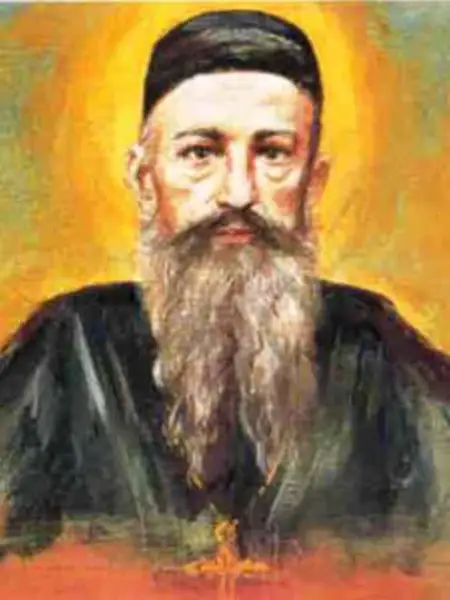
Overview
Pier Luigi Grassi was born on 13 December 1833 at Castellazzo Bormida in Piedmont. He took the Franciscan habit at fifteen, in November 1848 at the friary of Montiano in Romagna, receiving the name Gregory; after theology studies at Bologna he was ordained at Mirandola in 1856. Further training in Rome prepared him for Shanxi, and in 1860 he reached Taiyuan, where he served as mission promoter, choirmaster of the seminary, and director of the mission orphanage. Chosen coadjutor vicar apostolic in January 1876, he took charge of the Apostolic Vicariate of Northern Shanxi in June 1891, and that September opened a novitiate open to Chinese candidates of all four Shanxi vicariates together with a rest home for worn-out missionaries. Plague and famine kept filling his orphanages, and he enlarged the Taiyuan house and founded others for the children left behind. When the Boxer rising spread and Governor Yuxian ordered the Europeans' arrest in July 1900, Grassi refused to escape — he had desired martyrdom, he said, since he was twelve. Seized on the night of 5 July with Bishop Fogolla, friars, the seven Franciscan Missionaries of Mary, and Chinese lay faithful, he was condemned after a show trial and put to death by Yuxian's own sword on 9 July 1900.
The Complete Life
Early Life
Pier Luigi Grassi was born on 13 December 1833 at Castellazzo Bormida in Piedmont, in the Kingdom of Sardinia. At fifteen he took the Franciscan habit, on 2 November 1848, at the friary of Montiano in Romagna, receiving the religious name Gregory; his solemn profession followed a year later, on 14 December. Sent to Bologna for his seminary studies, he was ordained priest at Mirandola on 17 August 1856, and then to Rome for further training in preparation for the mission to China.
§ Early life and mission
Mission and Ministry
In 1860 Grassi was assigned to Taiyuan in Shanxi, the base of the Franciscan mission in northern China, where he held the roles of mission promoter, orphanage director for the mission, and seminary choirmaster. He was chosen Coadjutor Vicar Apostolic of the Apostolic Vicariate of Shanxi on 25 January 1876; on 17 June 1891 authority over the Vicariate of Northern Shanxi passed to him. That September he established at Taiyuan a novitiate to open Franciscan life to Chinese candidates of all four Shanxi vicariates, together with a rest home for overworked missionaries — two institutions that looked to the mission's Chinese future and the care of its worn-out European workers. His episcopate was spent against a backdrop of catastrophe: plague and famine repeatedly struck the local population, and Grassi enlarged the Taiyuan orphanage and founded several others to cope with the orphans the epidemics left behind.
§ Early life and mission
Trial and Final Years
When the short and bloody Boxer Rebellion broke out at Peking in June 1900 and the Empress Dowager Cixi issued the imperial decree of war against the foreign powers, Grassi was urged to flee. His answer has become the best-remembered sentence of the Chinese martyrs: martyrdom, he said, he had desired and begged of God since the age of twelve; the hour he had so longed for had now arrived — 'must I run away?' Early in July, Yuxian, the governor of Shanxi, gave orders for the arrest of the European missionaries throughout the province. On 4 July the Franciscan mission at Hengyang, in southern Hunan, was attacked by a mob, which murdered the friar Cesidio Giacomantonio and burned the mission; on 7 July Bishop Antonio Fantosati and his companion Giuseppe Maria Gambario were killed while returning there. On the night of 5 July the Boxers took Grassi, Bishop Fogolla and the whole Taiyuan community from the mission, and after a fixed trial the group was condemned. Grassi was put to death at Taiyuan on 9 July 1900, in his sixty-seventh year.
§ Martyrdom
Canonization
Grassi was beatified by Pope Pius XII on 27 November 1946 among the martyrs of the Boxer persecution, and canonized by Pope John Paul II on 1 October 2000 among the 120 Martyrs of China. His feast is kept on 9 July with the Taiyuan company. The canonization of the China martyrs in 2000 drew protest from the Chinese government, which read the martyrs of 1900 as agents of imperialism; the Vatican answered that they died for the faith, and Grassi's orphanages and famine work are the factual refutation.
§ Introduction
Legacy
Grassi is the central figure of the Taiyuan martyrdoms: the senior bishop on the spot, the builder of its seminary, orphanages and novitiate, and the man whose refusal to leave fixed the example for the whole community, friars, seminarians and servants alike. Forty years of Shanxi work — mission promotion, choir, the care of orphans by plague and famine — stand behind his single recorded sentence of 1900. In the Franciscan martyrology of China he represents the institutional achievement of the Shanxi missions at the moment of their destruction.
§ Introduction
Timeline
- 13 Dec 1833
Born Pier Luigi Grassi at Castellazzo Bormida in Piedmont
§ Early life and mission
- 2 Nov 1848
Received the Franciscan habit at the Friary of Montiano in Romagna, taking the name Gregory
§ Early life and mission
- 14 Dec 1849
Made solemn profession one year after receiving the habit
§ Early life and mission
- 17 Aug 1856
Ordained priest at Mirandola after seminary studies in Bologna
§ Early life and mission
- 1860
Assigned to Taiyuan, China, as Mission Promoter, orphanage director, and seminary choirmaster
§ Early life and mission
- 25 Jan 1876
Chosen Coadjutor Vicar Apostolic of the Apostolic Vicariate of Shanxi
§ Early life and mission
- 17 Jun 1891
Assumed authority over the Apostolic Vicariate of Northern Shanxi
§ Early life and mission
- 6 Sep 1891
Established a novitiate for Chinese Franciscans and a rest home for overworked missionaries
§ Early life and mission
- 27 Jun 1900
Described in a letter the mounting peril to Christians in Shanxi as Boxer violence spread
§ Martyrdom
- 5 Jul 1900
Imprisoned by Boxer forces at Taiyuan along with Bishop Fogolla, friars, sisters, and Chinese faithful
§ Martyrdom
- 9 Jul 1900
Killed at Taiyuan after a show trial before Governor Yuxian, in the massacre that spread across Shanxi
§ Martyrdom
- 24 Nov 1946
Beatified by Pope Pius XII along with companions Fogolla and Fantosati
§ Veneration
- 25 Feb 1949
The cause for their canonization was opened
§ Veneration
- 1 Oct 2000
Canonized by Pope John Paul II among the 120 Martyrs of China
§ Veneration
In Their Own Words
Ever since I was twelve, I have desired and also asked God for martyrdom. Now that this longed-for hour has come, must I run away?
The European establishments... are seriously threatened by the mob, united with the Boxers and the soldiers: a catastrophe could occur at any moment.
The Record
- Canonization
- Beatified by Pope Pius XII on 24 November 1946; canonized by Pope John Paul II with the 120 Martyrs of China on 1 October 2000
Prayer
Bibliography
Show 9 sources
- ↑ "Il martirio di San Gregorio Grassi". L'Indicatore Mirandolese (in Italian). No. 5. 1 March 2018. p. 24.
- ↑ "Bishop St. Grégoire Grassi, O.F.M. Obs" . Catholic Hierarchy .
- ↑ Office for Saints O.F.M. "The Friars Minor in Shanxi" Archived 2012-01-03 at the Wayback Machine
- ↑ "Ss. Gregory Grassi, Hermine Grivot (Virgin), And Companions", The Irish Franciscans
- ↑ Grassi qtd. in Valli, Mario (1905). Gli avvenimenti in Cina Nel 1900 e l'azione della R. Marina Italiana (in Italian). Milan. p. 259. {{ cite book }} : CS1 maint: location missing publisher ( link )
- ↑ "7 Martyrs" . Franciscan Missionaries of Mary . Archived from the original on 3 May 2021 . Retrieved 5 May 2021 .
- ↑ Valli, Mario (1905). Gli avvenimentiin Cina nel 1900 e l'azione della R. Marina italiana . Milan. p. 260. {{ cite book }} : CS1 maint: location missing publisher ( link )
- ↑ Valli 1905, pp. 260–261
- 1 2 Index ac status causarum beatificationis servorum dei et canonizationis beatorum (in Latin). Typis polyglottis vaticanis. January 1953. p. 87.
Profile text adapted from the Wikipedia article, licensed CC BY-SA 4.0.
Pray with this saint every day
Save St. Gregorio Grassi to your favorites, read the full profile, and get feast-day reminders in the Saints app.
Get the Saints AppFree on the App Store for iPhone and iPad