
759 – 861·Feast October 18
St. Gregory of Khandzta
Restorer of Georgian Monasticism in Tao-Klarjeti
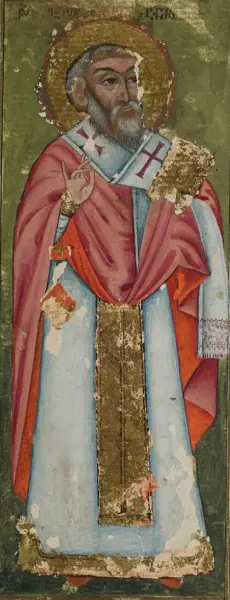
Overview
Gregory of Khandzta was a Georgian ascetic, churchman, and man of letters whose labors in the Tao-Klarjeti region are honored as a central architect of the revival of Georgian monasticism. Born into an aristocratic family of Kartli on 5 October 759 and educated in his uncle Nerse's noble household in the sciences of the church, liturgical chant, Georgian letters, philosophy, and foreign languages, he turned aside from the episcopal career his family intended for him and fled with his cousin Savva and two companions to the Opiza Monastery. After two years he withdrew to the Khandzta region, lived with the hermit Evodius, and around 782 raised there the church, refectory, and cells of the Khandzta Monastery, aided by the local lord Gabriel Dapanchuli. His reputation brought him the patronage of Ashot I the Great, who granted land at Shatberdi where Gregory founded a second monastery that became a celebrated center of manuscript copying and illumination. His disciples carried his rule, modeled on the Lavra of Saint Sabbas, to Nedzvi, Kviriketsminda, Ubisi, and the women's monastery of Mere, and he helped restore the church of Ishkhani. Revered by nobility and clergy alike, he influenced the election of Arsenius I as Catholicos, worked miracles, and died a centenarian on 18 October 861.
The Complete Life
An Aristocrat's Son Who Fled to Opiza
Gregory was born on 5 October 759 into the aristocracy of Kartli, bound by kinship to the governing circles of the Principality of Iberia: the wife of the Eristavi Nerse, among the land's most powerful men, was his aunt. Raised in that noble household, he received the broad education reserved for the elite of Christian Caucasia, which covered the church sciences, chant, Georgian letters, philosophy, and several foreign tongues. His family marked him out from childhood for the highest offices of the church, preparing him for priesthood and eventually the episcopate. Gregory had other designs. With his cousin Savva, who would later serve as Bishop of Ishkhani, and two other companions, he fled the path laid out for him and took refuge at the Opiza Monastery, joining its community as a monk. The escape set the pattern of his whole life, in which rank and learning were always placed at the service of the ascetic ideal rather than the reverse, and it joined his fortunes to the small circle of young aristocrats whose monastic ventures would transform Georgian spiritual life in the following century.
§ Biography
Building at Khandzta
After two years in the community of Opiza, Gregory moved on to the Khandzta region in Tao-Klarjeti and lived for a time with the hermit Evodius, learning the eremitic discipline that would undergird all his foundations. Around 782, together with the disciples who had gathered around him, he raised at the site a church, a refectory, and monastic cells, the first stones of what became the Khandzta Monastery. The work was made possible by the local feudal lord Gabriel Dapanchuli, who supplied the monks with food, labor, and building materials, an early instance of the alliance between ascetic pioneers and the Georgian nobility that characterized the whole movement. Gregory's fame soon reached Ashot I the Great, the foremost ruler of the Georgians, who bestowed on him the estate of Shatberdi; a second monastery rose there, one that grew into a major center for the copying and illumination of manuscripts; some of the books produced under its roof survive to this day. From these two houses the revival of Georgian monastic life in the south spread through the valleys of Tao-Klarjeti.
§ Biography
A Family of Monasteries
Gregory's enduring achievement was not a single holy mountain but a network of houses and disciples that carried one rule across the Georgian lands. He trained monks who went out to found communities of their own: Theodore established the Nedzvi Monastery, Christofor founded Kviriketsminda, and Hilarion of Jerusalem founded the monastery at Ubisi. Gregory himself brought into being a convent for women at Mere, and he lent his support to the repair of Ishkhani and further churches, caring for the older fabric of the Georgian church as well as its new foundations. The discipline he imposed was strict, following the ascetic principles of the Lavra of Saint Sabbas the Sanctified, the great Palestinian father of Eastern monasticism, whose rule he adapted to the conditions of the Caucasus. Both nobility and clergy held him in esteem, and his counsel carried weight in the affairs of the church; he played an influential part in the election of Arsenius I of Iberia as Catholicos of Kartli. His hagiography credits him with numerous miracles, the healing of the sick, the taming of animals, and command over the forces of nature, signs of the holiness that underwrote his authority.
§ Biography
Centenarian of Khandzta and His Biographer
Gregory died on 18 October 861, a centenarian, surrounded by the followers and disciples who had made Khandzta the nursery of Georgian monasticism. The Eastern Orthodox Church marks his memory on the anniversary of his death, October 18, and he is honored as a patron of Georgia itself. Nearly a century later, in 951, the priest Giorgi Merchule compiled the hagiographic Life of Gregory of Khandzta, one of the masterpieces of medieval Georgian literature and the principal source for the saint's career. Through Merchule's book, Gregory's story became the charter legend of the monastic revival of Tao-Klarjeti, the movement of the ninth and tenth centuries in which Georgian monks built, copied, and wrote their culture into survival at the southern edge of their broken kingdom. The monasteries he founded, above all Khandzta and Shatberdi, remained centers of learning, manuscript production, and spiritual life long after his death, and the manuscripts that still survive from Shatberdi stand as the most tangible monument to the aristocrat of Kartli who traded a bishop's palace for a cell in the mountains and thereby altered the course of Georgian Christian civilization.
§ Biography
Timeline
- 759
Born into an aristocratic family of Kartli, nephew of the wife of the Eristavi Nerse.
§ Biography
- 782
Built with his disciples a church, refectory, and monastic cells at Khandzta, the beginning of the Khandzta Monastery, supported by the feudal lord Gabriel Dapanchuli.
§ Biography
- 860
Helped secure the elevation of Arsenius I of Iberia to the catholicosate of Kartli.
§ Biography
- 18 Oct 861
Died as a centenarian at Khandzta, surrounded by followers and disciples.
§ Biography
- 951
Giorgi Merchule compiled the hagiographic account of his life.
§ Biography
The Record
- Major works
- Khandzta Monastery, founded around 782·Monastery at Shatberdi, a major centre of manuscript copying and illustration·Monastic rule modeled on the Lavra of Saint Sabbas the Sanctified
- Patron of
- Patron of Georgia
- Canonization
- Pre-congregation; venerated in the Eastern Orthodox Church, with his feast on the day of his death, October 18.
Prayer
Bibliography
Show 4 sources
- Lang, David Marshall (1956). Lives and Legends of the Georgian Saints. St Vladimir's Seminary Press.
- Toumanoff, Cyril (1963). Studies in Christian Caucasian History. Georgetown University Press.
- Peeters, Paul (1922-23). Latin Translation of the Life of St. Gregory of Khandzta.
- Marr, Nicholas (1911). Texts and Researches on Armenian-Georgian Philology, Series VII. St. Petersburg.
Profile text adapted from the Wikipedia article, licensed CC BY-SA 4.0.
Pray with this saint every day
Save St. Gregory of Khandzta to your favorites, read the full profile, and get feast-day reminders in the Saints app.
Get the Saints AppFree on the App Store for iPhone and iPad