
c. 980 – 1045·Feast June 27
St. Hemma of Gurk
Noble Foundress of Churches and Gurk Abbey
Overview
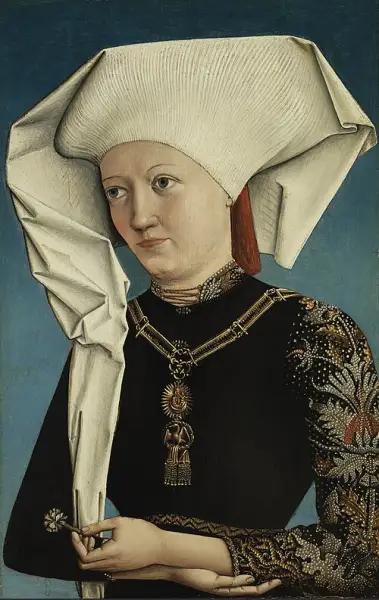
Hemma of Gurk, also called Emma of Gurk, was a Carinthian noblewoman and princess whose fortune, devastatingly won and freely given, built the church of her native duchy. Probably born around 980, related through the Bavarian Luitpoldings to Emperor Henry II and raised, by hagiographic account, at the imperial court in Bamberg under Empress St. Cunigunde, she married Count William II of Friesach, margrave an der Sann, and bore him two sons. Her husband and both sons were murdered — the margrave, probably in 1036, at the hands of Adalbero, formerly duke of Carinthia — and Hemma inherited a great estate through her losses. She devoted it to the poor with a generosity so marked that she was venerated as a saint during her own lifetime, and she founded ten churches across present-day Carinthia. In 1043 her foundation of a Benedictine double monastery at Gurk gave her the refuge where she passed her final years. She died at Gurk on 29 June 1045. After her death Archbishop Gebhard of Salzburg dissolved the abbey and applied its funds to found the Diocese of Gurk-Klagenfurt in 1072; her relics have rested in the crypt of Gurk Cathedral since 1174.
The Complete Life
A Noble Line and an Imperial Court
Little can be established about Hemma's descent, and the obscurity of her origins is part of her story. She was probably born around 980, though some sources place the year as early as 973. Through her family she stood related to the Bavarian Luitpoldings, and thereby to Emperor Henry II himself, a connection that placed her house among the great kin-groups of the southern empire. The family's standing had a practical foundation: in 975 Emperor Otto II had granted her grandmother Imma the rights of market and coinage over the estates at Lieding, near Straßburg, a grant that stirred the objections of the Archbishop of Salzburg and was later transferred to Gurk in Carinthia. Her hagiography, the account written of her sanctity, traces her line to a noble house whose seat lay at Pilštanj, called Peilenstein, within the march of the Sann, a frontier of today's Slovenian Styria. The same tradition relates that her upbringing passed within the imperial household at Bamberg, under the eye of the Empress St. Cunigunde, herself a saint, so that the girl who would end her days as a founder of Carinthian churches received her formation amid the piety and politics of an imperial household.
§ Biography
Marriage, Motherhood, and Murder
Hemma married Count William II of Friesach, a Carinthian noble styled margrave of the Sann march from 1016 onward, on whom the emperor bestowed vast estates on the Savinja river from the emperor's own hands. The marriage joined two great frontier lordships and brought her the title by which she is sometimes known, margravine an der Sann. She bore William two sons, Hartwig and William, and for a time her life followed the course of any great noblewoman of the eleventh century: estates, children, and the management of a scattered dominion. The peace was broken by violence. Both of her sons were murdered, and their father followed them; Margrave William II was probably killed in 1036 by Adalbero, the deposed duke of Carinthia, acting in revenge. By these crimes Hemma lost husband and heirs within a short span, yet the murders made her, through the rights of inheritance, one of the wealthiest women of the duchy. The fortune that grief brought her became the instrument of her vocation, for the countess resolved that her abundance would not be hoarded but spent for God and for the poor of Carinthia.
§ Biography
Ten Churches and an Abbey
The widowed countess devoted her immense fortune to the relief of the destitute with a generosity so conspicuous that during her own days the faithful were already honoring her as a saint, an extraordinary tribute of popular esteem for a living laywoman. Her principal works were in stone. Across present-day Carinthia she founded ten churches, binding the rural church of the duchy to her name wherever they rose. Her crowning foundation came in 1043, when she established the Benedictine double monastery of Gurk Abbey, a house that accommodated communities of men and women under one rule, and there she prepared to end her days. The abbey outlived her only in transformed guise. After her death the Archbishop of Salzburg, Gebhard, dissolved the young monastery and applied its funds to a larger design, the erection of the Diocese of Gurk-Klagenfurt in 1072, so that Hemma's money brought a bishop's see into being on the ground she had sanctified. Gebhard founded Admont Abbey in 1074 as well, another Benedictine house in Austria that the record acknowledges owes its very existence to Hemma's wealth. Few benefactors of the eleventh century can count so many enduring institutions from a single estate.
§ Biography
Holiness Before Honors
The spirituality that emerges from Hemma's life is one of works rather than words: no writings of hers survive, and her sanctity was read in the grammar of almsgiving, foundation, and penitential withdrawal. The contemporary judgment is recorded simply: she lavished her fortune upon the needy, and the people of Carinthia honored her as a saint while she still lived. It is rare for the church to encounter a woman of her rank as a living saint, since aristocratic power more often drew suspicion than reverence, and the tribute suggests a life of visible and habitual charity. Her almsgiving is preserved also in her iconography, which shows the noble lady handing alms to beggars or holding a miniature church, a charter, or a rose, images that gather her benefactions, her foundations, and the legend of her purity into a single figure. Her final choice of the cloister completed the pattern: having given her fortune to God, she gave herself as well, withdrawing into the double monastery she had founded at Gurk to live her last years in the Benedictine discipline, a founder become a simple religious within her own walls.
§ Biography
Retirement and Death at Gurk
In 1043, two years before her death, Hemma founded Gurk Abbey and withdrew into it for the last years of her life, exchanging the governance of her estates for the quiet of the community she had gathered. The double monastery held both monks and nuns under the Benedictine rule, and within it the widowed margravine lived out her days in the shadow of her own foundations, without title or property to administer. She died at Gurk on 29 June 1045, aged about sixty-four or sixty-five. The date fell on the feast of Saints Peter and Paul, and for that reason her own feast was assigned to 27 June, so that her memory might not be crowded out by the greatest solemnity of the Roman calendar. She was buried among her own foundations, and in 1174 her relics were laid in the crypt of Gurk Cathedral, the great church that rose from the diocese her money had created, where pilgrims have sought her intercession ever since. The woman who had lost her family to murder ended her life surrounded by a spiritual one, and death at Gurk made the abbey village the shrine of all Carinthia.
§ Biography
From Local Veneration to the Altars
Hemma's passage to the church's official honors stretched across nine centuries, tracing the long development of canonization itself. Veneration began in her lifetime, unique among the laywomen of her century, and after her death the cult persisted at Gurk through the Mittelalter. Formal recognition came first on 21 November 1287, when she was beatified, more than two hundred years after her death. Canonization followed only in the modern era: on 5 January 1938 Pope Pius XI inscribed her in the catalogue of the saints, confirming a cult that had endured almost a millennium. By that time her veneration had long crossed political and linguistic frontiers, for she is honored not only by the Roman Catholic Church but also by the Eastern Orthodox Church, a rare double recognition that reflects the convergence of Carinthian, Slovenian, and Austrian devotion around her tomb. She keeps her feast on 27 June, displaced from the day of her death so that it should not collide with the feast of Saints Peter and Paul. In the calendar of saints of the Slovene people she stands among the small company of Slovene saints, patroness of a land that was her childhood frontier.
§ Biography
Patroness of Carinthia and Pilgrim Routes
Hemma's afterlife in the devotion of the Alps has been as fruitful as her foundations were in life. She is patroness of the Roman Catholic Diocese of Gurk-Klagenfurt and of the Austrian state of Carinthia, the two territories whose existence descends from her endowment, and the faithful ask her prayers for safe childbirth and for healing of eye ailments, to which popular custom has added, with homely affection, deliverance from extreme hangovers. Artists portray her as a noble lady with a miniature church, a deed of gift, or a rose in her hands, or else giving alms, and her major shrine is the crypt of Gurk Cathedral, where her relics have lain since 1174. From about three hundred years ago pilgrims have traveled to her tomb from Slovenia and from the Austrian state of Styria, crossing the mountains by the Loibl Pass from Carniola in an annual pilgrimage held on the fourth Sunday after Easter. The political convulsions of the twentieth century broke the custom, but in recent years the pilgrim roads binding Gurk to Slovenia and Styria have been steadily reopening, and walkers use them more and more, so that the widow of the eleventh century still draws her children across the passes each spring.
§ Emma pilgrimage
Timeline
- 975
Emperor Otto II vested her grandmother Imma with market and minting rights at Lieding, privileges later transferred to Gurk after objections by the Archbishop of Salzburg.
§ Biography
- 980
Probably born around this year, into a family related to the Bavarian Luitpoldings and thus to Emperor Henry II.
§ Biography
- 1016
Her husband, Count William II of Friesach, is mentioned as margrave an der Sann.
§ Biography
- 1036
Margrave William II was probably murdered in revenge by Adalbero, the deposed duke of Carinthia; her sons had also been killed.
§ Biography
- 1043
Founded the Benedictine double monastery of Gurk Abbey from her great inherited wealth.
§ Biography
- 29 Jun 1045
Died at Gurk, Carinthia, aged about sixty-four.
§ Biography
- 1072
Archbishop Gebhard of Salzburg dissolved Gurk Abbey and used its funds to establish the Diocese of Gurk-Klagenfurt.
§ Biography
- 1074
Gebhard founded Admont Abbey, another Benedictine house that owed its existence to Hemma's wealth.
§ Biography
- 1174
Her relics were buried in the crypt of Gurk Cathedral, where they remain.
§ Biography
- 21 Nov 1287
Beatified by the Catholic Church.
§ Biography
- 5 Jan 1938
Canonized by Pope Pius XI.
§ Biography
The Record
- Major works
- Gurk Abbey, Benedictine double monastery founded in 1043·Ten churches founded throughout present-day Carinthia·Endowment from which Admont Abbey was founded in 1074
- Patron of
- Diocese of Gurk-Klagenfurt·State of Carinthia·invoked during childbirth·against diseases of the eye·against extreme hangovers
- Symbols
- model of a church·legal deed·rose·distributing alms
- Canonization
- Beatified 21 November 1287; canonized 5 January 1938 by Pope Pius XI
Prayer
Bibliography
Show 8 sources
- Hourihane, Colum, ed. (2016). "Gurk Cathedral". The Grove Encyclopedia of Medieval Art and Architecture. Vol. 2. Oxford University Press, p. 256.
- Messner, Sepp (1995). Hemma von Gurk. Wesentliches kurz gefaßt. Kolbnitz: S. Messner.
- Prenner-Walzl, Irene Maria (1987). Das Leben der Heiligen Hemma von Gurk und dessen künstlerische Ausdeutung im Laufe der Geschichte. Thesis, University of Graz.
- Till, Josef (1999). Hemmas Welt. Hemma von Gurk - ein Frauenschicksal im Mittelalter. Klagenfurt/Celovec: Hermagoras/Mohorjeva. ISBN 3-85013-634-5.
- Tropper, Peter Günther (ed.) (1988). Hemma von Gurk. Exhibition catalogue. Carinthia, Klagenfurt. ISBN 3-85378-315-5.
- Vieser, Dolores (1999). Hemma von Gurk. Carinthia, Klagenfurt. ISBN 3-85378-505-0.
- Wolfram, Herwig (2006). Conrad II, 990-1039: Emperor of Three Kingdoms. Translated by Kaiser, Denise A. Pennsylvania University Press, p. 88.
- Schellander, Gregor (1879). Die selige Hemma von Gurk. Klagenfurt: St. Hermagoras-Bruderschaft, p. 58.
Profile text adapted from the Wikipedia article, licensed CC BY-SA 4.0.
Pray with this saint every day
Save St. Hemma of Gurk to your favorites, read the full profile, and get feast-day reminders in the Saints app.
Get the Saints AppFree on the App Store for iPhone and iPad