
1505 – 1567·Feast November 6 (repose); also July 23 (translation of relics)
St. Herman of Kazan and Svyazhsk
Archbishop of Kazan who defied the oprichnina
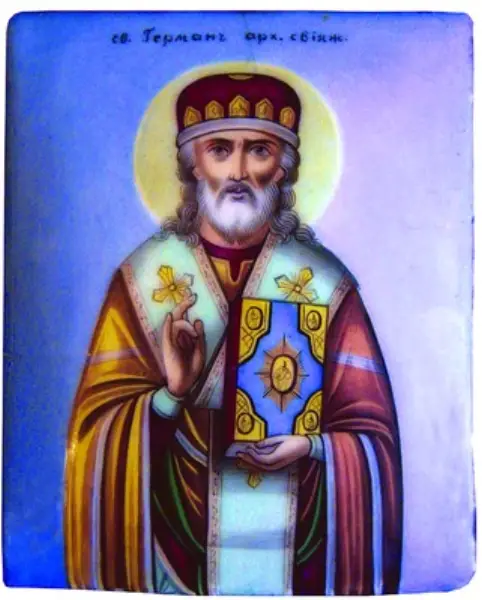
Overview
Herman, born Grigory Fyodorovich Sadyrev-Polev around 1505, rose from the quiet discipline of monastic life to one of the most exposed thrones of the sixteenth-century Russian Church. He took his vows at the Joseph-Volokolamsk Monastery, served under the Hegumen Guriy, and labored there at the copying of books. When Guriy was made the first archbishop of Kazan and set about organizing the new congregation in the lands recently joined to Moscow, he summoned his former monk and placed him at the head of the Bogoroditsky Monastery in Sviyazhsk, a house the Russian Orthodox Church prized for spreading Christianity among the non-Russian peoples of the Kazan region. When Guriy died in 1564, the Church of Kazan chose Herman to succeed him on the archiepiscopal throne. Two years later, against his own will and at the insistence of Ivan the Terrible, he was appointed Metropolitan of Moscow. He held that perilous office only long enough to confront the tsar: when Ivan's oprichnina seized land from the aristocracy and unleashed repression, Herman demanded its abolition, and for this he was banished from Moscow in disgrace. He died in Moscow on November 6, 1567, and his relics were returned to Sviyazhsk, where they rest in the Bogoroditsky Monastery.
The Complete Life
A Monk of Joseph-Volokolamsk
The road to Holiness began for Herman within the walls of the Joseph-Volokolamsk Monastery, one of the great houses of Russian monasticism. There he received the monastic habit and gave himself to the ordinary, demanding work of the cloister, and among his labors was the copying of books, the patient handwork by which monasteries preserved the written heritage of the faith. More consequential still was the abbot under whom he served: Hegumen Guriy, a man of such standing that the Church would soon raise him to the newly created archbishopric of Kazan. From Guriy, Herman learned both the discipline of monastic obedience and the spirit of mission that would define the rest of his life. When Guriy traveled east in 1555 to organize the new congregation of Kazan, he did not forget the monk who had served him; he called Herman to join the enterprise and entrusted to him the leadership of the Bogoroditsky Monastery in Sviyazhsk. In that appointment the talents formed in the monastery — order, learning, and quiet endurance — were turned to the conversion of a vast frontier.
§ Biography
Missionary Bishop of the Volga
The Bogoroditsky Monastery at Sviyazhsk was no ordinary house. The Russian Orthodox Church attached great importance to it as an instrument for spreading Christianity among the non-Russian peoples of the Kazan region, lands only recently brought under Moscow's rule and still largely unconverted. As its head, Herman stood at the forward edge of that missionary effort, governing the monastery from which the Christianization of the region was directed. His service there could not remain unnoticed. When Archbishop Guriy died in 1564, the clergy and people of Kazan turned to his former disciple, and Herman was elected to fill the cathedra of his teacher as the second archbishop of Kazan and Svyazhsk. Yet his tenure was cut short almost at once: the following year, the tsar who had engineered the Kazan mission fixed his eye on the monk from Sviyazhsk and demanded him for Moscow. At Ivan the Terrible's insistence, and against Herman's own desires, he was translated from the frontier see to the primatial throne of the Russian Church as Metropolitan of Moscow in 1566, exchanging a monastery of converts for the most dangerous court in Christendom.
§ Biography
Courage Before the Tsar and a Holy Death
Herman's tenure as Metropolitan of Moscow coincided with the darkest invention of Ivan's reign: the oprichnina, the policy by which the tsar seized land from the aristocracy and imposed repression through his dedicated household. Where other courtiers fell silent, the archbishop who had spent his life among Volga converts spoke plainly. He demanded that the tsar abolish the oprichnina, and the answer was swift: Herman was banished from Moscow in disgrace, stripped of the dignity he had never sought. His fall was short. On November 6, 1567, he died in Moscow, and his body was laid to rest in the Church of Saint Nicholas the Hospitable in the city that had rejected him. The Church he had served remembered him otherwise than the court did. His relics were transported to Sviyazhsk and placed in the Bogoroditsky Monastery, where they rest to this day; the Russian Church celebrates his memory on November 6, the day of his repose, and on July 23, the day his relics were translated from Moscow to Sviyazhsk. The monk who resisted an autocrat and died in disgrace is honored as a saint in both the city of his mission and the capital of his persecution.
§ Biography
Timeline
- 1505
Born; in the world he bore the name Grigory Fyodorovich Sadyrev-Polev.
§ Biography
- 1564
Elected archbishop of Kazan in succession to Guriy upon the latter's death.
§ Biography
- 1566
Appointed Metropolitan of Moscow at the tsar's insistence and against his own will, then banished in disgrace for demanding the abolition of the oprichnina.
§ Biography
- 6 Nov 1567
Died in Moscow and was buried in the Church of Saint Nicholas the Hospitable.
§ Biography
The Record
- Major works
- Headship of the Bogoroditsky Monastery in Sviyazhsk, a center of Christian mission among the peoples of the Kazan region·The copying of books at the Joseph-Volokolamsk Monastery
- Patron of
- The city and region of Kazan·Sviyazhsk and its Bogoroditsky Monastery
- Symbols
- Bishop's vestments of a Russian archbishop
- Canonization
- Venerated as a saint by the Russian Orthodox Church, which celebrates his memory on November 6 and July 23
Prayer
Bibliography
Show 2 sources
Profile text adapted from the Wikipedia article, licensed CC BY-SA 4.0.
Pray with this saint every day
Save St. Herman of Kazan and Svyazhsk to your favorites, read the full profile, and get feast-day reminders in the Saints app.
Get the Saints AppFree on the App Store for iPhone and iPad