
died c. 560·Feast June 17
St. Himerius of Cremona
Hermit monk who governed Amelia as bishop
Overview
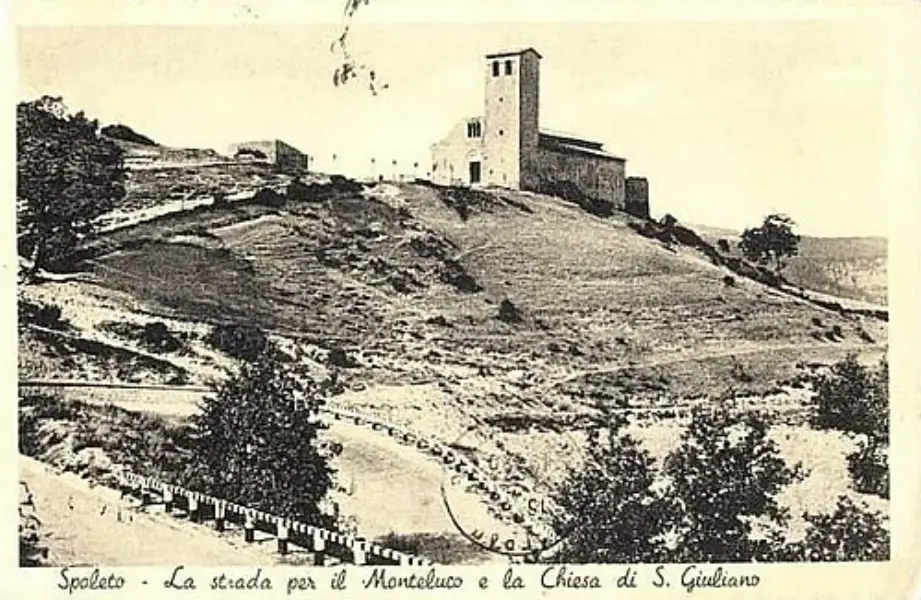
Himerius of Cremona, who died on 17 June around the year 560, was an Italian bishop venerated by the Roman Catholic Church and by the Christian communities of Western Rite Orthodoxy; he is also remembered as Himerius of Amelia, and in some sources as Irnerius. A native of Calabria, he first sought God as a hermit and then as a monk, most probably in the monastery of San Giuliano on the wooded hill of Monteluco above Spoleto, or else the monastery of San Pietro in Valle, set deep in the Valnerina valley by Terni. From the cloister he was chosen bishop of Amelia, in Umbria, and his biographers describe him as a man of extreme austerity and ascetic rigor. The ancient martyrologies pass over his name, yet the Roman Martyrology records it. After his death his fame passed to Cremona: around 965 Bishop Liutprand translated his relics from Amelia to that city, where they were venerated for centuries — lost under the rubble of the 1117 earthquake, rediscovered in 1129, honored with reported miracles, and in 1196 placed by Bishop Sicardo in a stone archway beside the martyr Archelaus. A relief in Cremona Cathedral and the monastery of Sant'Imerio, built in 1606, keep his memory in the city.
The Complete Life
From Calabria to the Cloisters of Umbria
Himerius was a native of Calabria, the mountainous toe of Italy where Greek monasticism had long flourished, and his first stated choice was the solitary life: the sources describe him as a hermit before anything else. From solitude he passed into community, becoming a monk — probably, the tradition says, in the monastery of San Giuliano on Monteluco, the wooded hill above Spoleto that had drawn ascetics since the days of Saint Francis's own contemporaries and earlier, or else in the monastery of San Pietro in Valle, set deep in the Valnerina valley near Terni. Both houses belonged to the dense network of Umbrian monasticism that formed bishops and saints for the surrounding region. Whoever wrote of him agreed on the one trait that defined him: he was an extremely austere, ascetic man, carrying into the common life the harshness he had first practiced alone. It was this reputation, no doubt, that marked him out for election. In an age when the episcopate often sought proven monks, the hermit of Calabrian origin and Umbrian formation was called from his monastery to govern the see of Amelia, a small city in Umbria whose bishopric would henceforth be inseparable from his name.
§ Life
Bishop of Amelia
As bishop of Amelia, Himerius joined the government of a flock to the discipline of a monk, and the memory of his severity became the core of his cult. He is described as having been a man of extreme austerity, an ascetic who evidently saw no contrast between the pastoral office and penitential rigor. Little else of his episcopate has survived; his life is known almost entirely through the afterlife of his relics rather than the acts of his rule. The name by which he was known shifted with the centuries: he is called Himerius of Amelia for his see, Himerius of Cremona for the city that claimed his remains, and in some traditions Irnerius, while the form Imier recalls the diffusion of his cult beyond Italy. Notably, his name is absent from the ancient martyrologies — he was a confessor, not a martyr — yet it found a place in the Roman Martyrology, and his feast of 17 June is kept both by the Catholic Church and by the communities of Western Rite Orthodoxy, which preserve the memory of pre-schism western saints. Around the twelfth century an abbot named Ambrose composed a Vita of the saint, of which only the prologue now remains; a later bishop of Amelia, Antonio Maria Graziani, who held the see from 1592 to 1611, wrote another biography in his turn.
§ Veneration
The Bishop Whom Cremona Kept
It is Cremona, not Amelia, that became the principal theater of Himerius's cult. Around 965 Liutprand — Luizo, as the older records style him, occupant of the Cremonese see from 962 to 972 and known to history as well as a diplomat and historian — brought the saint's relics from Amelia to his own city and interred them in a church there. That building was destroyed in the earthquake of 1117, and the relics lay lost until their rediscovery in 1129, when they were placed in a sepulcher; from that tomb miracles were reported, and in the twelfth century a monk named John collected the wonders worked after the rediscovery, writing during the episcopate of Bishop Offredo of Cremona, from 1168 to 1185. In 1196 Bishop Sicardo — the great liturgist of the Cremonese church — placed the relics in an archway of stone together with those of the martyr Archelaus and consecrated an altar in their honor. Art keeps the memory too: Giovanni Antonio Amadeo carved a relief showing the bishop giving alms, set within the cathedral's presbytery by the right-hand entrance. The year 1606 saw the rise of the city's monastery of Sant'Imerio, built to lodge the Discalced Carmelites, and parish churches such as Sant'Imerio at Madignano carry his name across the Cremonese countryside. He remains patron of the city that took him for its own.
§ Veneration
Timeline
- 17 Jun 560
Died after serving as bishop of Amelia
§ Life
- 965
Bishop Liutprand of Cremona translated his relics from Amelia to Cremona
§ Veneration
- 1117
Church sheltering his relics in Cremona destroyed by earthquake
§ Veneration
- 1129
Relics rediscovered and placed in a sepulcher; miracles reported at his tomb
§ Veneration
- 1196
Bishop Sicardo placed his relics in a stone archway with those of the martyr Archelaus and consecrated an altar in their honor
§ Veneration
- 1606
Monastery of Sant'Imerio built at Cremona for the Discalced Carmelites
§ Veneration
The Record
- Patron of
- Cremona
- Canonization
- Pre-congregation saint; absent from the ancient martyrologies but named in the Roman Martyrology
Prayer
Bibliography
Show 6 sources
- "Crypt", Cremona Cathedral
- Schäfer, Joachim. "Himerius von Amelia", Ökumenischen Heiligenlexikon
- Lucci, Emelio. "Sant' Imerio di Amelia", Santi e Beati, June 26, 2019
- Kirsch, Johann Peter. "Liutprand of Cremona." The Catholic Encyclopedia Vol. 9. New York: Robert Appleton Company, 1910
- Grabowski, Antoni. The Construction of Ottonian Kingship: Narratives and Myth in Tenth-Century Germany, Amsterdam University Press, 2018, p. 23, ISBN 9789462987234
- "Municipality of Cremona - TOURIST INFORMATION - S. Imerio's". Archived from the original on 2007-04-19. Retrieved 2007-03-24.
Profile text adapted from the Wikipedia article, licensed CC BY-SA 4.0.
Pray with this saint every day
Save St. Himerius of Cremona to your favorites, read the full profile, and get feast-day reminders in the Saints app.
Get the Saints AppFree on the App Store for iPhone and iPad