
1837 – 1907·Feast Commemorated by the Georgian Orthodox Church
St. Ilia Chavchavadze
Father of the Georgian Nation
Overview
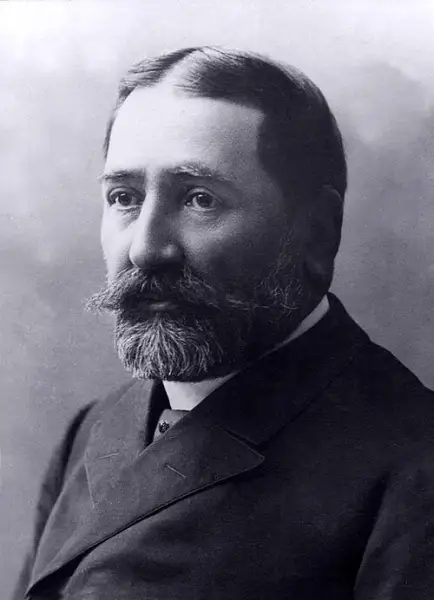
Ilia Chavchavadze, a prince (tavadi) by birth, stands at the center of the Georgian cultural and political awakening of the nineteenth century. A journalist, publisher, novelist, poet and jurist, he led the Tergdaleulebi circle of European-educated intellectuals who labored to keep the Georgian language, church and national identity alive under Tsarist rule. He founded the newspapers Sakartvelos Moambe and Iveria, established the Bank of the Nobility in Tbilisi to shield Georgian land from being sold away, and coined the rallying formula 'Language, Homeland, Faith.' Educated in the law faculty of St. Petersburg University, he gave up a promising official career to serve his homeland, and after the upheaval of 1905 he sat in the imperial State Council as a deputy of the Georgian nobility. An unflinching critic of revolutionary socialism, he drew much of the peasantry away from radical politics, and in 1907 he was ambushed and killed by a band of assassins near Mtskheta. His murder was mourned as a national catastrophe by every class of Georgian society. In 1987 the Georgian Orthodox Church enrolled him among the saints as Ilia the Righteous, and modern Georgia honors him as the 'Father of the Nation.'
The Complete Life
Early Life
Ilia Chavchavadze was born in the village of Qvareli, in the Alazani Valley of the Kakheti province of Georgia, at a time when that land formed part of the Russian Empire. Loss struck early: Mariam, his mother, passed away on 4 May 1848, leaving ten-year-old Ilia motherless. His father Grigol then asked his own sister Makrine to help raise the children, and after Grigol's death, which followed sometime after 1852, Makrine remained the family's sole caretaker. The boy's first schooling took place at home, in the manner of Georgian gentry families of the day. In 1848, in the same year that his mother died, his father sent him to Tbilisi to begin his secondary education, and there the future leader of the national revival encountered the broader world of the imperial Caucasus. These early years — a noble household wounded by bereavement, an aunt's steadying care, a provincial boy sent to the capital — formed the man who would later make the survival of the Georgian family, school and church his life's work.
§ Early life
A Calling Chosen in the Archives
In 1857 Chavchavadze entered the law faculty of the University of St. Petersburg, joining the generation of Georgian students who absorbed European learning in the imperial capital. His real passion, however, was his own country's past: he spent long hours in the St. Petersburg archives hunting out old Georgian texts and immersing himself in Georgian history. His teachers and examiners found him an exemplary student with outstanding academic achievements to his credit, yet the official diploma mattered less to him than the work itself. In his fourth year he made the decision that defined his vocation: he left the academy without a degree and returned to Georgia, resolved to labor for his country's freedom and to head a national cultural and political renaissance. It was the classic choice of the Tergdaleulebi, the 'Georgians of the Sixties' — men educated in Russia but devoted to their nation's awakening — and Chavchavadze became the principal figure of that movement.
§ Student years
Language, Homeland, Faith
The national movement Chavchavadze led arose from the wound of 1801, when Russia annexed the Georgian lands and abolished the centuries-old Bagrationi dynasty. Resentment among Georgian elites and intellectuals deepened through the century and rose to a crest in the 1860s, when Chavchavadze and his contemporaries came of age. Their program called for the unity of all Georgians across class and provincial lines, and stopped short of open revolt: they sought autonomy within a reformed empire, greater cultural freedom, the promotion of the Georgian language, support for Georgian schools and the restoration of the national church, whose independence the Russian government had suppressed. To keep Georgian land out of the hands of creditors, Chavchavadze founded the Bank of the Nobility in Tbilisi. Through the newspapers he founded and edited, Sakartvelos Moambe and Iveria, he gave the movement its voice, and he compressed its creed into the slogan 'Ena, Mamuli, Sartsmunoeba' — Language, Homeland, Faith. In Iveria he also gave a young Orthodox seminarian named Joseph Stalin his first publication, choosing five of the teenager's poems for publication and describing the seminarian as a youth with burning eyes.
§ Political life
Faith and the Nation
For Chavchavadze the nation's cause and the Church's cause were never separate. The formula he forged — Language, Homeland, Faith — placed confession at the heart of national identity, and in its usage 'Faith' meant specifically Georgian Orthodoxy. His movement pressed for the restoration of the national church, robbed of its independence by the Russian state, and he saw the Georgian school, the Georgian press and the Georgian sanctuary as one seamless inheritance to be defended together. After the upheavals of 1905 he returned from imperial service to Georgia intent on advocating a religious Georgian national identity, a vision directly at odds with the atheist ideologies of the revolutionary left. It was precisely this public, unembarrassed Christianity — joined to his success in drawing peasants away from radical socialism — that his enemies could not tolerate, and that helps explain why men of violence marked him for death. In the memory of the Georgian Church he therefore stands not only as a writer and statesman but as a witness: a layman who made the faith of his people the keystone of their freedom.
§ Political life
Martyrdom at Tsitsamuri
Having served in the Upper House of the first Russian Duma, Chavchavadze returned to Georgia in 1907 and threw himself into the advocacy of a religious Georgian national identity. The position made him dangerous to the revolutionary factions he had so effectively undermined. On 28 August 1907, in the company of his wife Olga and en route from Tbilisi to Saguramo, he fell into an ambush at the small village of Tsitsamuri near Mtskheta and was killed by a crew of six assassins. According to the investigation, he appealed to his killers with the words 'Do not shoot, I am Ilia,' and the leader of the gang answered, 'That's why we have to shoot you.' The assailants were caught and condemned, and Olga, judging that this was what her husband would have done, pleaded that they be forgiven. His murder was mourned as a national tragedy by all classes of Georgian society; Prince Akaki Tsereteli, himself gravely ill, told the mourners that Ilia's service to the nation's revival was an example for the generations to come. The Tsarist inquiry blamed a Bolshevik 'Red Squad,' the Soviet era blamed the secret police, and the controversy has never wholly ended.
§ Death
Saint Ilia the Righteous
In 1987 the Georgian Orthodox and Apostolic Church formally enrolled Chavchavadze in its calendar of saints under the name by which he is venerated today: Saint Ilia the Righteous (tsminda ilia martali). The title 'the Righteous' captures the Church's judgment on a life given wholly to the service of the nation in language, learning and faith, and sealed by a violent death. He had been laid to rest at the Mtatsminda Pantheon in Tbilisi, in the pantheon of Georgia's greatest, where his tomb remains a place of national remembrance. His canonization came near the end of the Soviet period, when the Church he had defended was emerging from seven decades of official unbelief, and it restored to the Georgian people the figure their grandmothers and grandfathers had revered as the 'Father of the Nation.' In the years since, he has been honored not as a confessor of any party but as a national saint: the proof, in the Church's own idiom, that love of homeland, kept faithful to Orthodoxy, can be a path to holiness.
§ Legacy
A Hero for All Georgians
Few modern figures command the breadth of esteem that Chavchavadze enjoys in Georgia. Writing in 1998, Stephen Kinzer observed that the left embraces him for his hatred of injustice, the center for his nonviolent humanism, and the nationalist right for his triple slogan of Language, Motherland and Faith. The state has matched the sentiment: in 2006 Ilia State University was named for him, and Tbilisi's central avenue bears his name, as do streets and avenues across the country. The Soviet Union itself, in 1987, issued a postage stamp in his honor, an ironic tribute from the regime whose forerunners were widely believed to have ordered his death. A monument in Tbilisi shows him standing beside his fellow poet Akaki Tsereteli, the two giants of the national revival; his works have traveled abroad through the translations of Marjory and Oliver Wardrop and, more recently, Lyn Coffin. Historians still debate who exactly sent the assassins to Tsitsamuri, but on one thing all Georgians agree: the man they killed remains, as one American correspondent put it, a man for all Georgians.
§ Legacy
Timeline
- 8 Nov 1837
Born at Qvareli in the Alazani Valley of Kakheti, then part of the Russian Empire
§ Early life
- 4 May 1848
His mother Mariam dies in May; his father sends the boy to Tbilisi for secondary schooling
§ Early life
- 1857
Enters the law faculty of St. Petersburg University and begins searching imperial archives for old Georgian texts
§ Student years
- 28 Aug 1907
Ambushed and murdered by six assailants at Tsitsamuri near Mtskheta while traveling from Tbilisi to Saguramo with his wife Olga
§ Death
- 1909
By decision of the Stolypin tribunal the entire assassin gang is condemned to capital punishment
§ Investigation
- 1921
Gigla Berbichashvili, head of the assassin crew, returns from hiding in Iran after the October Revolution and takes posts in Soviet Georgia
§ Investigation
- Jan 1942
Berbichashvili, tried for the murder in a Soviet court, has his death sentence commuted to ten years' imprisonment
§ Investigation
- 1987
The Georgian Orthodox and Apostolic Church formally canonizes him as Saint Ilia the Righteous
§ Legacy
- 2006
Ilia State University in Georgia takes his name
§ Legacy
In Their Own Words
Do not shoot, I am Ilia
Ilia's inestimable contribution to the revival of the Georgian nation is an example for future generations
Today leftists in Georgia embrace Chavchavadze for his hatred of injustice, centrists love him for his nonviolent humanism, and right-wing nationalists have adopted his slogan Motherland, Language, Faith.
Ah here, O mother is thy task, Thy sacred duty to thy land: Endow thy sons with spirits strong, With strength of heart and honor bright; Inspire them with fraternal love, To strive for freedom and for right.
O mother! hear thy country's plea: Nurture thy sons with spirits strong Led by the torch of truth whose flame Will banish ignorance and wrong.
No sound doth great the still of night; My mother land in silence lies; Yet oft is heard an anguished moan As Georgia in her slumber sighs. I stand alone … the mountains, shades The slumber of my land caress. O God! O God! when will we wake And rise again to happiness?
The wood is decked in light green leaf. The swallow twitters in delight. The lonely vine sheds joyous tears Of interwoven dew and light. Spring weaves a gown of green to clad The mountain height and wide-spread field. O when wilt thou, my native land, In all thy glory stand revealed?
The Record
- Major works
- Sakartvelos Moambe (newspaper)·Iveria (newspaper)·The Bank of the Nobility, Tbilisi·Outcrying Stones·The Hermit (translated by Marjory Wardrop, 1895)
- Canonization
- Canonized in 1987 by the Georgian Orthodox and Apostolic Church as 'Saint Ilia the Righteous'
Prayer
Bibliography
Show 8 sources
- Kinzer, Stephen (7 May 1998). "Saguramo Journal; On the Tallest Pedestal, a Man for All Georgians". The New York Times.
- Kekelia, Tatia (2015). "Building Georgian national identity". In Religion, Nation and Democracy in the South Caucasus. Routledge. p. 123.
- Chkhartishvili, Mariam (2013). "Georgian nationalism and the idea of Georgian nation". Codrul Cosminului. 19 (2): 189–206.
- Geifman, Anna (1993). Thou shalt kill: revolutionary terrorism in Russia, 1894-1917. Princeton University Press. ISBN 978-0-691-08778-8.
- Jones, Stephen F. (2005). Socialism in Georgian Colors: The European Road to Social Democracy, 1883-1917. Harvard University Press. ISBN 9780674019027.
- Montefiore, Simon Sebag (2007). Young Stalin. New York: Alfred A. Knopf. ISBN 978-1-4000-4465-8.
- Ram, Harsha (Fall 2008). "Masks of the Poet, Myths of the People: The Performance of Individuality and Nationhood in Georgian and Russian Modernism". Slavic Review. 67 (3): 567–590.
- Abashidze, Zaza; Grdzelidze, Tamara; George, Martin (2006). Witness Through Troubled Times: A History of the Orthodox Church of Georgia, 1811 to the Present. Bennett & Bloom. ISBN 978-1-8989-4868-1.
Profile text adapted from the Wikipedia article, licensed CC BY-SA 4.0.
Pray with this saint every day
Save St. Ilia Chavchavadze to your favorites, read the full profile, and get feast-day reminders in the Saints app.
Get the Saints AppFree on the App Store for iPhone and iPad