
1st century (traditional)·Feast June 30
St. Ilid
Semi-Legendary Missionary of Roman Britain
Overview
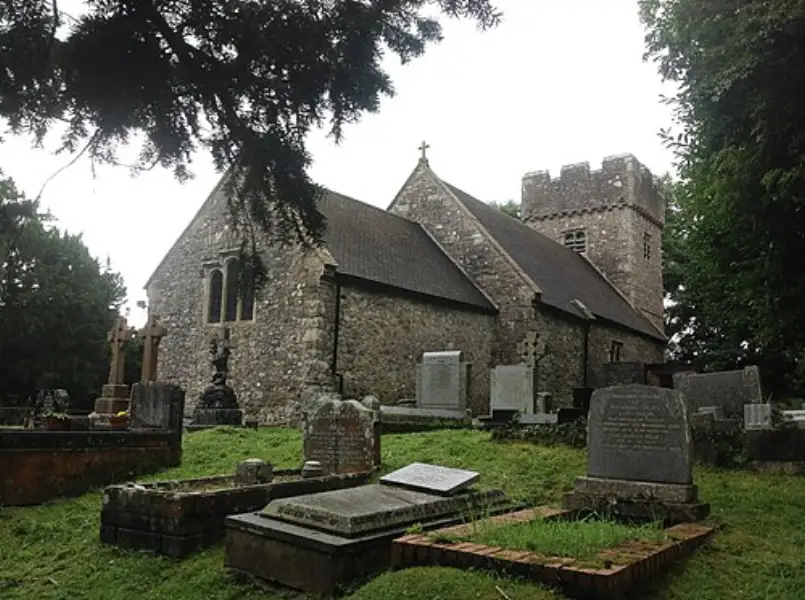
Ilid is a semi-legendary saint of Wales whose story reaches back, in tradition, to the first century of the Christian era. He has at times been identified with Joseph of Arimathea, perhaps because he is described as a man of Israel and said to have been born a Jew. The legends tell that he returned from Rome to Britain in the company of the British prince Caratacus and of Saints Cyllin and Eigen, and that he formed a religious college of twelve known as Cor Eurgain, the choir of Eurgain, a foundation cited as evidence for the earliest arrival of Christianity in Britain. His memory attaches above all to the village of Llanilid, whose church of St Ilid and St Curig is dedicated to him; following the custom of Welsh place names, the parish takes its title from its patron saint, and the antiquary Thomas Morgan understood Ilid as the person who brought Christianity to Wales in the first century. That view may descend from the elaborate tales of the literary forger Iolo Morganwg, and it was challenged in 1962 by R. W. D. Fenn, who read Ilid as a district name and linked the church instead to Julitta and Quiricus. Ilid's feast is kept on June 30.
The Complete Life
A Man of Israel in British Legend
Ilid belongs to the shadowy first rank of British Christianity, the company of figures whom tradition carries back to the apostolic age but whom documentary history cannot firmly grasp. He is described as a man of Israel, and the tradition holds that he was born a Jew; on this ground some writers have gone so far as to identify him with Joseph of Arimathea, the disciple who, in the Gospel narrative, laid the body of Christ in his own tomb. That identification belongs to the realm of legend rather than of history, yet it shows how deeply the figure of Ilid was woven into Britain's claims to have received the faith at its very source. The legend gives him companions for his journey: tradition has him coming back from Rome to Britain in the company of Caratacus, the British chieftain whom Roman arms carried to the imperial city, and with Saint Cyllin and Saint Eigen. In this way the story binds the fate of the native British aristocracy, the apostolic East and the apostolic Church into a single narrative of the faith's arrival in Wales.
§ Introduction
The Choir of Eurgain
At the centre of Ilid's legend stands the foundation of a religious college of twelve, known as Cor Eurgain, the choir of Eurgain. The very shape of the institution, a body of twelve devoted to the service of God, was understood by the tradition's tellers as a sign of the primitive character of British Christianity, reaching back behind the official missions of later centuries to a first-century planting of the faith. Whether such a college ever existed cannot be determined; what is certain is that the story expresses the conviction of the Welsh Church that its roots were ancient indeed. The name of Ilid survives most concretely at Llanilid, a village whose very form follows the rule that Thomas Morgan described for Welsh parishes: the llan, or sacred enclosure, borrows its name from the patron under whom the parish church stands. At Llanilid this is the church of St Ilid and St Curig, and Morgan held that the name preserved the memory of one who had brought the Christian faith to Wales in its first century, tying the map of Glamorgan directly to the age of the apostles.
§ Introduction
Forger, Antiquary and Sceptic
The cult of Ilid as it reached the modern world carries visible marks of its makers and its critics. Much of the elaborate tale about him, including the claim that Ilid was the Welsh name of Joseph of Arimathea, has been connected with the work of Iolo Morganwg, the celebrated literary forger whose inventions shaped so much of what passed for ancient Welsh tradition. Modern scholarship has pressed the sceptical case further. R. W. D. Fenn, studying the Book of Llandaff and Nennius's Historia Brittonum, argued in 1962 that the element Ilid in Llanilid represents the name of a district, comparable to Llandovery, rather than of any person. He observed that in 1566 the church of Llanilid was dedicated to Ilid and Curig, and he connected these two with the saints better known in the wider Christian tradition as Julietta and Quiricus; in support he cited the appendix of the Book of Llandaff, where the church appears first as the Church of St Julitta. Whatever the truth, Ilid's feast has been kept on June 30, and his name endures in the landscape and worship of Glamorgan.
§ Introduction
Timeline
- 1566
The church at Llanilid is recorded as dedicated to Ilid and Curig, whom R. W. D. Fenn connects with Julietta and Quiricus
§ Introduction
- 1962
R. W. D. Fenn publishes his study arguing that Ilid is the name of a district rather than of a person
§ Introduction
The Record
- Major works
- Cor Eurgain (the choir of Eurgain), a religious college of twelve
- Patron of
- The parish and church of Llanilid, Wales
- Canonization
- Pre-congregation; a semi-legendary saint of Welsh tradition
Prayer
Bibliography
Show 4 sources
- Griffin, Justin E. Glastonbury and the Grail: Did Joseph of Arimathea Bring the Sacred Relic to Britain? (McFarland, 2012), pages 96-97
- Francis, David J. (1971). "A brief account of three parishes". In Stewart Williams, Glamorgan Historian, VII. Cowbridge: D. Brown and Sons, p. 208
- Morgan, Thomas (1912). The Place Names of Wales (2nd ed.). Newport: J. E. Southall, p. 185
- Fenn, R. W. D. (1962). "The Saints in the Vale". In Stewart Williams (ed.), Vale of Glamorgan Series, Vol. IV: Saints and Sailing Ships. Cowbridge: D. Brown & Sons, p. 119
Profile text adapted from the Wikipedia article, licensed CC BY-SA 4.0.
Pray with this saint every day
Save St. Ilid to your favorites, read the full profile, and get feast-day reminders in the Saints app.
Get the Saints AppFree on the App Store for iPhone and iPad