
fl. mid-6th century
St. Isan
Sixth-century follower of Illtyd and founder of Llanishen
Overview
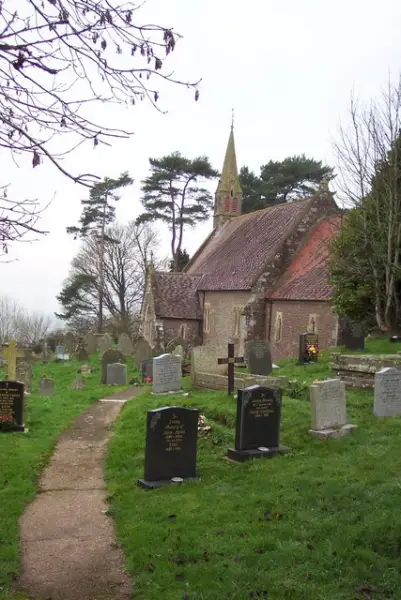
Isan was a saint of the Welsh church in the sixth century, remembered as the patron of Llanishen, now a district of Cardiff. The little that survives of him links him to the circle of St Illtyd, the celebrated Celtic teacher whose pupils carried Christian life across south Wales. In the year 535 he set out with his companion Edeyrn from the religious settlement at Llandaff, making eastward for the country around Caerphilly mountain with the aim of planting churches. The ground they chose was watered by the Nant Fawr stream, whose fresh water made settlement possible. Two years later, in 537, Isan established a community at the place that grew into Llanishen. His coworker Edeyrn travelled more widely and gathered a great community at Llanedeyrn, and churches in both North and South Wales came to bear his name. Isan's own memory remained local and durable: churches at Llanishen in Monmouthshire and Llanishen in Cardiff preserve him, and the parish church of St Isan stands on ground occupied by medieval foundations.
The Complete Life
In the School of Illtyd
The earliest fact remembered of Isan is his formation: tradition counts him among the disciples of St Illtyd, the great Celtic teacher of the sixth century. To stand in that circle was to stand at one of the springs of Welsh Christianity, for Illtyd's pupils went out from his teaching to preach, to found settlements, and to give their names to the villages that grew around them. Isan belonged to the generation that carried this movement eastward. His companion on the road, Edeyrn, came from the same world, and both men began their missionary work from Llandaff, a small religious settlement that served as a staging point for the evangelization of the country around it. Nothing is recorded of Isan's birth or family; his identity in the sources is wholly that of a disciple sent out to work. In the pattern of the Celtic church, the teacher formed the monk, and the monk became in time a founder, and Isan's life follows that arc from the schoolroom of Illtyd to the banks of the Nant Fawr, where his own work of founding would soon begin.
§ Introduction
Eastward from Llandaff, 535-537
In the year 535 Isan and Edeyrn came eastwards from Llandaff into the hill country around Caerphilly mountain, intending to establish churches where none yet stood. The choice of ground was practical as well as spiritual: the sites they selected had fresh water from the Nant Fawr stream, the stream that runs down from the hills toward the sea plain. Water determined settlement in that landscape, and the missionaries read it correctly. Isan took the ground that later became Llanishen, and there in 537 he established his settlement, a llan in the Welsh manner: an enclosed community of prayer that became the seed of a parish. Edeyrn worked the same country and went further afield, acquiring a reputation as a wide traveller; he gathered a community of about three hundred souls who lived and worshipped in the area of Llanedeyrn, which still carries his name. Between them the two disciples of Illtyd covered the ground between Llandaff and the mountain with Christian settlement, and the dedications that remain there to this day are the standing record of those few years of founding.
§ Introduction
The Two Llanishens
Isan is remembered in churches at Llanishen in Monmouthshire and at Llanishen in Cardiff, two communities that keep his name in different counties of the old Welsh land. The Cardiff parish became his principal memorial: St Isan's Church there stands on the site of twelfth-century church foundations, so that the present building is the successor of a line of worship reaching back across the centuries toward the settlement Isan raised by the Nant Fawr in 537. As patron saint of Llanishen he belongs to that company of Welsh founders whose names are woven into the map itself, preserved not in writings but in the places where people have prayed for fifteen hundred years. Beside him stands the memory of Edeyrn, whose travels left churches in both North and South Wales and whose great community at Llanedeyrn made the eastern country around Caerphilly a center of Christian life. Together the two missionaries from Llandaff show how a single school of the sixth century could stamp its teaching permanently onto the landscape, the parishes, and the very place-names of south Wales, and the two Llanishens still speak his name.
§ References
Timeline
- 535
Sets out with St Edeyrn from the religious settlement of Llandaff toward the Caerphilly mountain country to found churches
§ Introduction
- 537
Establishes his own settlement at the place later called Llanishen, near the fresh water of the Nant Fawr stream
§ Introduction
The Record
- Major works
- Religious settlement at Llanishen (founder)
- Patron of
- Llanishen, Cardiff
- Canonization
- Pre-congregation; venerated from early times as patron saint of Llanishen, Cardiff
Prayer
Bibliography
Show 2 sources
- "History – The Parish of Llanishen". Retrieved 22 February 2026.
- "The history of the suburb of Llanishen". Cardiffians.co.uk. Retrieved 22 February 2026.
Profile text adapted from the Wikipedia article, licensed CC BY-SA 4.0.
Pray with this saint every day
Save St. Isan to your favorites, read the full profile, and get feast-day reminders in the Saints app.
Get the Saints AppFree on the App Store for iPhone and iPad