
1870 – 1918·Feast July 17
St. Ivan Kharitonov
Head cook to the last imperial family of Russia
Overview
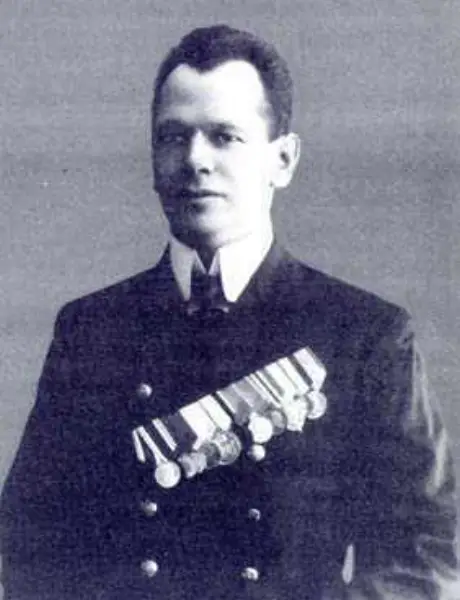
Ivan Mikhailovich Kharitonov (14 June 1870 – 17 July 1918) served the last Russian emperor as head cook at the court of Tsar Nicholas II. A man of humble rank in a household of grandeur, he belonged to the circle of devoted servants who followed the imperial family through its catastrophe. When the Russian Revolution of 1917 ended the monarchy, Kharitonov did not abandon his employers: he accompanied the Romanovs into internal exile at Tobolsk, where his wife and daughter joined him. In the spring of 1918 the Bolsheviks transferred the prisoners to Ekaterinburg, and the cook went with them, leaving his family behind in Tobolsk. At Ipatiev House in that city, on 17 July 1918, he was murdered together with the tsar, the empress, their five children, and three other servants, among them the physician Eugene Botkin, the maid Anna Demidova, and the footman Alexei Trupp. Like the imperial family, in 1991 the Russian Church Outside Russia enrolled him among its passion-bearers, confessors who suffered under Soviet oppression. He was buried with the Romanovs in Saint Petersburg in 1998, eighty years after his death.
The Complete Life
A Servant of the Imperial Court
Ivan Mikhailovich Kharitonov was born on 14 June 1870 in the Russian Empire, into a world in which the Romanov dynasty still ruled from Saint Petersburg over the largest realm in Europe. Little is recorded of his childhood and origins; what his memory preserves is the office he attained, for he rose to become head cook at the court of Tsar Nicholas II. In the imperial household this was no small trust. The kitchen of the tsar served the emperor, the empress, and their five children daily, and the man who directed it was admitted into the intimate economy of the palace, charged with the provision and welfare of the sovereign's own table. Such service bred a particular bond: the servants of the imperial family were not merely employees but members of its daily life, sharing its routines, its journeys, and eventually its dangers. When the catastrophes of the twentieth century broke over Russia — war, revolution, and the abdication of the tsar in 1917 — the household staff faced a choice between their own safety and their fidelity to the family they had served. Kharitonov's whole biography was determined by the answer he gave.
§ Biography
Loyalty That Followed into Exile
The Russian Revolution of 1917 stripped Nicholas II of his throne and confined him and his family as prisoners in their own country. In that hour most of the court's servants were dispersed, but Kharitonov stayed. He followed the Romanov family into internal exile at Tobolsk in Siberia, trading the organised world of the imperial kitchens for the constrained service of a household under guard. There his wife and daughter came out to join him, sharing the captivity of the fallen dynasty as far as they were permitted. His continued presence at the family's table in those months was a quiet testimony: the cook owed the tsar nothing now, least of all his prospects, yet he chose to remain a servant of a house that had lost everything but its people. When the Bolsheviks resolved in the spring of 1918 to move the prisoners from Tobolsk to Ekaterinburg, Kharitonov went with them. His wife and daughter did not make the second journey; the party selected for transfer was drawn tighter around the imperial family, and it included the cook along with the physician Eugene Botkin, the maid Anna Demidova, and the footman Alexei Trupp.
§ Biography
Ipatiev House and the Shared Passion
In Ekaterinburg the prisoners were lodged in Ipatiev House, designated by the Ural soviets as their place of confinement under the Bolshevik regime. There, in the spring and early summer of 1918, the family and their four remaining servants lived out the final weeks. On 17 July 1918 the end came: in the cellar of the house, by order of the Bolshevik authorities, Kharitonov was murdered together with Nicholas II, Alexandra Feodorovna, the five imperial children, and his fellow servants — Botkin, Demidova, and Trupp. The killings were carried out amid the Russian Civil War and formed part of the Red Terror that swept away the old order's captives. Eighty years afterwards, the Church would name what had happened in that basement a martyrdom of sorts: not a death endured for doctrine argued in words, but a death endured for fidelity to persons, borne by a man who could have walked away at every stage and never did. Kharitonov's wife and daughter, left in Tobolsk in the spring, survived the man they had followed into exile, and with them the private grief of a public catastrophe.
§ Biography
Passion-Bearer of Soviet Oppression
The veneration of the victims of Ipatiev House began among Russian exiles almost immediately after the murders. In 1991, as the Soviet state was dissolving, the Russian Orthodox Church Outside Russia formally canonized the imperial family and those who died with them, and Ivan Kharitonov was numbered among them, enrolled as a passion-bearer who endured Soviet oppression. The title is precise in Orthodox usage: a passion-bearer is one who accepts suffering and death with Christian patience and innocence, not necessarily one slain expressly for the faith. It fitted the cook exactly, for he died not for opinions of his own but for refusing to abandon the family whose bread he had broken. His cause belongs to the wider memory of the new martyrs of Russia, the host of clergy and laity who perished under the anti-religious campaigns of the Soviet period. Alongside the Romanov sainthood that gathered in the servants with the imperial household, his commemoration on July 17 recalls that the catastrophe of 1918 was endured not only by tsars and grand duchesses but by the humblest members of their train.
§ Biography
Burial in Peter and Paul Cathedral
On 17 July 1998, the eightieth anniversary of the murders, the remains of Nicholas II, Alexandra, their children, and their servants were interred in the Peter and Paul Cathedral in Saint Petersburg, the burial church of the dynasty. Kharitonov was laid to rest beside the family he had served, together with Anna Demidova and Alexei Trupp, victims of the same night. His grandson attended the funeral on his behalf, a living link between the kitchen of the fallen court and the Russia that rose after the Soviet Union. The burial closed a circle that had opened at Tobolsk in 1917, when a cook chose exile over abandonment, and completed in the earth of the imperial capital the story of the man who had shared the Romanovs' table, their imprisonment, and their death. His memory now stands in the calendars of the Church beside the emperors he served, a reminder that holiness in the Orthodox understanding does not depend on rank: the head cook and the tsar were counted worthy of the same crown, for both bore their passion without betrayal.
§ Biography
Timeline
- 14 Jun 1870
Born in the Russian Empire; he would rise to become head cook at the court of Tsar Nicholas II.
§ Biography
- 1917
Followed the Romanov family into internal exile after the Russian Revolution ended the monarchy.
§ Biography
- 1918
In the spring, the Bolsheviks moved the prisoners from Tobolsk to Ekaterinburg; he went with them, while his wife and daughter remained behind.
§ Biography
- 17 Jul 1918
Murdered with Tsar Nicholas II and the imperial family by the Bolsheviks at Ipatiev House, Yekaterinburg.
§ Biography
- 1991
The Russian Church Outside Russia enrolled him among the passion-bearers who suffered under Soviet oppression.
§ Biography
- 17 Jul 1998
Buried alongside the Romanovs and fellow servants in Peter and Paul Cathedral, Saint Petersburg, eighty years after the murders.
§ Biography
The Record
- Major works
- Service as head cook at the imperial court of Tsar Nicholas II
- Canonization
- Canonized as a passion-bearer of Soviet oppression by the Russian Orthodox Church Outside Russia in 1991
Prayer
Bibliography
Show 2 sources
- Greg King and Penny Wilson, The Fate of the Romanovs, John Wiley and Sons, Inc., 2003, pp. 65, 495.
- "17 July 1998: The funeral of Tsar Nicholas II", romanovfundforrussia.org, 1998 (archived 29 December 2006).
Profile text adapted from the Wikipedia article, licensed CC BY-SA 4.0.
Pray with this saint every day
Save St. Ivan Kharitonov to your favorites, read the full profile, and get feast-day reminders in the Saints app.
Get the Saints AppFree on the App Store for iPhone and iPad