
1789 – 1870·Feast May 24
St. Jackson Kemper
First Missionary Bishop of the American Episcopal Church
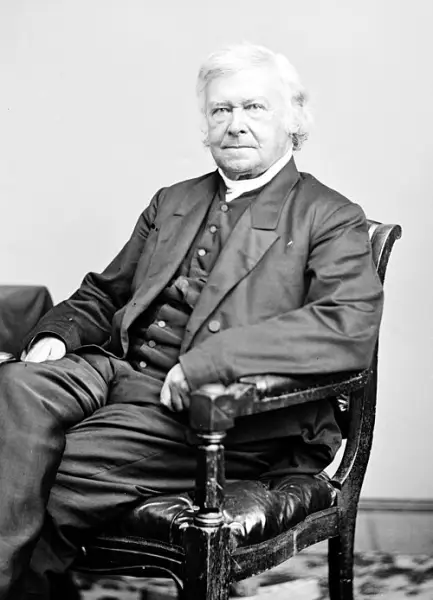
Overview
Jackson Kemper (1789–1870) became in 1835 the Episcopal Church's first missionary bishop in the United States, and the appellation 'bishop of the Whole Northwest' measures the country he covered. Raised in New York and educated at Columbia College under John Henry Hobart, he was ordained deacon in 1811 and priest in 1814 by Bishop William White, serving at Christ Church in Philadelphia while kindling an evangelistic zeal that carried his elderly mentor into the western Pennsylvania missions. When General Convention resolved to consecrate missionary bishops for the unsettled West, Kemper was the first chosen. From Indiana and Missouri to Wisconsin and Minnesota he planted parishes, recruited western men for western work, founded the short-lived training college in St. Louis, and established Nashotah House and Racine College. He pressed constantly for outreach to Native American peoples and for Scripture and liturgy in their languages, ordaining the Ottawa deacon Enmegahbowh in 1859. From 1854 until his death he led the Diocese of Wisconsin as its first diocesan bishop, and the Episcopal Church keeps his feast on May 24.
The Complete Life
A Hudson Valley Childhood
The man who would become the missionary bishop of the whole Northwest was born on December 24, 1789, in the Hudson River Valley of New York, where his parents had withdrawn for a time from a smallpox epidemic then raging in New York City. Baptized David Jackson Kemper by Dr. Benjamin Moore, assistant rector at Trinity Church, he would in time set aside the name David. His father, Daniel Kemper, had served as Deputy Clothier-General of the Continental Army through the American Revolution; his mother, Elizabeth Marius, came of the best-known families of the old Dutch days of New Amsterdam. At fifteen the boy entered Columbia College, where he read theology under John Henry Hobart, joined the Philolexian Society, and graduated in 1809 as valedictorian of his class. The double inheritance of revolutionary service and devout Episcopal upbringing formed a young man convinced that the church's newest frontier and the republic's newest territories required the same sacrifice his parents' generation had given in war.
§ Early life
Philadelphia and the Call West
Kemper moved to Philadelphia and there received holy orders at the hands of Bishop William White — deacon in 1811, priest on January 23, 1814 — while serving at Christ Church. His interest in evangelism declared itself early and boldly: he even persuaded his aged bishop and mentor to undertake an evangelistic journey into western Pennsylvania, on which trip the party planted St. Matthew's Church in Wheeling in what is now West Virginia. In 1835 the General Convention of the Episcopal Church, looking at the swelling settlements beyond the mountains, resolved to raise up missionary bishops who would carry the Gospel beyond the settled country. Kemper was the first chosen, and was consecrated on September 25, 1835, by Bishop White — the same hands that had made him deacon and priest now set him apart as the first missionary bishop in the United States. He went west at once, to Indiana and Missouri, beginning thirty-five years of episcopal labor on the frontier.
§ Career
Bishop of the Whole Northwest
The East did not answer his call. Experienced clergy settled in the old dioceses were slow to volunteer for frontier work, so Kemper resolved to make priests out of western men, and founded a training college in St. Louis for the purpose — an experiment that collapsed in 1845 for want of funds, though the vision survived. He founded Nashotah House in 1842 and Racine College in Wisconsin, and established the mission parish in Milwaukee that grew into All Saints Cathedral. His first official act on Wisconsin soil was to lay the cornerstone of a frame church for Hobart Church at Duck Creek, serving the Oneida Indian Mission; there, too, on October 9, 1842, came the first ordinations in Wisconsin's history, when he ordained William Adams and James Lloyd Breck, the young easterners who would help him build Nashotah House. His journeys carried him across Indiana, Missouri, Wisconsin, Minnesota, and Nebraska — the whole Northwest of his era.
§ Career
The Gospel in Every Tongue
Kemper's convictions about mission were decades ahead of his church. He urged outreach to Native American peoples constantly, and pressed for the Bible and the Church's services to be translated into their languages — not a faith imposed in English, but one offered in the tongues of those who received it. Chief Daniel Bread regularly invited him to the Oneida reservation at Duck Creek, a friendship of unusual mutual respect for the age. In 1859 he ordained Enmegahbowh of the Ottawa people as a deacon, the first Native American ordained in the region's church. In the churchmanship disputes of his day he supported the Oxford Movement, while insisting on continued separation from Rome; he ordained James De Koven a priest in 1855 and stood by Bishop Benjamin Onderdonk during his trial. In 1846 he bought property beside Nashotah House and made his home there for the rest of his life, a bishop settled among the seminarians he had raised from the wilderness.
§ Career
Bishop of Wisconsin
The missionary dioceses Kemper had carried on his back were gradually organized into settled sees, and Wisconsin claimed him for its own. From 1847 to 1854 he acted as provisional bishop for the new Wisconsin diocese, and from 1854 until his death he served as its diocesan bishop, the first to hold that office. He supported the creation of a new diocese out of the northern parishes, but passed away before the Diocese of Fond du Lac came into being. His residence in Delafield, called Bishopstead, and Kemper Hall, the Episcopal school for girls in Kenosha named in his honor, are both listed on the National Register of Historic Places. He died at Nashotah on May 24, 1870, aged eighty, and was buried in the cemetery of Nashotah House among the institution he counted his greatest harvest. His successor as bishop of Wisconsin was William Edmond Armitage.
§ Career
Feast Day and Commemoration
The Episcopal Church honors Jackson Kemper as a saint on its calendar, with a feast on May 24, the day of his death, kept also by the Anglican Church in North America; he is remembered there as the first missionary bishop in the United States. No formal process of canonization attaches to his name, for the Anglican tradition commemorates its heroes by inscription in the calendar rather than by decree. His memory is sustained by institutions as much as by liturgy: Nashotah House and, more recently, the Anglican Province of America maintain mission funds that bear his name, directing gifts to the missionary work he embodied. At Nashotah House Cemetery his tomb remains a place of visitation for seminarians and bishops who trace their church in the Upper Midwest to the man who crossed it on horseback when it had no churches at all.
§ Veneration
Institutions That Outlived Him
Kemper's name endures wherever the Episcopal Church works in the American heartland. Nashotah House, founded in 1842 with the first ordinations held on Wisconsin soil, remains a working seminary; Racine College, its sister foundation, educated generations before its close. All Saints Cathedral in Milwaukee grew from the mission parish he established. The dioceses of the Upper Midwest descend in large part from the vast missionary jurisdiction he first administered, and the Diocese of Fond du Lac, whose creation he backed, stands as a monument to his foresight. Historians of the Wisconsin church, from Harold Wagner's account of the diocese's first century to the older memoirs of James Lloyd Breck and John Egar's Story of Nashotah, treat his episcopate as the hinge on which the region's Anglican history turned. Bishop of the 'Whole Northwest' was no ornament: nearly every Episcopal institution between the Great Lakes and the Missouri River began in some enterprise of his.
§ Career
Timeline
- 24 Dec 1789
Born in the Hudson River Valley, where his parents had taken refuge from a smallpox outbreak in New York City
§ Early life
- 1809
Graduates valedictorian of his class at Columbia College, where he studied theology under Dr. John Henry Hobart
§ Early life
- 1811
Ordained a deacon of the Episcopal Church by Bishop William White after relocating to Philadelphia
§ Career
- 23 Jan 1814
Ordained a priest by Bishop White while serving at Christ Church, Philadelphia
§ Career
- 25 Sep 1835
Consecrated the Episcopal Church's first missionary bishop and heads west for Indiana and Missouri
§ Career
- 9 Oct 1842
Ordains William Adams and James Lloyd Breck at Hobart Church, Duck Creek, the first ordinations in what became Wisconsin, and founds Nashotah House
§ Career
- 1845
Sees his St. Louis training college for western priests fail for lack of funding
§ Career
- 1855
Ordains James De Koven to the priesthood
§ Career
- 1859
Ordains Enmegahbowh of the Ottawa people as a deacon, and is elected first bishop of the Diocese of Wisconsin
§ Career
- 24 May 1870
Dies at Nashotah, Wisconsin, after thirty-five years as missionary and diocesan bishop
§ Career
The Record
- Major works
- Nashotah House Seminary, Wisconsin (1842)·Racine College, Wisconsin·All Saints Cathedral mission parish, Milwaukee·Provisional training college at St. Louis, Missouri
- Patron of
- Missionaries of the Anglican Communion·Native American ministries
- Symbols
- Bishop's crozier·Missionary's traveling coat
- Canonization
- Not formally canonized; commemorated as a saint on the calendar of the Episcopal Church (USA) and the Anglican Church in North America
Prayer
Bibliography
Show 12 sources
- "May 24: Jackson Kemper, First Missionary Bishop in the United States, 1870", 2011
- "Jackson Kemper, Bishop, Missionary"
- Philolexian Annals, 1902–1912. Columbia University, 1912, p. 38
- Wagner, Harold Ezra (1947). The Episcopal Church in Wisconsin, 1847–1947: A History of the Diocese of Milwaukee. Milwaukee: Diocese of Milwaukee
- Breck, Charles (1883). The Life of the Reverend James Lloyd Breck, D.D.: Chiefly from Letters Written by Himself. New York: E. & J. B. Young
- Hauptman, Laurence (2008). Seven Generations of Iroquois Leadership: The Six Nations Since 1800. Syracuse University Press, p. 91, ISBN 978-0-8156-3165-1
- "Society for the Increase of the Ministry", The New York Times, October 8, 1862
- Curtiss, A. Parker (1925). History of the Diocese of Fond du Lac and Its Several Congregations. Fond du Lac, Wisconsin: P.B. Haber Printing
- "Bishopstead", Landmark Hunter
- "Kemper Hall — Kenosha, WI", Waymarking
- Lesser Feasts and Fasts 2018. Church Publishing, 2019, ISBN 978-1-64065-235-4
- "Home — Diocese of the Central and Western States"
Profile text adapted from the Wikipedia article, licensed CC BY-SA 4.0.
Pray with this saint every day
Save St. Jackson Kemper to your favorites, read the full profile, and get feast-day reminders in the Saints app.
Get the Saints AppFree on the App Store for iPhone and iPad