
1831 – 1879·Feast March 22
St. James DeKoven
Episcopal priest, educator, and champion of Eucharistic worship
Overview
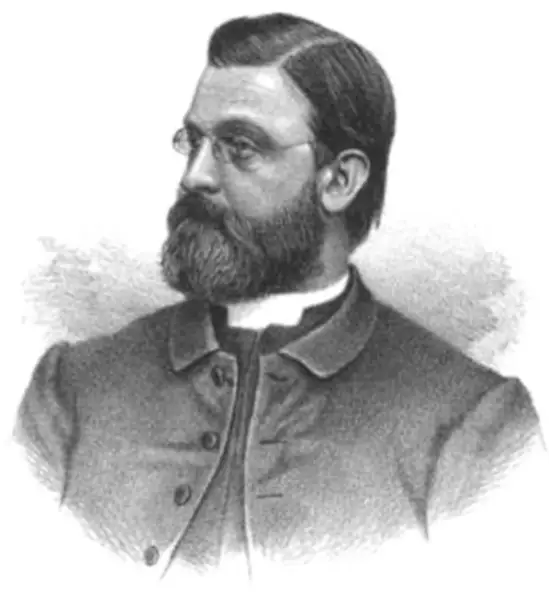
James DeKoven, priest and educator of the American Episcopal Church who lived from 19 September 1831 to 19 March 1879, stood at the head of the Ritualist party in the United States. Born in Middletown, Connecticut, to a wealthy family of ten children, he was educated at Columbia College and the General Theological Seminary and ordained a deacon in 1854. He took a teaching post at Nashotah House in Wisconsin and served as rector of St. John Chrysostom parish in Delafield, where Bishop Jackson Kemper ordained him priest; there he also founded a school, St. John's Hall. In 1859 he became warden of Racine College, the institution at the center of his life for the next two decades. DeKoven defended ritualist worship at the General Conventions of 1871 and 1874 and addressed the Church Congress in 1876. His Eucharistic doctrine — accused by opponents of approximating Roman transubstantiation — repeatedly blocked his episcopal ambitions: he was elected or nominated for the dioceses of Massachusetts, Wisconsin, Fond du Lac, and Illinois, but was never consecrated, in the Illinois case after clergy and laity chose him over his standing committee's objections. He declined prestigious calls to Trinity Church New York, the Church of the Advent in Boston, and St. Mark's in Philadelphia, remaining in Wisconsin until his death from a fall on the ice on Saint Joseph's Day, 1879. He is buried at Racine College, now the DeKoven Center.
The Complete Life
Formation in Connecticut and New York
James DeKoven entered the world on 19 September 1831 in Middletown, Connecticut, one of ten children born to parents of considerable wealth. Comfort, however, did not define him; from an early age his path bent toward scholarship and the church. Among his kin was the future composer Reginald De Koven, his nephew, evidence of the family's cultivated milieu. For his higher education he went east to Columbia College in New York, and from there to the General Theological Seminary, the flagship school of Anglican theology in the United States. In 1854, at twenty-three, he was ordained a deacon. The trajectory was that of a promising young churchman of his class and generation, but the direction he gave it was not the expected one. Instead of seeking a comfortable urban cure, the young deacon headed west to Wisconsin, to Nashotah House — the frontier monastery-college of the High Church movement — where the Episcopal Church was planting both the faith and serious education in what was still in many respects wilderness. This choice of the hard posting over the easy one became the pattern of his whole life, and the theology he absorbed in those Midwestern years, centered on the sacraments and reverent worship, would make him the standard-bearer of a movement.
§ Early life and education
Priest, Rector, and Warden
At Nashotah House DeKoven accepted a teaching position, and in the nearby town of Delafield he took charge as rector of St. John Chrysostom parish. It was there that Bishop Jackson Kemper, the great missionary bishop of the Northwest, ordained him to the priesthood. Delafield also saw his first experiment as an educator: he established a school called St. John's Hall, joining the twin vocations of priesthood and teaching that marked his entire career. In 1859 came the defining appointment — warden of Racine College on the shore of Lake Michigan. For the remaining twenty years of his life, DeKoven remained at the center of that school, guiding its academic and spiritual character and making it a showplace of Anglican higher education in the Midwest. He might have left it many times over. Some of the largest and wealthiest parish churches in the nation sought his services, among them Trinity Church in New York City, the Church of the Advent in Boston, and St. Mark's Church in Philadelphia — pulpits that offered influence, salary, and prominence. He turned every call down and stayed in Wisconsin. In an age when clerical careers were built by advancement, DeKoven's refusal to leave a small college on Lake Michigan became itself a kind of sermon on vocation.
§ Career
Standard-Bearer of Ritualism
DeKoven rose to national leadership as the eloquent voice of Anglican Ritualism — the movement seeking to restore ceremonial dignity, Eucharistic adoration, and Catholic doctrine to a church that had inherited the plainness of the Reformation settlement. He argued the cause in person at the National Conventions of 1871 and 1874, where the ritualist controversies convulsed the Episcopal Church, and in 1876 he addressed the Church Congress, the national forum where the denomination argued out its vision of itself. The heart of the conflict was his Eucharistic teaching. An open letter on the Doctrine of the Holy Eucharist, published in a Milwaukee newspaper on 14 January 1874, drew the fire of his opponents; among those who signed the attack were three faculty members of Nashotah House, his own institution. To his critics, his views on transubstantiation came closer to Roman teaching than the Thirty-Nine Articles allowed. The controversy had consequences for him personally: although he was nominated and even elected a bishop — for Massachusetts in 1873, Wisconsin in 1874, Fond du Lac in 1875, and Illinois in 1875, where both clergy and laity chose him — the required endorsements were withheld, the standing committee in Illinois citing his Eucharistic doctrine. He was never consecrated, and he accepted the verdicts without schism.
§ Career
A Sudden Death at Racine
DeKoven's life ended as quietly and abruptly as it had been steadfast. After suffering a fall on the ice, he died on 19 March 1879 — the feast of Saint Joseph — in his fifty-eighth year, still the warden of Racine College, still never having received the episcopate that his church so often offered and so often withheld. His death deprived the Anglo-Catholic movement in America of its most winsome spokesman at its critical hour. He was buried on the grounds of Racine College itself, the institution he had served for two decades; that burial ground is now the site of the DeKoven Center, a retreat and conference center that keeps his name and continues something of his vision of a place where learning and prayer belong together. The church he had served, and whose conventions he had shaken, enshrined his memory in its liturgical calendar: the Episcopal Church commemorates him in Lesser Feasts and Fasts, with a feast day of 22 March. In a movement that often remembered its martyrs of controversy bitterly, DeKoven was remembered with affection across party lines — the priest who was denied a bishop's mitre and given instead the surer memorial of a saint's day.
§ Death and legacy
Commemoration in the Episcopal Church
James DeKoven belongs to that company of Christians honored by ecclesiastical commemoration rather than Roman canonization. The Episcopal Church inscribed him in its Calendar of the Church Year, fixing his feast on 22 March and including his biography in Lesser Feasts and Fasts, the church's official directory of its heroes — a form of canonization in all but name within Anglicanism. The honor acknowledges not a miracle record but a life of conspicuous holiness in a particular vocation: the scholar-priest who combined love of the Eucharist with fidelity to a church that repeatedly wounded him. His continued influence has taken institutional forms as well. The DeKoven Center at Racine preserves his memory as a place of retreat and conference; the Solitaries of DeKoven, a religious order of hermits, took his name for their contemplative vocation; and his image has circulated even in unexpected places, borrowed for cover art by Monstrance, a rock band made up of clergy from the Episcopal Diocese of Milwaukee. Biographers have continued to return to him — from William Cox Pope's 1899 life to a major modern study of 2025 — testifying that the warden of Racine College, denied every mitre, remains one of the memorable figures of American Episcopal history.
§ Death and legacy
The Warden Who Would Not Leave
DeKoven's legacy is woven of three strands. The first is liturgical: the ritualist cause he championed, once suspected of disloyalty to the Thirty-Nine Articles, largely triumphed in the long run, and the Eucharistic reverence he defended — frequent communion, ceremonial dignity, adoration of Christ in the sacrament — is now unremarkable in much of the Episcopal Church he scandalized. The second is educational: St. John's Hall and Racine College embodied his conviction that the church's future is formed in schools where worship and learning are one, a conviction continued at the DeKoven Center and honored wherever Anglican colleges remember their debt to him. The third is personal: his refusal of the great urban pulpits of Trinity, Boston, and Philadelphia in favor of a small Wisconsin college has become a standing parable about ambition and fidelity. The episcopal rejections that might have embittered him never drove him from his church; he addressed its congresses, argued in its conventions, and died in its service. His sermons were collected and published in 1888, and historians of the Episcopal Church, from DeMille to Prichard, give him a central place in the story of its Catholic revival. A biography of 2025 calls him a famous yet forgotten man; the calendar of the church, which keeps his feast each 22 March, remembers otherwise.
§ Death and legacy
Timeline
- 19 Sep 1831
Born in Middletown, Connecticut, into a wealthy family of ten children
§ Early life and education
- 1854
Ordained a deacon after studies at Columbia College and General Theological Seminary
§ Early life and education
- 1859
Becomes warden of Racine College, the school with which he remains for life
§ Career
- 1871
Speaks in support of ritualism at the Episcopal Church's National Convention
§ Career
- 1874
Nominated for Bishop of Wisconsin after rejection in Massachusetts the previous year
§ Career
- 14 Jan 1874
His open letter on the Holy Eucharist appears in a Milwaukee newspaper, drawing attacks from Nashotah House faculty
§ Career
- 1875
Nominated as bishop of Fond du Lac and elected in Illinois, but never consecrated
§ Career
- 1876
Addresses the Church Congress on the vision of the Episcopal Church
§ Career
- 19 Mar 1879
Dies on Saint Joseph's Day after suffering a fall on the ice; buried on the grounds of Racine College
§ Death and legacy
The Record
- Major works
- St. John's Hall school, founded at Delafield, Wisconsin·Leadership of Racine College as warden from 1859·Open letter on the Doctrine of the Holy Eucharist (1874)·Sermons Preached on Various Occasions (published posthumously, 1888)
- Patron of
- Anglo-Catholic worship·Christian educators and college teachers
- Symbols
- Priest's cassock and surplice·books and scholarly dress
- Canonization
- Not canonized; commemorated in the Episcopal Church's calendar (Lesser Feasts and Fasts), feast March 22
Prayer
Bibliography
Show 6 sources
- Crumb, Lawrence (October 23, 2025). "Giving DeKoven His Due". The Living Church
- William Pope, The Life of Reverend James De Koven, pp. 9-13
- The Catholic Movement in the American Episcopal Church by George DeMille, pp 92-94
- "THE EPISCOPAL CHURCH.; THE COMING GENERAL CONVENTION...". The New York Times. 1874-08-18. ISSN 0362-4331
- Robert Prichard, A History of the Episcopal Church, p. 184
- William C. Pope, Life of the Reverend James de Koven, D. D., Sometime Warden of Racine College (New York: James Pott & Company, 1899)
Profile text adapted from the Wikipedia article, licensed CC BY-SA 4.0.
Pray with this saint every day
Save St. James DeKoven to your favorites, read the full profile, and get feast-day reminders in the Saints app.
Get the Saints AppFree on the App Store for iPhone and iPad