
1651 – 1719·Feast April 7
St. Jean-Baptiste de La Salle
Founder of the Christian Brothers and patron of teachers
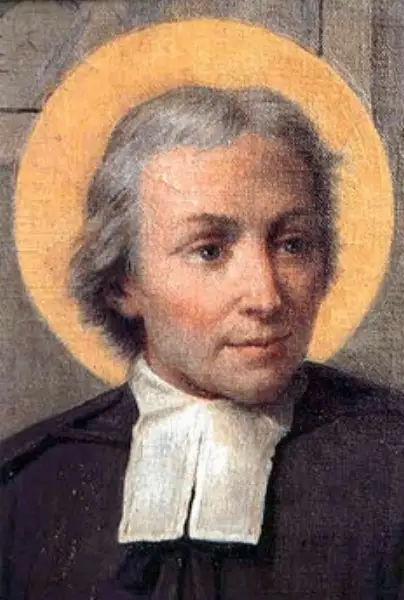
Overview
Jean-Baptiste de La Salle, a French priest who rebuilt schooling for the destitute and brought into being the community known as the Christian Brothers, is honoured by the Catholic Church as patron saint of teachers of youth. Born to a wealthy Reims family in 1651, he was headed for a comfortable ecclesiastical career when a chance encounter with the schoolmaster Adrian Nyel in 1679 drew him toward the education of poor children. Step by step he gave away his inherited fortune, resigned his canonry, and shared his home with the rough schoolmasters of Reims, eventually forming them into a religious institute of consecrated laymen without a single priest, the first of its kind. His schools taught in French rather than Latin, grouped pupils by ability, and trained teachers in the world's first normal school, established at Reims in 1685. Opposed by church authorities wary of a new form of religious life and resented by the educational establishment, he persevered until his death at Saint Yon near Rouen on Good Friday 1719. Canonized by Pope Leo XIII in 1900, he was proclaimed patron of all teachers of youth by Pius XII in 1950, and the Lasallian network he inspired now educates more than a million students worldwide.
The Complete Life
A Reims Childhood of Privilege
Jean-Baptiste de La Salle was born on 30 April 1651 into one of the prosperous families of Reims, the eldest child of Louis de La Salle and Nicolle Moet de Brouillet. His mother came from nobility and ran a thriving winery business; through her line he was related to Claude Moët, the founder of the champagne house Moët & Chandon. His parents steered him toward the Church from childhood: at eleven, on 11 March 1662, he received the tonsure in a formal ceremony that registered a boy's intention, and his parents' offer of their son, for the service of God. At sixteen he was named a canon of Reims Cathedral, and at seventeen he took minor orders. Sent to the College des Bons Enfants for higher studies, he earned the degree of Master of Arts on 10 July 1669, and in October 1670 he went to Paris to enter the Seminary of Saint-Sulpice. Death then reshaped his plans: he lost his mother on 19 July 1671, and his father followed on 9 April 1672, obliging the twenty-one-year-old seminarist to return home as head of the family, responsible for educating four brothers and two sisters while continuing his own path to ordination.
§ Background
An Accidental Vocation
Ordained a deacon in 1676 and a priest on 9 April 1678, La Salle seemed destined for the respectable canons' life of Reims. The turning point came through his chaplaincy to the Sisters of the Child Jesus, a new congregation devoted to the care of the sick and the schooling of poor girls; he helped them become established and served as their confessor. It was in that circle that in 1679 he met Adrian Nyel, a schoolmaster working among the poor. With La Salle's backing a school soon opened, and when a wealthy woman of Reims offered to endow another on the sole condition that La Salle involve himself, what had begun as a favour to Nyel became the labour of a lifetime. He later admitted he had never intended any of it: he imagined his care for the schools and their masters would remain a marginal charity, and that had he foreseen it would oblige him to live with the teachers, he would have abandoned the whole project. God, he wrote, engages a person wholly by steps too gradual to notice and across years, so that one commitment draws the next beyond all foresight.
§ Sisters of the Child Jesus
Schools Together and by Association
The teachers of Reims struggled without leadership, purpose, or training, and La Salle took deliberate, socially costly steps to help them. In 1680 he began inviting them to eat at his own table, partly to teach them manners and partly to form them for their work; in 1681 he took the decisive step of bringing them to live in his house. His relatives were deeply disturbed and his social peers scandalized. When the family home was lost at auction through a lawsuit, he rented a house and moved in with the small band of teachers. He then resigned his canonry to devote himself entirely to the schools, and, counselled by a priest of Paris called Barre, he sold off his considerable fortune, sending the proceeds to the poor of Champagne during a famine. Out of these beginnings came his community of the Brothers of the Christian Schools: consecrated laymen with no priests among their members, giving a free Christian schooling to children of tradesmen and of the destitute, united in a common life and a shared work. Ecclesiastical authorities resisted this new form of religious life and the educational establishment resented his methods, but the institute endured. In 1685 he founded at Reims what is generally accounted the first normal school.
§ Institute of the Brothers of the Christian Schools
Poverty Chosen for the Sake of the Poor
La Salle's spirituality was a spirituality of Providence and of descent. The condition of the destitute, shut off from rescue in this life and the next, stirred him, and he resolved to spend his talents and advanced education on boys and girls who were left to their own devices and brought up badly. Every escalation of his commitment followed the same pattern: he crossed a social boundary, found his family and class dismayed, and concluded that God was committing him more deeply to the schools. The surrender was total, his canonry, his fortune, and finally his home given away in stages, the money from the sale of his goods sent to famine-stricken Champagne. He lived with the masters he formed, sharing their table before he shared their house, and his rule of life in community bound the Brothers to their pupils' needs rather than to clerical ambition. His educational writings, prized long after his death, carry the same spirit: Matthew Arnold judged that later works on education had added little to his precepts and entirely lacked their unction.
§ Institute of the Brothers of the Christian Schools
Worn Out at Saint Yon
The last decades of La Salle's life were spent extending and defending the young institute, which established itself in Rouen at the house of Saint Yon and extended into Sunday courses for working young men, technical schools, secondary schools teaching modern languages, the arts, and the sciences, and one of the first French institutions for the care of delinquents. The cost of this unremitting labour was heavy. Worn out by austerity and exhausting work, La Salle died at Saint Yon near Rouen on Good Friday, 7 April 1719, at the age of sixty-seven. He had outlived most of his early critics and left behind a community that spread his method of free schools across France and beyond. The church would later fix his feast on 7 April itself, the anniversary of his death, which the calendar calls his dies natalis, his birth to heaven, a fitting date for a man whose whole life had been an unbroken gift of himself to the schoolroom.
§ Institute of the Brothers of the Christian Schools
Raised to the Altars
Veneration of La Salle grew steadily through the nineteenth century as the Christian Brothers spread across the world. Pope Leo XIII beatified him on 19 February 1888 in Saint Peter's Basilica, and in the same basilica canonized him on 24 May 1900. Pope Pius X inserted his name into the General Roman Calendar in 1904, assigning the feast to 15 May, a date Lasallian institutions still keep. The culmination of his recognition came on 15 May 1950, when Pope Pius XII, citing both his life and his inspirational writings, proclaimed him Patron Saint of All Teachers of Youth. In the 1969 revision of the Church's calendar, Pope Paul VI transferred the observance to 7 April, the anniversary of his holy death. His relics rest at the Sanctuary of John Baptist de La Salle in the Casa Generalizia in Rome, the worldwide headquarters of the institute he founded, where the Brothers maintain his memory as the living centre of their educational vocation.
§ Veneration
Three Hundred Years of Lasallian Schools
La Salle's innovations passed permanently into the practice of schooling. He was a pioneer in training lay teachers, founding the first normal school, and he was among the first to teach in French rather than Latin, opening learning to pupils who would never study the classical tongues. His network of free schools, Sunday courses for working men, technical and secondary schools, and care for delinquent youth anticipated institutions that later became universal. According to La Salle University, his books have left their mark for more than three centuries on how schools are run, how teachers are prepared, and how education is practised. The Lasallian network he began now spans the globe: in 2021 the International Lasallian Mission reported roughly 3,000 Brothers helping to run more than 1,100 educational centres in over 80 countries, instructing over a million pupils, supported by some 90,000 instructors and lay partners. Countless schools bear his name, and streets near Lasallian schools around the world do the same. Even the heavens carry his memory: asteroid 3002 Delasalle, discovered in 1982, was named in his honour.
§ Legacy
Timeline
- 30 Apr 1651
Born at Reims, eldest child of Louis de La Salle and Nicolle Moet de Brouillet.
§ Background
- 11 Mar 1662
Tonsured at the age of eleven in a ceremony consecrating him to God's service.
§ Background
- 10 Jul 1669
Took the degree of Master of Arts at the College des Bons Enfants.
§ Background
- 18 Oct 1670
Entered the Seminary of Saint-Sulpice in Paris.
§ Background
- 19 Apr 1672
Left Saint-Sulpice after his father's death to lead the family and educate his six siblings.
§ Background
- 9 Apr 1678
Received priestly ordination at twenty-six years of age.
§ Background
- 1679
Met the schoolmaster Adrian Nyel through his work with the Sisters of the Child Jesus.
§ Sisters of the Child Jesus
- 1681
Opened his own house as a common residence for the schoolmasters of Reims.
§ Institute of the Brothers of the Christian Schools
- 1685
Established at Reims the teacher-training house now regarded as history's first normal school.
§ Institute of the Brothers of the Christian Schools
- 7 Apr 1719
Died at Saint Yon near Rouen on Good Friday, worn out by austerity and exhausting labour.
§ Institute of the Brothers of the Christian Schools
- 19 Feb 1888
Beatified by Pope Leo XIII at Saint Peter's Basilica.
§ Veneration
- 24 May 1900
Canonized by Pope Leo XIII at Saint Peter's Basilica.
§ Veneration
- 15 May 1950
Proclaimed Patron Saint of All Teachers of Youth by Pope Pius XII.
§ Veneration
In Their Own Words
I had imagined that the care which I assumed of the schools and the masters would amount only to a marginal involvement committing me to no more than providing for the subsistence of the masters and assuring that they acquitted themselves of their tasks with piety and devotion
Later works on the same subject have little improved the precepts, while they entirely lack the unction.
The Record
- Major works
- Institute of the Brothers of the Christian Schools·First normal school for teacher training, Reims (1685)·Sunday courses for working young men·One of the first institutions in France for the care of delinquents·Technical schools and secondary schools for modern languages, arts, and sciences·Writings on education and school management that influenced practice for over 300 years
- Patron of
- Teachers of youth·Institute of the Brothers of the Christian Schools·Lasallian educational institutions·Educators·School principals·Teachers
- Symbols
- Book·Christian Brothers' habit
- Canonization
- Canonized by Pope Leo XIII on 24 May 1900
Prayer
Bibliography
Show 7 sources
- Graham, Matthias (1910). "St. John Baptist de la Salle". In Herbermann, Charles (ed.). Catholic Encyclopedia. Vol. 8. New York: Robert Appleton Company.
- Van Grieken, G. (1995). To Touch Hearts – Pedagogical Spirituality and St. John Baptist de La Salle (Doctoral dissertation). Boston College, Chestnut Hill, Massachusetts.
- Koch, Carl (1990). Praying with John Baptist de La Salle. Saint Mary's Press. pp. 49–50. ISBN 9780884892403.
- Salm, Luke (1996). The Work Is Yours: The Life of Saint John Baptist de La Salle (2nd ed.). Christian Brothers Publications. ISBN 978-1884904080.
- Calcutt, Alfred (1994). De La Salle: A City Saint and the Liberation of the Poor Through Education. De La Salle. ISBN 978-0952139805.
- Wanner, R., Claude Fleury (1640-1723) as an Educational Historiographer, 1975.
- "The International Lasallian Mission". La Salle Worldwide. Retrieved 11 May 2021.
Profile text adapted from the Wikipedia article, licensed CC BY-SA 4.0.
Pray with this saint every day
Save St. Jean-Baptiste de La Salle to your favorites, read the full profile, and get feast-day reminders in the Saints app.
Get the Saints AppFree on the App Store for iPhone and iPad