
1884 – 1918·Feast March 8
St. Johannes Karhapää
Orthodox teacher and martyr of the Finnish Civil War
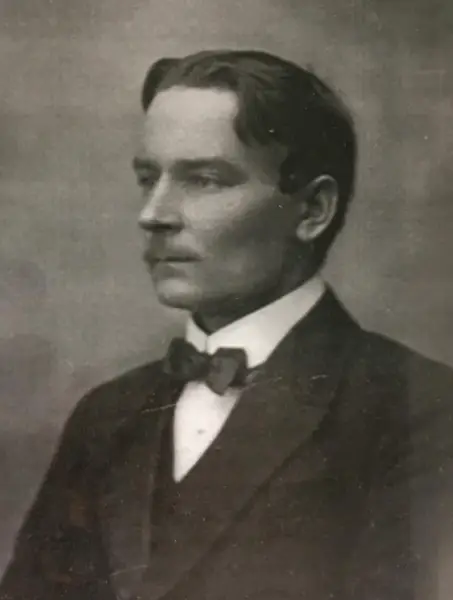
Overview
Johannes Vasilinpoika Karhapää, canonized as the Holy Martyr and Confessor John of Sonkajanranta, was a Finnish Karelian schoolteacher and Eastern Orthodox missionary killed by White Guards during the Finnish Civil War. Born in 1884 at the Nissinen homestead in the Sonkajanranta village of Ilomantsi, he grew up in a devout Orthodox family and married young, fathering two sons before his first wife's death in 1910. Alarmed by aggressive Lutheran proselytism among the Orthodox of Karelia, he wrote to Archbishop Sergius of Finland in 1906 asking for a school in his village; the Saint Sergius and Herman Brotherhood built one the following year, teaching in Finnish, and Karhapää became its driving force, adding a church consecrated to the Prophetess Anna in 1915 and serving as a catechist across the region. In 1914 the Viipuri Spiritual Consistory named him religion teacher for the whole province of Kuopio. His visible loyalty to the tsarist order made him, as revolutionary feeling spread, the target of slander from Fennomans and eventually of dismissal. Arrested by White Guards in March 1918, he was executed without trial in Joensuu, shot by a firing squad on 7 or 8 March 1918. The Orthodox Church of Constantinople enrolled him among the saints in 2018.
The Complete Life
A Son of Sonkajanranta
Johannes Karhapää was born on 13 July 1884 in the Sonkajanranta village of Ilomantsi, in the Grand Duchy of Finland, on the Nissinen homestead. Vasili and Anastasia brought him up alongside Jaakko, his full brother, and the half-brothers Feodor and Ilja. As a young man he wed Katri Timola, mother of his two sons, Aleksi and little Sergei, who did not survive infancy; widowed in 1910, he took Anna Palviainen as his second wife. From childhood he possessed a robust Orthodox faith and took part in the youth circle of the local Saints Sergius and Herman Brotherhood, the organization that would shape his life's work. His world was the Orthodox Karelian countryside at a moment when its identity was under pressure: the Sortavala Evangelical Society had launched an aggressive campaign to draw Orthodox Karelians into Lutheranism, and the Karelian Brotherhood, founded at Olonets in 1907 on the initiative of Hieromonk Cyprian, answered by building schools and publishing teaching materials across the region. Half-brothers by a second marriage, a wife lost young, a second family begun in maturity: the homestead at Sonkajanranta knew the ordinary hardships of Karelian country life, and Karhapää's lifelong work among the poor grew from the economics of his own village.
§ Early life
A School for the Village
Worried by the spread of Lutheran mission work in his home district, Karhapää in 1906 approached Archbishop Sergius of Finland, the future Patriarch of Moscow, with a letter asking for help in defending Orthodoxy and requesting a school for Sonkajanranta. The result was an Orthodox Association in the village, a branch of the Saints Sergius and Herman Brotherhood, blessed by the archbishop to build a church school with the Brotherhood's support. The school opened the following year with Finnish as the language of instruction, and by 1911 it ran four classes, boarding and feeding poor pupils and those who came from a distance, while its halls served adult teaching and village festivals in the evenings. Karhapää himself, working for the Brotherhood, went about Ilomantsi as a catechist alongside Hieromonk Isaakiy of Valamo Monastery, selling devotional prints and literature and organizing popular Christian gatherings. In 1914 the Viipuri Spiritual Consistory, recognizing a self-taught teacher of unusual effectiveness, appointed him religion teacher for the entire province of Kuopio, his salary paid by the Grand Duchy itself. That the school taught in Finnish rather than Russian mattered enormously in a region where Russification was resented, and its boarding provision for poor and distant pupils made it, in effect, the educational center of the whole Orthodox community round about.
§ Activities as an enlightener
Enlightener Under Suspicion
Karhapää's influence peaked with the First World War, and so did the hatred directed at him. To Fennoman nationalists he was a propagator of the "Russian faith," a henchman of the tsarist regime, even a spy of the Okhrana; a Kemi newspaper had already maligned him and his father as early as 1910. The slur that stung most was remembered for decades: in 1912 he had received Governor-General Seyn at his home, and the governor had advised him to seek state funds for a proper road to the school. After the Russian Revolution of 1917 the attacks intensified. The North Karelian Fennoman press ridiculed his mission journeys and decorations, called him one of the dark powers of the region, and accused him of sowing discord among Karelians and of seeking to enslave Finland to Russia. Before Easter 1917 a parish assembly condemned him and his school as alien oppression mixed with religion. When Bishop Kiprian died in 1914 the Karelian Brotherhood had already been paralyzed; in the autumn of 1917 Karhapää lost the support of Archbishop Serafim, was dismissed from his post, and saw his school handed to a fierce nationalist Jäger. A church historian, Kauko Pirinen, later judged the criticism unjust: Karhapää's only motive had been deep religious conviction.
§ In trouble in the 1910s
Arrest and Execution
In March 1918, in the midst of the Finnish Civil War, Karhapää and his brother Jaakko were summoned to the White Guard call-up at the Tuupovaara primary school and there arrested on a tip-off. The incriminating evidence was a small icon, kept for school instruction, found in Karhapää's coat pocket. He was permitted to go home and say farewell to his family before being marched to Joensuu at gunpoint; at a stop along the way he told the woman of a nearby house that his days were numbered. In Joensuu the brothers were locked in the basement of the town hall with Red Guards and Russian prisoners of war. In early March he was taken to the Siilainen district of the town and executed: prisoners were lined up, five marksmen fired a volley, and witnesses say a second volley was needed to finish him. The executions of those weeks were random, drunken, and without trial. His wife could recover the body only after months, identifying it by the stripes of its woolen socks; the Kokonniemi churchyard at Ilomantsi received him, mourned by crowds of both confessions together. Even then the slander continued, and his gravestone was twice hurled into a lake before being set in concrete. His death date was recorded as 7 March in the national War Victims database, though other accounts place it days or weeks later.
§ Imprisonment and death
Enrolled in the Hagiologion
A century after his death, the Finnish Orthodox Church brought Karhapää's name forward. In March 2016 the bishops' synod put forward two names, Karhapää's and that of Schema-Igumen John of Valamo. Constantinople answered on 29 November 2018, when the Patriarchate's Holy Synod inscribed both in the Orthodox Hagiologion, and the liturgical act of canonization was celebrated on 12–13 July 2019 in the church of the Prophetess Anna at Sonkajanranta, the very church he had built beside his school. He was canonized as the Holy Martyr and Confessor John of Sonkajanranta, and his annual feast was fixed for 8 March, the date of his martyrdom. His cause had been prepared by the 2008 Yle documentary on his rise and ruin, directed by Mikko Keinonen, which restored his story to Finnish public memory, and by the judgment of historians like Kauko Pirinen that the propaganda which ruined him had slandered a man whose only crime was his faith. The interval between the Finnish proposal of March 2016 and the Constantinopolitan decision of November 2018 was short by the standards of Orthodox canonization causes, and the choice of Sonkajanranta for the July 2019 rite returned the honor to the village whose school and church he had raised.
§ Canonization
After the Grave
The traces Karhapää left were almost erased and yet survived. After Finnish independence his school passed to the municipality and burned down in the 1950s, destroying many of his belongings; the Prophetess Anna's church endures today among the parochial churches of Joensuu. His grave at Kokonniemi endured its own passion: the tombstone was twice thrown into a nearby lake by those who still hated the "Russian faith" he represented, until it was finally cast in concrete. Yet in 1958 a broken old man in a frieze coat came to his brother Jaakko's door, confessed that he had been one of the executioners, and could find no rest; Jaakko talked with him through the night and let him sleep under his roof, a last act of forgiveness in the family of the murdered teacher. In the Church's memory the slander has been reversed entirely: the martyr of Sonkajanranta is now invoked as a confessor who kept the faith of his fathers under three banners of hostility, Lutheran mission, tsarist Russification, and nationalist rage, and who died for a small icon carried in a coat pocket.
§ Imprisonment and death
Timeline
- 13 Jul 1884
Born at the Nissinen homestead in the Sonkajanranta village of Ilomantsi
§ Early life
- 1906
Wrote to Archbishop Sergius of Finland asking help in defending Orthodoxy and a school for Sonkajanranta
§ Activities as an enlightener
- 1907
An Orthodox school, founded with the Saints Sergius and Herman Brotherhood, was built in Sonkajanranta
§ Activities as an enlightener
- 1910
His first wife Katri died; he later married Anna Palviainen
§ Early life
- 1911
The Sonkajanranta school had grown to four classes, boarding poor and distant pupils
§ Activities as an enlightener
- 1914
The Viipuri Spiritual Consistory appointed him religion teacher for the entire province of Kuopio
§ Activities as an enlightener
- 1915
The church he built beside the school, dedicated to the Prophetess Anna, was completed and consecrated in the autumn
§ Activities as an enlightener
- 1917
Condemned by a parish meeting before Easter and dismissed from his teaching post in the autumn after losing Archbishop Serafim's support
§ In trouble in the 1910s
- Mar 1918
Arrested at the White Guard call-up at Tuupovaara and taken to Joensuu, he was executed by firing squad on 7 or 8 March
§ Imprisonment and death
- 1958
A guilt-stricken old man, one of his executioners, came to his brother Jaakko's house seeking peace
§ Imprisonment and death
- Mar 2016
The synod of bishops of the Finnish Orthodox Church proposed his canonization together with Schema-Igumen John of Valamo
§ Canonization
- 29 Nov 2018
The Holy Synod of the Ecumenical Patriarchate of Constantinople recorded him in the Hagiologion of the Orthodox Church
§ Canonization
- 12 Jul 2019
Liturgical canonization celebrated at the church of the Prophetess Anna in Sonkajanranta
§ Canonization
The Record
- Major works
- Orthodox school of Sonkajanranta (founded 1907)·Church of the Prophetess Anna, Sonkajanranta (consecrated 1915)
- Canonization
- Recorded in the Hagiologion by the Ecumenical Patriarchate of Constantinople on 29 November 2018; liturgically canonized 12–13 July 2019 at Sonkajanranta as the Holy Martyr and Confessor John of Sonkajanranta
Prayer
Bibliography
Show 6 sources
- "Karhapää, Ivan Vasiljev". War Victims of Finland 1914–1922 Database (in Finnish). The Prime Minister's Office of Finland. 5 March 2002. Archived from the original on 20 September 2016. Retrieved 3 December 2018.
- "Communiqué (29/11/2018)". Chief Secretariat of the Holy and Sacred Synod. Ecumenical Patriarchate. 29 November 2018. Retrieved 3 December 2018.
- Keinonen, Mikko: Oikeauskoisen nousu ja tuho. Karlik Films, 2008. Viitattu 9.9.2016.
- "Pyhä marttyyri ja tunnustaja Johannes Ilomantsilainen (1884–1918)" (in Finnish). Finnish Orthodox Church. 30 November 2018. Archived from the original on 3 December 2018. Retrieved 3 December 2018.
- Kärkkäinen, Tapani (1999). Kirkon historia. Ortodoksin käsikirja ['The history of the church. A handbook for Orthodox Christians']. Jyväskylä: Ortodoksisen kirjallisuuden julkaisuneuvosto. p. 192. ISBN 951-8979-27-8.
- Loima, Jyrki (2004). "Part 2.2. The battle of Rautu and the Russians". Venäläissurmat Suomessa vuosina 1914–22 ['Russians killed in Finland during 1914–22']. Helsinki: Prime Minister's Office (Finland). ISBN 952-53544-5-8.
Profile text adapted from the Wikipedia article, licensed CC BY-SA 4.0.
Pray with this saint every day
Save St. Johannes Karhapää to your favorites, read the full profile, and get feast-day reminders in the Saints app.
Get the Saints AppFree on the App Store for iPhone and iPad