
c. 1544 – 1594·Feast July 24
St. John Boste
Seminary priest and martyr of Northern England
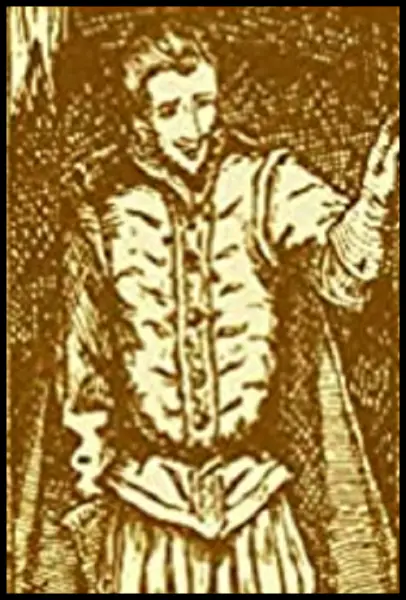
Overview
John Boste was born around 1544 at Dufton in Westmorland, the child of Nicholas Boste, a landowner whose estates lay at Dufton and in Penrith, and of Janet Hutton, a daughter of Hutton Hall. Educated at Appleby Grammar School and then Queen's College, Oxford, he earned both bachelor's and master's degrees and was elected a fellow of his college in 1572. A year or so later he took up the first headmastership created under Queen Elizabeth's charter at Appleby. His conversion to Catholicism in 1576 changed the course of his life: he crossed to the continent, was ordained priest at Reims in the March of 1581, and returned to England within weeks. For a decade he served as a missionary priest across the North, often travelling with John Speed and operating from Brancepeth Castle and a secret base at South Shields that helped ordinands reach seminaries abroad. Hunted relentlessly — Lord Huntingdon dubbed him 'the great stag of the North' — he evaded capture for roughly ten years until Francis Egglesfield, a lapsed Catholic, betrayed him near Durham in 1593. Racked in the Tower of London by Richard Topcliffe and condemned at the Durham Assizes, he was hanged, drawn and quartered at Dryburn on 24 July 1594, dying with composure as he recited the Angelus on the ladder.
The Complete Life
A Scholar of Westmorland
John Boste entered the world around 1544 in the Westmorland village of Dufton, into a family of standing: his father, Nicholas Boste, held land at Dufton and Penrith, and his mother, Janet Hutton, came from Hutton Hall near Penrith. The boy was sent first to Appleby Grammar School, where the bright pupil from the Eden valley prepared for university, and then to Queen's College, Oxford. There he distinguished himself academically, taking both the degrees of Bachelor and Master of Arts and joining the ranks of the college fellows in 1572. Learning, however, did not yet point him toward the Church. In 1574 he returned north to Appleby to take up a post of civic consequence — the first headmastership established under the charter granted to the town by Queen Elizabeth. As a schoolmaster he stood at the centre of Elizabethan public life, a conforming subject shaping the next generation. Behind that respectable surface, though, his convictions were shifting, and within two years he would make a decision that set him on a collision course with the regime he had served.
§ Life
Conversion and Ordination
In 1576 Boste converted to Catholicism, a step that closed the doors of official preferment and opened the hazardous path of the seminary priest. He left England for the continent, joining the stream of Englishmen who trained abroad for a mission at home. At Reims, where the English College had re-established itself, he was raised to the priesthood in March 1581. The preparation was brief by design: the mission field in England was desperate for clergy, and within a month of his ordination he was on his way back. In April 1581 he came ashore at Hartlepool and made his way south through East Anglia before reaching London, where for a time he passed as a servant in the household of Lord Montacute, a conforming Catholic nobleman whose roof offered cover to priests. This period of concealment gave him a practical education in the mechanics of survival as a banned cleric: safe houses, disguises, and the quiet cooperation of gentry families. Armed with that experience, he turned north again, toward the region where he would spend the rest of his life.
§ Life
Missionary of the North
Boste's apostolate unfolded across Northern England, frequently in the company of the priest John Speed, and its hub lay among the recusant networks of the gentry. Much of his work radiated from Brancepeth Castle, the seat of Lady Margaret Neville, whose household sheltered Catholic activity. From South Shields he ran a clandestine operation with a double purpose: sustaining the sacramental life of scattered Catholic communities and moving candidates for the priesthood out of the country so they could train on the continent and return. His success made him a priority target. In January 1584 the Privy Council instructed Scrope, the warden of the Western March, to move energetically against him; the house of his brother Laurence was searched. Lord Huntingdon, sketching the exasperation of the authorities, called him 'the great stag of the North' — the quarry that led every pursuer a chase. Records place him near Carlisle in December and January and in Northumberland early in 1584, and for roughly a decade he continued to slip through the net, an itinerant priest whose very elusiveness became his legend among the people he served.
§ Life
Betrayal and Martyrdom
The end came through betrayal rather than pursuit. In 1593 Francis Egglesfield, a former Catholic, informed on Boste to the authorities near Durham. The trap closed at the Waterhouse on the Neville estate: as Boste was leaving a secret Mass there, Egglesfield asked him for a blessing, and the priest's compliance signalled the watching militia, who stormed the house and pulled Boste from a priest hole behind the fireplace. Taken to the Tower of London, he was interrogated on the rack by the notorious hunter of priests Richard Topcliffe. Sent back to Durham, he was condemned at the Assizes and on 24 July 1594 suffered the full sentence of treason — hanging, drawing and quartering — at Dryburn, ground that today holds St. Leonard's school. He repudiated the charge of treason in words that have outlived his judges: his business, he said, was the winning of souls, not any meddling in temporal invasions. On the ladder he recited the Angelus. His executioners were barbarously hasty, cutting him down almost before he had been turned off, so that he was butchered while semi-conscious and standing. His limbs were fixed on the castle walls; his head was raised on a pole on Framwellgate Bridge, and quietly removed before morning by an unknown hand.
§ Life
Raised to the Altars
Formal recognition followed the passage of centuries. In 1929 Pope Pius XI beatified Boste, an act that placed him among the ranks of the English Reformation martyrs whose causes Rome had begun to advance. On 25 October 1970 Pope Paul VI canonized him together with the Forty Martyrs of England and Wales, the group of priests, religious and laypeople executed for their Catholic faith between 1535 and 1679, of whom Boste is one of the clearest representatives of the Elizabethan seminary-priest tradition. The collective feast of the Forty Martyrs is observed on 4 May, but Boste also keeps his own memorial on 24 July, the anniversary of his execution at Dryburn. Beyond these, he shares in two further commemorations: 25 October with the Forty Martyrs collectively, and 29 October as one of the Douai Martyrs, the band of clergy trained at the English College of Reims and Douai who died on the English mission. In iconography he is represented by a crucifix, the emblem of the priesthood for which he gave his life and which he exercised to the very end.
§ Veneration
Memory of the Great Stag
Boste's life has continued to draw the steady attention of historians of the English mission down to the present day. The modern telling of his story reaches from Bede Camm's entry in the early twentieth-century Catholic Encyclopedia, through the Catholic Records Society's 1908 study of his pursuit, to Martin Dufferwiel's history of Durham, which records the city that condemned and now honours him. The dioceses that once hunted priests — Hexham and Newcastle among them — now commemorate the Northern Martyrs, and parishes in Derby and Westminster keep his memory alive in their devotional material. The episode of his betrayal at the Waterhouse has become one of the vivid set pieces of recusant history: the blessing that doubled as a signal, the priest hole behind the fireplace, the militia at the door. To the North he remains a local saint in the fullest sense, a Westmorland schoolmaster whose learning, once directed to grammar and chalk, became an instrument of ministry, and whose ten-year evasion of the most energetic machinery of the Elizabethan state earned him the hunting epithet by which the region still remembers him.
§ Veneration
Timeline
- 1544
Born at Dufton in Westmorland to Nicholas Boste and Janet Hutton.
§ Life
- 1572
Became a fellow of Queen's College, Oxford, after taking B.A. and M.A. degrees.
§ Life
- 1574
Appointed the first headmaster at Appleby under Queen Elizabeth's charter.
§ Life
- 1576
Converted to Catholicism while working as a schoolmaster.
§ Life
- Mar 1581
Ordained a priest at Reims after leaving England.
§ Life
- Apr 1581
Landed at Hartlepool on his return and began work as a missionary priest in the North.
§ Life
- Jan 1584
The Privy Council directed Lord Scrope to take energetic steps toward his arrest.
§ Life
- 1593
Betrayed near Durham by Francis Egglesfield and seized after a clandestine Mass at the Waterhouse.
§ Life
- 24 Jul 1594
Condemned at the Assizes and executed by hanging, drawing and quartering at Dryburn near Durham.
§ Life
- 15 Dec 1929
Beatified by Pope Pius XI.
§ Veneration
- 25 Oct 1970
Canonized by Pope Paul VI among the Forty Martyrs of England and Wales.
§ Veneration
In Their Own Words
My function is to invade souls, not to meddle in temporal invasions
The Record
- Major works
- Clandestine network at South Shields aiding seminarians travelling to the continent
- Symbols
- crucifix
- Canonization
- Canonized by Pope Paul VI on 25 October 1970 as one of the Forty Martyrs of England and Wales; beatified by Pope Pius XI on 15 December 1929
Prayer
Bibliography
Show 8 sources
- Camm, Bede. "St. John Boste." The Catholic Encyclopedia Vol. 2. New York: Robert Appleton Company, 1907.
- "Northern Martyrs", Diocese of Hexham and Newcastle
- "Saint John Boste", English Martyrs Parish, Derby
- "The Pursuit of John Boste", Catholic Records Society, 1908
- Dufferwiel, Martin. Durham: Over 1,000 Years of History and Legend, Random House, 2011, ISBN 9781780573946
- Duffy, Patrick. "The Forty Martyrs of England and Wales", Catholic Ireland
- "Martirologio", Vatican
- "The Martyrs of Douai", Diocese of Westminster
Profile text adapted from the Wikipedia article, licensed CC BY-SA 4.0.
Pray with this saint every day
Save St. John Boste to your favorites, read the full profile, and get feast-day reminders in the Saints app.
Get the Saints AppFree on the App Store for iPhone and iPad