
1414 – 1484·Feast September 28
St. John of Dukla
Franciscan Preacher of Poland and Lithuania
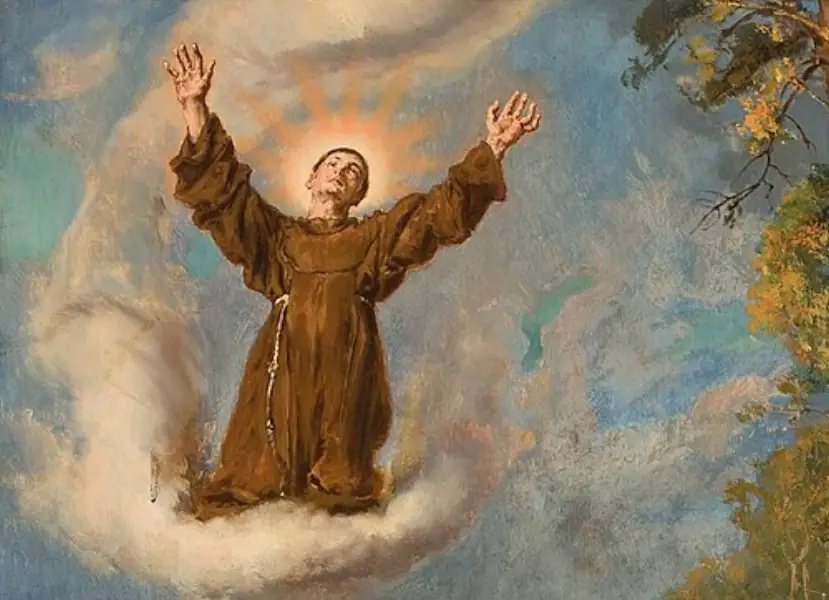
Overview
John of Dukla, known in Polish as Jan of Dukla, was a Conventual Franciscan friar and preacher who came to be honored as a patron of Poland and of Lithuania. Born at Dukla in 1414, he entered the Friars Minor Conventual as a young man and pursued studies at Kraków before ordination. His ministry was spent largely in the east of the Polish realm: he preached in Lwów, in territory that now belongs to Moldavia and Belarus, and served as superior of the friars at Lwów. During the period when the two branches of the Franciscan order were working toward reunion, he may have transferred to the Observant branch. Even after losing his sight at about the age of seventy, he continued his preaching apostolate, composing his sermons with the assistance of a helper. Contemporaries credited his preaching with drawing many in his province back to the practice of the faith. He died at Lwów in 1484, and veneration at his tomb began at once, with numerous wonders attributed to his intercession. He was beatified in 1733 and canonized by Pope John Paul II in 1997.
The Complete Life
Early Life
John was born in 1414 at Dukla, a town in the southeastern reaches of the Polish kingdom. Of his parents, his childhood, and the schooling he received before he left home, the surviving records say nothing; what is known begins with his entry into religious life. As a young man he joined the Friars Minor Conventual, the branch of the Franciscan family that lived in settled convents in the towns of central Europe and devoted itself to preaching, study, and the care of souls. In preparation for this work he was sent to study at Kraków, then one of the great centers of learning in the region, famous for its university. There he would have pursued the theological formation required of a friar destined for ordination. He was ordained a priest, and from that point his life took the shape it would keep for the rest of his days: the pulpit, the confessional, and the government of his brethren. The quiet completeness of that transition, from the son of a small Polish town to a friar of standing in the order, is itself a measure of the man.
§ Biography
Vocation and Ministry
After his ordination John gave himself to preaching, and the field of his labor was the east of the Polish kingdom. He preached in Lwów, the great city of the eastern provinces, and carried the Gospel into territories that lie today within Moldavia and Belarus. In time he was made superior of the friars at Lwów, an office that placed him at the head of the community and gave him responsibility for its preaching ministry. These were decades in which the Franciscan order itself was in movement, for the Conventual and Observant branches were working toward union, and at some point John may have joined the Observants himself as those efforts advanced. The testimony of his contemporaries is that his preaching bore fruit on a remarkable scale: he was credited with bringing the people of his province back to the church. When he reached about the age of seventy his eyesight failed entirely, yet the loss did not end his work. With the help of an aide who assisted him in preparing his sermons, he continued to preach as he had always done, wholly given to the word he proclaimed.
§ Biography
Death, Veneration, and Canonization
John died at Lwów in 1484. Veneration at his tomb began without delay, and a number of miracles were soon being attributed to his intercession, a spontaneous tribute from the people among whom he had labored. Formal recognition, however, came slowly. He was declared venerable by Pope Clement XII on 21 January 1733, and beatified in Rome by the same pope on 23 January. Even then the cause rested for two centuries. It was reopened on 22 June 1948, and on 18 January 1951 the inquiry into a miracle worked through his intercession was set in motion. The culmination came in our own time: on 10 June 1997 Pope John Paul II canonized him at a mass celebrated at Krosno in Poland, close to the town of his birth, before a congregation of approximately one million people. The Polish pope thus enrolled among the saints a son of Poland whose preaching had strengthened the faith of the eastern lands, and honored him as a patron of both Poland and Lithuania. His feast is kept on September 28.
§ Biography
Timeline
- 1414
Born at Dukla, in Poland
§ Biography
- 1484
Dies at Lwów, where veneration at his tomb begins immediately and miracles are attributed to him
§ Biography
- 23 Jan 1733
Beatified in Rome by Pope Clement XII, who declared him venerable on 21 January
§ Biography
- 22 Jun 1948
The cause for his beatification is formally opened
§ Biography
- 18 Jan 1951
Examiners begin assessing a miracle credited to his intercession
§ Biography
- 10 Jun 1997
Canonized by Pope John Paul II at a mass in Krosno, Poland, before roughly one million people
§ Biography
The Record
- Patron of
- Poland·Lithuania
- Symbols
- Franciscan habit·Book of sermons
- Canonization
- Beatified January 23, 1733 in Rome by Pope Clement XII; canonized June 10, 1997 by Pope John Paul II
Prayer
Bibliography
Show 5 sources
- Patron Saints Index - Saint John of Dukla. Archived from the original on 31 December 2011.
- Jones, Kathleen (2006). Butler's Lives of the Saints. New York: Continuum International Publishing Group. ISBN 0-86012-255-7, p. 273.
- Duffy, Patrick. "St John of Dukla", Catholic Ireland, July 10, 2012.
- Index ac status causarum beatificationis servorum dei et canonizationis beatorum (in Latin). Typis polyglottis vaticanis. January 1953. p. 115.
- Mass for the canonization of blessed John of Dukla.
Profile text adapted from the Wikipedia article, licensed CC BY-SA 4.0.
Pray with this saint every day
Save St. John of Dukla to your favorites, read the full profile, and get feast-day reminders in the Saints app.
Get the Saints AppFree on the App Store for iPhone and iPad