
c. 900 – 974·Feast February 27
St. John of Gorze
Monastic Reformer and Ambassador to Córdoba
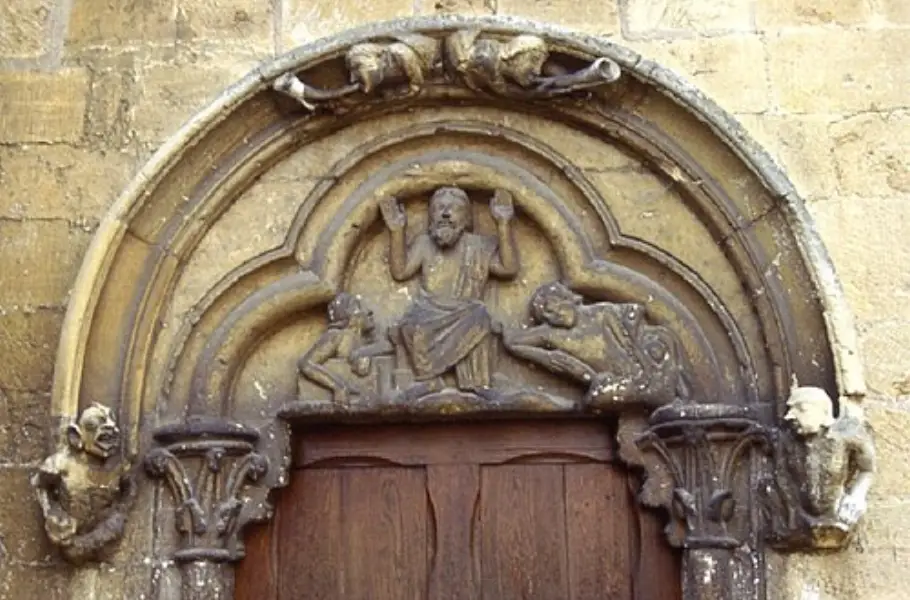
Overview
John of Gorze, also called John of Lorraine, joined to one life the callings of monk, diplomat, estate manager, and reformer of monasteries, and his name became attached to one of the great tenth-century movements for the renewal of religious life. Born around 900 at Vandières near Pont-à-Mousson to wealthy and well-known parents, he was educated at the Benedictine monastery of Saint-Mihiel and early formed ties with the powerful figures of the region. As a young administrator of landed estates he renounced his wealth, made a pilgrimage to Rome and Monte Cassino, and in 933 became a monk at Gorze Abbey. In that same year Bishop Adelbero of Metz asked John and Einald, formerly archdeacon of Toul, to restore the decayed monastery of Gorze; under their leadership the community flourished and its reform spread to other houses. Renowned for his memory and his skill in management, John was sent in 953 as ambassador of King Otto I to the Caliph Abd-ar-Rahman III of Córdoba, where for three years he negotiated with the caliph's court. He became abbot of Gorze in 960 and died there on March 7, 974, of natural causes.
The Complete Life
Early Life and Education
John was born around the year 900 at Vandières, near Pont-à-Mousson in Lorraine, to parents of means and standing in the district. His father had married late in life, taking a wife much younger than himself, and the couple had three children together. The family could afford to give their son a thorough education, and he was sent to study at the Benedictine monastery of Saint-Mihiel. The tradition of scholarship there was strong: his instructor was Hildebold, a pupil at Paris of Remi d'Auxerre, one of the notable schoolmen of the previous generation. John proved a pupil of unusual gifts, and by the age of twenty he already counted the powerful men of the region among his friends and patrons, among them Count Ricuin of Verdun and Dado, bishop of Verdun. These early connections with the aristocracy and hierarchy of Lorraine shaped the opportunities that came to him later, for he entered adulthood known both for learning and for the trust of men who governed the church in that frontier land between the Frankish and imperial worlds.
§ Life
Vocation and the Gorze Reform
John spent his early manhood as an administrator of landed estates, and it was from this position of responsibility that he turned to the religious life. Having found no monastery whose discipline was strict enough for his aspirations, he sought out like-minded men, among them Einald, formerly archdeacon of Toul. He renounced his wealth, made a pilgrimage to Rome and to Monte Cassino, the cradle of Benedictine monasticism, and in 933 became a monk at Gorze Abbey. In that same year Bishop Adelbero of Metz asked John and Einald to rebuild the ruined house at Gorze. Einald was made abbot, and John became his principal assistant. Under their direction the community at Gorze grew steadily, and the reform movement that took its name from the abbey spread to other monasteries of the region. The reach of the revival was such that in 950 Pope Agapetus II himself summoned Gorze monks to renew observance at Rome's monastery of St. Paul — a striking testimony to the reputation a house on the Moselle had earned at the papal court.
§ At the Abbey of Gorze
Mission to Al-Andalus
In 953 John was sent as ambassador of King Otto I to the court of the Caliph Abd-ar-Rahman III at Córdoba, on a mission that was to occupy three years. The purpose was diplomatic: to put a stop to the attacks made by Andalusian adventurers operating from their base at Fraxinet. John went overland through Langres, then Dijon, Lyon, and Avignon, passed into Barcelona, and made his way down to Tortosa, Zaragoza, and last of all Córdoba, arriving in 953-954 with his companions bearing a letter from Otto and valuable gifts. He was lodged in a residence standing beside the caliph's own palace. The negotiations proved delicate. The caliph, fearing that the German emperor's letter might contain matter derogatory to Islam, commissioned his ambassador Hasdai ibn Shaprut to open talks with the envoys. Hasdai quickly saw that the letter could not be handed over in its existing form and persuaded the envoys to request another drafted without anything objectionable. John, who records the episode in his own account, judged Hasdai the subtlest mind he had ever encountered; his narrative of these years survives as one of the remarkable documents of tenth-century diplomacy between the Christian and Muslim worlds.
§ Mission to Al-Andalus
Character and Gifts
The Life written of John after his death records traits that made him as striking in the cloister as in the court. He was reputed to possess a photographic memory, a gift that served both his scholarship and his administration, and the practical abilities he had shown as an estate administrator did not abandon him in religious life: he devised accounting methods and rules for investing capital in the monastery's temporal affairs, an unusually managerial mind among the reformers of his century. Yet these natural endowments were joined to an ascetic and prayerful spirit. Some claimed that his lips, as they moved through the Psalms, hummed like a bee at its work — a small detail that his biographer clearly regarded as an eloquent portrait of the man, whose continuous, almost unconscious recitation of the divine office shaped every hour of his day. His restless search for a stricter observance, which had led him to Rome and Monte Cassino before he ever reached Gorze, remained the driving force of his monastic career: discipline first for himself, then for his community, and finally for the houses that asked the Gorze reformers to renew them.
§ Character
Abbacy and Death
When Einald of Toul died in 960, John, who had been his principal assistant for nearly three decades of reform, was chosen to succeed him as abbot of Gorze Abbey. He governed the community he had helped to rebuild until his own death seven years later, having lived to see the Gorze observance firmly planted and spreading through the monasteries of Lorraine and beyond. He died on March 7, 974, of natural causes, at an age of about seventy-four — an unusually long life for a man who had combined the burdens of administration, diplomacy, and monastic discipline. His passing was not the end of his influence: the houses reformed by Gorze carried its usage forward, and the memory of the abbey's second founder was carefully kept. A life of John was written by John, abbot of Saint-Arnoul in Metz, composed within a decade of his death, which preserved for posterity the details of his education, his reforming work, and his extraordinary embassy to the Muslims of Spain.
§ Later life
Legacy
John of Gorze's legacy rests on two foundations: the reform movement that bore his abbey's name and the written account he left of his diplomacy. The Gorze reform became one of the principal engines of monastic renewal in the tenth century, carried by the monks trained at Gorze to houses needing restoration, as far as the monastery of St. Paul in Rome, to which Pope Agapetus II summoned them in 950. Modern historians have studied him not only as a churchman but as a figure in the early history of management, citing his bookkeeping system and capital investment policies as evidence of a distinctly administrative turn of mind in service of the cloister. His narrative of the Córdoba embassy, preserved in his Life and translated into English as 'Niceties of diplomacy (953-56)', remains a primary source for relations between the Ottonian court and the caliphate of al-Andalus. He is venerated in both the Roman Catholic and Eastern Orthodox churches, his feast kept on February 27, and his cult endures at Gorze, where the abbey church of St. Stephen still preserves the memory of the community he rebuilt.
§ At the Abbey of Gorze
Timeline
- 900
Born at Vandières near Pont-à-Mousson to wealthy and well-known parents
§ Life
- 933
Renounces his wealth as an estate administrator, makes a pilgrimage to Rome and Monte Cassino, and becomes a Benedictine monk at Gorze Abbey
§ At the Abbey of Gorze
- 933
Bishop Adelbero of Metz asks John and Einald to restore the decayed monastery of Gorze; Einald becomes abbot and John his principal assistant
§ At the Abbey of Gorze
- 950
Pope Agapetus II summons Gorze monks to renew observance at Rome's monastery of St. Paul
§ At the Abbey of Gorze
- 953
Sent as ambassador of King Otto I to the Caliph Abd-ar-Rahman III of Córdoba, traveling overland through Langres, then Dijon, Lyon, and Avignon, before entering Barcelona
§ Mission to Al-Andalus
- 956
Concludes three years of negotiation at the Córdoba court and returns from the embassy
§ Mission to Al-Andalus
- 960
Becomes abbot of Gorze Abbey upon the death of Einald of Toul
§ Later life
- 7 Mar 974
Dies at Gorze of natural causes
§ Later life
In Their Own Words
I have never seen a man of such subtle intellect as the Jew Hasdeu.
The Record
- Major works
- Gorze reform movement·Account of the embassy to Córdoba, translated as 'Niceties of diplomacy (953-56)'
- Symbols
- Benedictine habit·Abbot's staff
- Canonization
- Pre-congregation; venerated in the Roman Catholic and Eastern Orthodox churches
Prayer
Bibliography
Show 7 sources
- Jean, Abbot of Saint-Arnoul. La vie de Jean, abbé de Gorze. Présentée et traduite par Michel Parisse (Paris, Picard, 1999), pp. 7-8.
- Ewig, Eugen (1953). "Adalbero I. Bischof von Metz (seit 929), † 962 Sankt Trond (Diözese Lüttich)". Neue Deutsche Biographie. Bayerische Staatsbibliothek, München. pp. 40-41.
- Schaff, Philip. "John of Gorze", The New Schaff-Herzog Encyclopedia of Religious Knowledge, Vol. VI, Funk and Wagnalls, Ann Arbor, Michigan (1953).
- McDaniel, Dennis K. "John of Gorze: A Figure in Tenth-Century Management", Indiana Social Studies Quarterly, 31, 1, 66-74, Spring 1978.
- Leclerq, Jean (1982). Amour Des Lettres Et Le Désir de Dieu. Fordham University Press. p. 73. ISBN 9780823204076.
- Parisse, Michel. La vie de Jean, 17.
- Pertz, G.H., Monumenta Germaniæ, iv. "Vita Johannis Gorziensis," ch. cxxi, 371.
Profile text adapted from the Wikipedia article, licensed CC BY-SA 4.0.
Pray with this saint every day
Save St. John of Gorze to your favorites, read the full profile, and get feast-day reminders in the Saints app.
Get the Saints AppFree on the App Store for iPhone and iPad