
1070 – 1139·Feast June 20
St. John of Matera
Founder-abbot of Pulsano on the Gargano
Overview
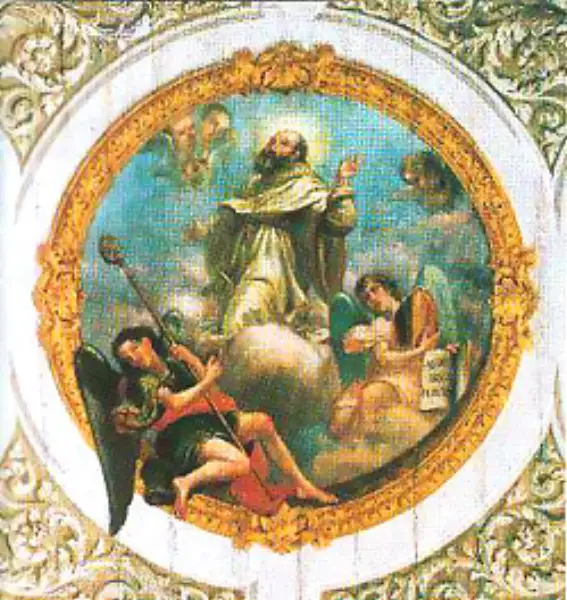
John of Matera, also called John of Pulsano, was an Italian Benedictine monk who rose from a noble childhood in Matera to become one of southern Italy's most influential monastic founders. After serving as a shepherd with Basilian monks at Taranto, he wandered through Calabria, Sicily, and Apulia in penance and poverty, gathered a community at Ginosa, and suffered imprisonment on false charges before a miraculous release. A planned journey to the Holy Land turned instead into a preaching mission at Bari under Prince Grimoald. Around 1130 he settled in a solitary valley near Pulsano on the Gargano promontory with six companions. The house, dedicated to Saint Mary of Pulsano, grew with astonishing speed — sixty monks within six months — and became the seed of a congregation remembered as the Scalzi, with daughter houses at Foggia and on the Dalmatian island of Meleda. John served as the monastery's first abbot until his death at Foggia on 20 June 1139. Canonized in 1177 by Pope Alexander III, he is honoured on that date and depicted in art as an abbot driving away the devil with a rod.
The Complete Life
A Noble Birth and a Humble Shepherd
John was born at Matera around 1070 into a family of nobles, a background that gave him standing and education but not the direction of his life. While still young he left his native city for Taranto, on the instep of the Italian peninsula, and sought lodging and employment with the Basilian monks of the Island of San Pietro. The community assigned him the humble task of shepherding, which he accepted as a discipline of service and self-denial. Relations with the monks, however, did not prove easy. Misunderstandings arose between the young layman and his hosts, and John eventually left the islet. Rather than return to the comfort of his family, he turned into Calabria and then crossed to Sicily, choosing the uncertain lot of a wanderer committed to penance and renunciation. These early years established the pattern of his whole career: an attraction to the monastic and eremitical ideal, a readiness to embrace poverty and manual work, and a temperament strong enough to collide with others even as it drew admirers. The shepherd of Taranto was already being shaped, though no one could have said so, into a founder.
§ Life
Penance, Preaching, and Prison at Ginosa
After some two years in Sicily, John returned to the Italian mainland and settled in Apulia, where he stayed with relatives. He soon resumed the communal form of life he had glimpsed at Taranto, founding a small monastic community at Ginosa, on the Basilicata-Apulia frontier. There his gifts as a preacher became apparent: he spoke in the surrounding district, won the admiration of many, and drew attention to the little settlement he had gathered. Holiness, however, made enemies. His upright life provoked resentment, and hostile voices accused him of crimes he had not committed. On the strength of these false calumnies he was arrested and imprisoned. The confinement did not last: the tradition records that he was freed from his chains by a miraculous intervention, an episode that followed him ever after as proof that his cause was God's. The pattern of this period — preaching, admiration, envy, accusation, and vindication — would recur at Bari, but Ginosa marks the first moment when John stepped forward publicly as a religious teacher rather than a hidden penitent. From this point his life belonged no longer to himself alone but to the Church of southern Apulia.
§ Life
Bari and the Mission That Stayed Home
John's instinct was toward Palestine, the land of Christ, and a stay at Bagnoli with the hermit William of Vercelli — himself a figure of commanding reputation — seems to have confirmed the desire for that pilgrimage. Setting out, he passed through Bari around 1127 and recognized that his mission lay there, not in the East. He was by then in trouble again, for the saint found himself imprisoned in the city, from which he was rescued by Grimoald, Prince of Bari. The prince required John to give an account of his theology in order to prove his orthodoxy, and the explanation he gave was satisfactory. Under Grimoald's protection John then preached in Bari, a city of consequence both as a port toward the eastern Mediterranean and as a meeting place of Latin and Greek Christian life. The episode reveals the shape of his public career: a wanderer without office, vindicated by examination rather than promotion, and given a pulpit by a secular ruler who tested him first. Whatever plans he still harboured for the Holy Land were set aside in favour of work in his native region, and Bari became the threshold of his great foundation at Pulsano.
§ Life
The Rule, the Valley, and Manual Labour
The community John planted near Pulsano around 1130 expressed his understanding of religious life with unusual clarity. He and six disciples settled in a solitary valley on the Gargano promontory, near the famous sanctuary of the region, and took up the Benedictine Rule under a discipline of heavy manual toil. Prayer and work were to be inseparable, and the austerity of the place belonged to the program rather than to accident. The foundation grew at a pace that astonished observers: within six months the six had become sixty, and the fame of the house spread through Apulia and beyond. Out of it grew a monastic congregation known as the Scalzi, which continued to expand through bequests and donations of land. A second house followed beside the church of St. James at Foggia, and the congregation then reached across the Adriatic to a monastery at Meleda in Dalmatia, opposite the coast of the Gargano. John's spirituality was thus neither purely eremitical nor conventionally Benedictine: it joined the desert ideal of the solitary valley to disciplined communal toil, and it proved capable of taking root in very different settings, from the hills of Apulia to coastal monasticism in Dalmatia.
§ Life
Abbot of Pulsano and Death at Foggia
John's last years were spent as first abbot of Saint Mary of Pulsano, governing a congregation that had outgrown its original valley. Expansion brought burdens: new houses at Foggia and at Meleda, the care of novices, the stewardship of land and benefactors, and the unending negotiations of a founder whose community kept enlarging beneath him. He died at Foggia on 20 June 1139, away from the valley where his congregation had been born but still within the region his monks knew well. The day of his death was remembered precisely, and it became his feast, kept on 20 June. John was about sixty-nine years old, having spent roughly a decade on the Gargano since the founding of 1130, and before that a full life of wandering, imprisonment, preaching, and government. His death did not interrupt the congregation's growth, which is the surest sign that the Scalzi rested on institutions and a rule of life rather than on one man's personal presence. The community he left behind carried his manner of life forward through the following centuries, and his memory remained especially alive in the two cities that had marked his career, Matera and Foggia.
§ Life
Canonization, Relics, and Cult
Veneration for John followed quickly upon his death. In 1177, thirty-eight years after he died at Foggia, Pope Alexander III canonized him, enrolling the abbot of Pulsano among the formal saints of the Roman Catholic Church. A canonization within a single generation of living memory suggests how widely the reputation of the Pulsano congregation had travelled by the latter half of the twelfth century. His feast was fixed on 20 June, the day of his death, and the calendar has kept it there. In 1830 his relics were translated to the cathedral of his native city, Matera, where they remain: the man who had left Matera as a young man returned to it, centuries later, as its honoured son. That translation joined him permanently to the civic and religious identity of the city of the sassi, and his cult there continues alongside the devotions of the city's other protectors. Artistic tradition shows him as an abbot who beats back the devil with a rod, an image that compresses into a single scene the combative holiness the sources attribute to him — the prisoner freed from chains, the preacher vindicated before a prince, and the founder whose valley in the Gargano became a stronghold of monastic life.
§ Life
The Scalzi and the Memory of Pulsano
John's most durable monument is the congregation of Pulsano itself. The monastery of Saint Mary of Pulsano, of which he was the first abbot, gave him his alternate name and became the head of a family of houses that spread from the Gargano to Foggia and across the Adriatic to Meleda in Dalmatia. The Scalzi demonstrated that a strict Benedictine observance, rooted in manual labour, could flourish in the religious climate of twelfth-century southern Italy, alongside the older Basilian communities of the region and the new eremitical movements represented by William of Vercelli, whom John had met at Bagnoli. His influence was exercised through example rather than writing: he left no treatises, and his fame rests on foundations, on an upright life that made enemies as readily as admirers, and on a reputation sealed by canonization in 1177. The translation of his relics to Matera Cathedral in 1830 renewed his cult in his birthplace, where he remains an object of popular devotion. In art he survives as an abbot expelling the devil with a rod — the emblem of a saint whose sanctity was experienced by those around him as a real and discomforting force.
§ Life
Timeline
- 1070
Born at Matera into a family of nobles.
§ Life
- 1127
Passing through Bari, freed from prison by Grimoald, Prince of Bari, and preached in the city.
§ Life
- 1130
Founded a new community with six disciples near Pulsano in a solitary valley of the Gargano.
§ Life
- 20 Jun 1139
Died at Foggia.
§ Life
- 1177
Canonized by Pope Alexander III.
§ Life
- 1830
Relics translated to Matera Cathedral, where they remain.
§ Life
The Record
- Major works
- Monastery of Saint Mary of Pulsano·Monastic congregation of the Scalzi
- Symbols
- Abbot driving the devil away with a rod
- Canonization
- Canonized by Pope Alexander III in 1177.
Prayer
Bibliography
Show 5 sources
- Borrelli, Antonio. "Giovanni da Matera", Santi e Beati, February 1, 2001
- "Saint John of Matera", Daily Compass, June 20, 2021
- "San Giovanni (Scalcione) da Matera Abate", Avvenire
- La Città dell'Uomo.it: Life of San Giovanni di Matera
- Caravale, Mario (ed.), 2003: Dizionario Biografico degli Italiani. Rome
Profile text adapted from the Wikipedia article, licensed CC BY-SA 4.0.
Pray with this saint every day
Save St. John of Matera to your favorites, read the full profile, and get feast-day reminders in the Saints app.
Get the Saints AppFree on the App Store for iPhone and iPad