
died 1900·Feast July 9
St. John Zhang Huan
Seminarian and Martyr
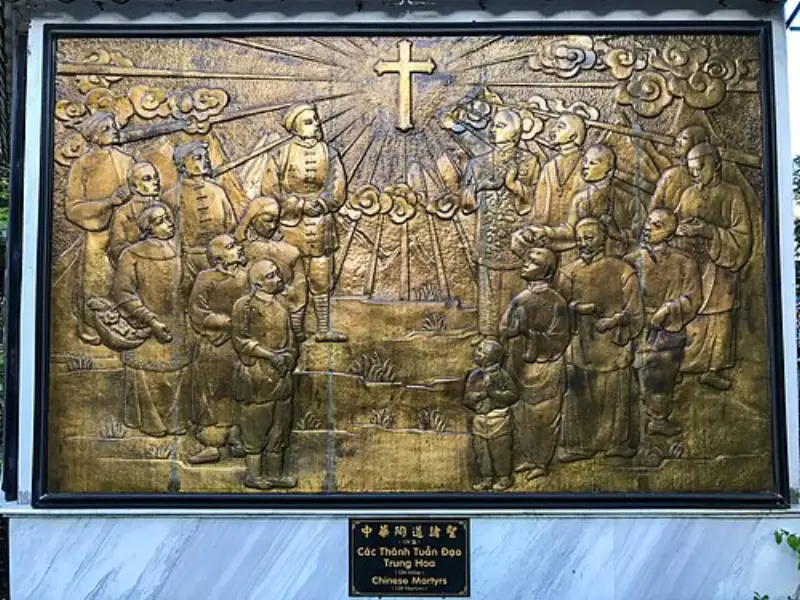
Overview
John Zhang Huan was a Chinese seminarian of Taiyuan in Shanxi and one of the Secular Franciscans — eleven in all, every one of them Chinese — who belonged to the Franciscan mission in the provincial capital. He was still a student, preparing for a priesthood he would never receive, when the Boxer uprising reached Shanxi in the summer of 1900. Zhang Huan was killed on 9 July 1900 in the massacre at Taiyuan, together with the Franciscan bishops and friars, the seven Franciscan Missionaries of Mary, and a great company of Chinese lay faithful. John Paul II canonized him on 1 October 2000 among the 120 Martyr Saints of China.
The Complete Life
Conversion and Vocation
John Zhang Huan was a Chinese Catholic of Taiyuan, the capital of Shanxi province, and belongs to that numerous class of Chinese saints whose Christian roots ran back generations, to the missions of the late Ming and Qing dynasties. The faith of such families survived the persecutions of the eighteenth and early nineteenth centuries at the cost of civil disabilities, loss of property, and periodic violence, and it produced, in the second half of the nineteenth century, the first large cohort of native Chinese clergy of the modern era. Zhang Huan's own step into that world was to enter the seminary at Taiyuan as a candidate for the priesthood of his own church. He also joined the Secular Franciscans — the tertiary order through which Chinese laymen, students, and heads of families attached themselves to the Franciscan family that ran the Shanxi mission, taking its rule of prayer and penance while remaining students and laymen in the world.
Mission and Ministry
As a seminarian, Zhang Huan's ministry was preparation rather than office, and the Church has always counted such preparation as real service. The Taiyuan seminary trained young Chinese men in Latin, philosophy, and theology — an arduous curriculum in a second scholarly language — precisely so that the church of Shanxi could cease to be a foreign institution and become Chinese in its own clergy. The eleven Secular Franciscans of Taiyuan, every one of them Chinese, stood at the point where the two communities met: they lived and studied alongside the Italian friars, shared the Franciscan rule, and were known to the Christian quarter of the city as the future priests of their own people. Zhang Huan never received that priesthood; what he received instead was the martyr's crown the Church considers an equal, and greater, consecration.
Trial and Final Years
In the summer of 1900 the Boxer uprising reached Shanxi, and the provincial governor, Yuxian, put the force of the state behind the movement's war on Christians. The foreign bishops and friars of Taiyuan were arrested, and with them the seminarians and Chinese laypeople who would not renounce their faith — for the movement targeted not only foreigners but the Chinese who stayed loyal to them, and apostasy was openly offered as the price of life. On 9 July 1900 Zhang Huan was killed in the massacre at the governor's residence, in the company of Bishops Gregorio Grassi and Francis Fogolla, the Franciscan priests and brother, the seven Franciscan Missionaries of Mary, and the fellow seminarians and catechists of his own city. The students died with their teachers; the Chinese church died that day alongside the foreign mission that had planted it, and the two were thenceforth impossible to tell apart.
Canonization
The Chinese Christians of Taiyuan who survived 1900 preserved the memory of their dead at real risk, and their testimony fed the causes that Rome eventually gathered into one. Pope Pius XII beatified the martyrs of Taiyuan with the other martyrs of the uprising on 24 November 1946. On 1 October 2000, Pope John Paul II canonized John Zhang Huan among the 120 Martyr Saints of China. The gesture was historic for the Chinese church: of the 120, the great majority were Chinese laity, seminarians, and catechists, and their canonization declared in the most public form possible that the church's true founders in China were not the foreign missions alone but the Chinese who lived and died for it as their own — among them a student not yet ordained.
Legacy
Zhang Huan's legacy lies in what he represents: the generation of Chinese seminarians standing on the threshold of a native priesthood at the moment history broke over them. Every Chinese priest ordained since that summer has, in some sense, stepped into the place left empty at Taiyuan. He is honored on the shared feast of the Martyr Saints of China, and his memory is a standing reminder that the Church counts students and catechumens — those who never held office or wore any rank — among its greatest saints, since martyrdom completes in blood what ordination would have completed in ceremony, and does it just as definitively.
Timeline
- 9 Jul 1900
Killed in the Taiyuan massacre alongside Franciscan bishops, friars, and his fellow Chinese seminarians.
§ Martyrs of the Boxer Rebellion
- 24 Nov 1946
Beatified by Pope Pius XII among the twenty-nine martyrs beatified that day.
§ Introduction
- 1 Oct 2000
Canonized by Pope John Paul II among the 120 Martyr Saints of China.
§ Introduction
The Record
- Canonization
- Canonized by Pope John Paul II on 1 October 2000, among the 120 Martyr Saints of China
Prayer
Profile text adapted from the Wikipedia article, licensed CC BY-SA 4.0.
Pray with this saint every day
Save St. John Zhang Huan to your favorites, read the full profile, and get feast-day reminders in the Saints app.
Get the Saints AppFree on the App Store for iPhone and iPad