
died 1461·Feast June 15
St. Jonah of Moscow
Metropolitan who secured the Russian Church's autocephaly
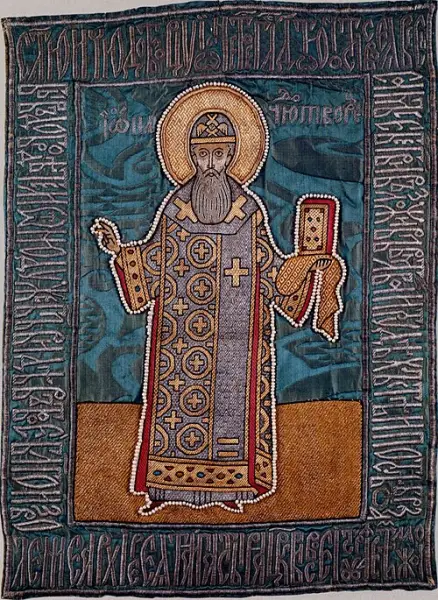
Overview
Jonah of Moscow led the Russian Church as Metropolitan of Kiev and all Rus' from 1448 until his death in 1461, residing permanently in Moscow like the primates before him. Born in the 1390s, he settled in the late 1420s at the Simonov Monastery and won the confidence of Metropolitan Photius, who consecrated him Bishop of Ryazan and Murom. When Photius died in 1431, Grand Prince Vasily II put Jonah forward for the primatial see, but the Patriarch of Constantinople chose the Greek Isidore instead. After Isidore backed the Union of Florence and was repudiated in Moscow, the metropolitan throne stood empty for seven years. In 1448 a council of Russian bishops, convened at Vasily II's behest, chose Jonah as primate without consulting Constantinople — an unprecedented step regarded as the start of the Russian Orthodox Church's autocephaly. He labored to recover ground lost to the Uniate party, adding Lithuania and Kiev to his title, though Galicia eluded him and Lithuania was detached in 1458. He died on 31 March 1461 and was buried in the Dormition Cathedral of the Moscow Kremlin.
The Complete Life
A Monk of Simonov
Jonah was born in the 1390s, most likely within the lands of Muscovy, though the record of his life preserves nothing of his family or childhood. By the late 1420s he had settled at the Simonov Monastery in Moscow, one of the notable monastic houses of the principality, and there he came to the attention of Metropolitan Photius, the Greek-born primate of the Russian Church. Photius grew to trust the young monk and raised him to the episcopate as Bishop of Ryazan and Murom, a see on the eastern frontier where pastoral and diplomatic gifts were at a premium. Jonah's advancement mattered against a wider background: for generations the metropolitans of Rus' had been appointed by the Ecumenical Patriarch of Constantinople, and almost all of them had been Greeks, even as Russian princes and bishops repeatedly asked that a native of the land be chosen. The succession to Photius would test that arrangement. When the metropolitan died in 1431, Jonah stood as the candidate of Grand Prince Vasily II of Moscow, a Russian churchman positioned at last for the primatial throne.
§ Career
Twice Passed Over
When Photius passed away in 1431, it took the grand prince and an assembly of Russian bishops only until the close of 1432 to settle on Jonah as the next primate. Strife over the succession in Moscow, however, made travel to Constantinople unwise, and Jonah put off his journey until mid-1435, when he finally set out to receive ordination from the patriarch. Events had already outrun him. The Lithuanian grand duke Švitrigaila, wanting a primate of his own, had secured the appointment of Bishop Gerasim over the Lithuanian lands alone — and before long put Gerasim to death on a suspicion of treason. When Jonah at last reached Constantinople in 1436, Patriarch Joseph II had already settled on the Greek bishop Isidore, who arrived in Moscow in 1437. Isidore made a favorable impression through his diplomacy and his command of Slavonic, yet within five months, in September 1437, he left for the Council of Florence, which aimed at reuniting the Churches of Rome and Constantinople. Jonah, twice passed over, could only wait on events that would soon transform the Church he served.
§ Career
Primate Without a Patriarch's Blessing
Isidore subscribed to the union with Rome at Florence; Abraham of Suzdal, the only other Russian prelate present, signed under duress according to his companion. When Isidore returned to Moscow in 1441 bearing the news, Vasily II and a council of Russian bishops condemned the union in defense of the faith's purity, and Isidore escaped with his life. The metropolitan throne then stood empty for seven years, since Constantinople sent no replacement. In 1448 the grand prince convened a council, and on 15 December of that year a majority of Russian bishops elected Jonah metropolitan in Moscow, without the patriarch's consent. Not all the Russian clergy supported him, but the fall of Constantinople in 1453 was read in Rus' as divine punishment, and the election came to be regarded as justified. Jonah's first labor as primate was to recover ground lost to the Uniate movement: he added Lithuania and Kiev to his title, though Galicia remained beyond his reach, and from 1451 he worked to purge Isidore's influence from the affected regions. When Gregory was ordained metropolitan of the new metropolis of Kiev, Jonah sent envoys and monks to hold the western nobles to Orthodoxy, but the effort failed.
§ Career
Two Hierarchies, One Flock
The dispute with the new metropolis of Kiev ended not in rupture but in a guarded compromise. The Polish-Lithuanian rulers of the western lands threw their support behind Gregory, and Jonah and Vasily II quietly accepted the coexistence of two Russian Orthodox hierarchies, one at Moscow and one at Kiev. Jonah himself remained in Moscow, as his immediate predecessors had done, and he was the last occupant of the see to carry the traditional title recalling the ancient metropolitan city of Kiev. He died on 31 March 1461, having led the Russian Church for a little more than twelve years. His body was laid to rest in the Dormition Cathedral within the Moscow Kremlin, beside the metropolitans who had gone before him, where the faithful would soon keep his memory as that of a saint. The memory of his episcopate settled quickly into reverence: here was the hierarch who had taken up the primatial cross when the patriarch's blessing could not be had, and who had preserved his flock through the aftershocks of Florence and the catastrophe that later engulfed Constantinople.
§ Career
Enrollment Among the Saints
Jonah was canonized by Metropolitan Macarius at the Moscow Council of 1547, the great assembly that shaped the official calendar of Russian saints. His cult took form around several commemorations that the Eastern Orthodox Church keeps to this day. 31 March marks the date of his repose; 27 May celebrates the uncovering and translation of his relics; 15 June is observed as his primary feast; and 5 October belongs to the Synaxis of the Hierarchs of Moscow, in which Jonah is honored alongside the other saintly metropolitans of the city. The feast of his relics' translation joins him with metropolitans Cyprian and Photius, whose remains were honored with his own. Together these commemorations bind the bishop of the 1448 election into the living prayer of the Church that his generation brought to maturity. In these observances the Church remembers not merely an administrator who steered his see through a constitutional crisis, but a shepherd who held his people together in faith when the ground gave way beneath the ecclesiastical order they had always known. The dates themselves tell the story of a cult that grew from the affection of the flock for the man who had borne the primacy in its hardest hour.
§ Veneration
The Beginning of Autocephaly
The lasting significance of Jonah's episcopate lies in what his election set in motion. He was the first metropolitan of Moscow appointed without the approval of the Ecumenical Patriarch of Constantinople, breaking with a practice that had governed the Russian Church since its beginning. Whether the omission of the patriarchal blessing was intended as a declaration of independence is doubtful, but the deed marked the start of the Russian Orthodox Church's autocephaly, which thereafter chose its own primates. Jonah's tenure also fixed the shape of the encounter with the Uniate movement: Lithuania and Kiev were gathered back into his title, Galicia was lost, and in time the western metropolis went its own way under Gregory. Later generations in Russia judged the crisis through the fall of Constantinople in 1453, seeing in the catastrophe God's verdict on the union with Rome and a vindication of the Russian churchmen who had refused it. As a saint of the Russian Orthodox Church, Jonah stands for the moment when the Church of Rus' came of age, governing itself in fidelity to the faith it had received.
§ Career
Timeline
- 1429
Began living at the Simonov Monastery in Moscow, where he became close to Metropolitan Photius.
§ Career
- 1431
Photius died; Grand Prince Vasily II nominated Jonah for the metropolitanate, but Constantinople chose Isidore.
§ Career
- 1432
Chosen as metropolitan by the grand prince and a council of Russian bishops at the year's end.
§ Career
- 1435
Finally set out for Constantinople at midyear; meanwhile Bishop Gerasim, metropolitan for Lithuania, was executed by Švitrigaila.
§ Career
- 1436
Reached Constantinople only to find the patriarch had already appointed the Greek bishop Isidore as metropolitan.
§ Career
- Sep 1437
Isidore departed Moscow for the Council of Florence after barely five months in his see.
§ Career
- 1441
Isidore returned announcing the union with Rome; Vasily II and the bishops condemned it and Isidore fled.
§ Career
- 15 Dec 1448
Elected metropolitan in Moscow by a majority of Russian bishops, with no consent from Constantinople.
§ Career
- 1451
Began purging the regions under his care of Isidore's Uniate influence.
§ Career
- 1453
The fall of Constantinople was read in Rus' as divine punishment and vindication of the independent election.
§ Career
- 1458
Lithuania was separated from his jurisdiction once Gregory led the newly established metropolis of Kiev.
§ Career
- 31 Mar 1461
Died in Moscow and was buried in the Dormition Cathedral of the Kremlin.
§ Career
- 1547
Canonized by Metropolitan Macarius at the Moscow Council.
§ Career
The Record
- Symbols
- depicted on a sixteenth-century liturgical shroud
- Canonization
- Canonized by Metropolitan Macarius at the Moscow Council of 1547
Prayer
Bibliography
Show 6 sources
- Casiday, Augustine (2012). The Orthodox Christian World. Routledge. ISBN 978-0-415-45516-9, pp. 18–19.
- Shubin, Daniel H. (2004). A History of Russian Christianity, Vol. I: From the Earliest Years through Tsar Ivan IV. Algora Publishing. ISBN 978-0-87586-287-3.
- Fennell, John (2014) [1995]. A History of the Russian Church to 1488. Routledge. ISBN 978-1-317-89720-0.
- Crummey, Robert O. (2014). The Formation of Muscovy 1300–1613. Routledge. ISBN 978-1-317-87200-9.
- Golubinskii, E. E. Istoriia russkoi tserkvi. Vol. 2, pt. 1. Moscow: Universitetskaia tipografiia, 1900.
- "Repose of Saint Jonah, Metropolitan of Moscow and All Russia". Orthodox Church in America (OCA).
Profile text adapted from the Wikipedia article, licensed CC BY-SA 4.0.
Pray with this saint every day
Save St. Jonah of Moscow to your favorites, read the full profile, and get feast-day reminders in the Saints app.
Get the Saints AppFree on the App Store for iPhone and iPad