
c. 1580-1623·Feast November 12
St. Josaphat Kuntsevych
Bishop and Martyr
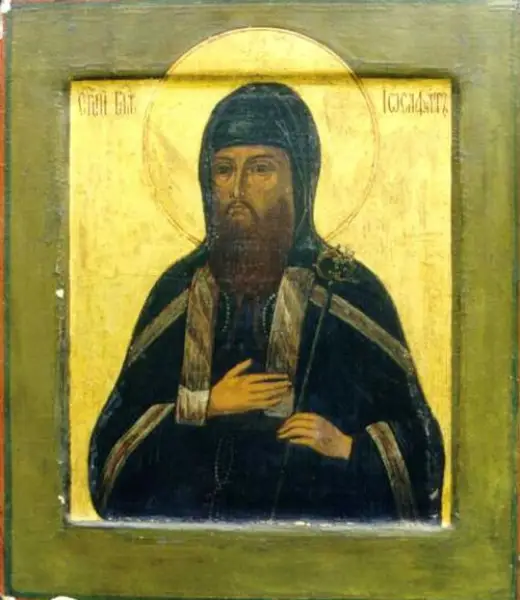
Overview
Ivan Kuntsevych was born around 1580 at Volodymyr in Volhynia, to a Ruthenian Orthodox family of the lesser nobility whose father was a town councilor in trade. Apprenticed to a merchant in Vilnius, amid that city's religious contentions he met Josyf Veliamyn Rutsky and other men of the Eastern Catholic revival, and in 1604 he entered the Basilian monastery of the Holy Trinity at Vilnius, receiving the name Josaphat. His austerities, his constant recitation of the Jesus Prayer, and his studied conviction that the Union of Brest of 1596 restored the Christian East to communion with Rome made him a magnet for vocations and converts — so many that Orthodox and Calvinist opponents nicknamed him the soul-snatcher. Ordained in 1609, consecrated bishop on 12 November 1617, and appointed Archeparch of Polotsk in 1618, he preached and heard confessions in churches, fields, hospitals, and prisons while the Orthodox–Uniate conflict hardened around him. On 12 November 1623 at Vitebsk a crowd opposed to the union attacked him, and axe-blows ended his life. Urban VIII beatified him in 1643; Pius IX canonized him in 1867. He is honoured as a martyr for the unity of the Church.
The Complete Life
Early Life
Ivan Kuntsevych was born around 1580 at Volodymyr in Volhynia, then part of the Polish-Lithuanian Commonwealth, into a Ruthenian Orthodox family of the lesser nobility; his father was a town councilor active in trade. Apprenticed to a merchant in Vilnius, the young Ivan found himself in one of the most religiously contested cities of Europe — Orthodox, Catholic, Uniate and Calvinist congregations all competing in the same streets. There he met Josyf Veliamyn Rutsky and other men of the Eastern Catholic revival, and in 1604, at about twenty-four, he entered the Basilian monastery of the Holy Trinity at Vilnius, receiving the monastic name Josaphat. His family, by some accounts, opposed the step; his mother is said later to have followed him into religion. From the beginning his was a life of unusually strict observance in a community still forming its identity.
§ Introduction
Monk of the Union
Josaphat's years as a monk were marked by austerities that alarmed even his superiors, by constant recitation of the Jesus Prayer, and by a studied conviction that the Union of Brest of 1596 — by which the Ruthenian church entered communion with Rome while keeping its Byzantine rite — restored the Christian East to its rightful unity. He was ordained a hieromonk in 1609 and quickly became a magnet for vocations and converts — so many that Orthodox and Calvinist opponents nicknamed him the soul-snatcher. He was consecrated bishop on 12 November 1617 by Archeparch Gedeon Brolnitskyj, and in 1618 was appointed Archeparch of Polotsk, one of the largest and most bitterly divided sees of the Uniate church.
§ Introduction
Archeparch of Polotsk
As archeparch, Josaphat worked with an energy that exhausted everyone around him. He preached and heard confessions in churches, fields, hospitals and prisons; he held synods, visited parishes, reformed monasteries, printed books for the clergy, and defended the Ruthenian rite against latinization while insisting on the union with Rome. His diocese was split between those who accepted the union and those who rejected it, and the conflict was sustained by lay brotherhoods, magnates and city magistrates as much as by clergy. Josaphat's manner was conciliatory toward individuals and absolute in principle — he held that the dissident Orthodox were his own flock estranged, not enemies — but the middle years of his episcopate saw riots, excommunications and mutual violence, and he governed for much of the time under threat. His reported prayer was for unity and the conversion of the dissidents, and his reported dying words, for the holy union and the supremacy of the Holy See.
§ Introduction
Martyrdom at Vitebsk
In the autumn of 1623 Josaphat went to Vitebsk, a city where hostility to the union was open and organized. On 12 November 1623 a crowd, incited after a priest of the anti-union party had been arrested, burst into the house where he was staying. He was beaten and struck with an axe, and his body was thrown into the river Dvina and later recovered. The murder shocked even his enemies; the perpetrators were tried and executed, and the Polish courts punished the city. His death, intended to destroy the union in Polotsk, instead fixed its martyr: the story of the archbishop killed with an axe became known across Europe within months.
§ Introduction
Canonization
Josaphat was beatified by Pope Urban VIII on 16 May 1643, twenty years after his death, on the testimony of witnesses to his life and martyrdom. Canonization followed a long interval: Pope Pius IX declared him a saint on 29 June 1867 — the first saint of the Eastern Catholic churches formally canonized in the modern process, at a moment when the papacy wished to honor the Eastern churches in communion with Rome. Pius IX also gave his relics a place of honor; his body now rests in Saint Peter's Basilica in Rome, near the tomb of the apostle. His feast is kept on 12 November in the Latin Church and the Eastern Catholic churches that honor him.
§ Canonization
Legacy
Josaphat is the great saint of church unity achieved at the price of blood: an Eastern bishop, keeping the Byzantine rite and defending it, who died for communion with Rome. He is honored as the patron of unity between Catholics and Orthodox — a patronage that the Catholic-Orthodox dialogues of the twentieth century made newly pointed — and as a father of the Ukrainian and Belarusian Greek Catholic churches. Basilian monasticism looks to him as its reformer; his austerities and his liturgical fidelity have made him a model for Eastern monastic life in the West as well. His memory in Belarus and Ukraine remains bound to the tragedy of a divided church: he is loved and venerated by the heirs of the union, and remembered more ambivalently by those of the church he sought to bring back to Rome.
§ References
Timeline
- 1580
Born Ioann Kuntsevych at Volodymyr, Volhynian Voivodeship, into a family of the Eastern Orthodox Church.
§ Early life
- 1596
The Union of Brest brings the Metropolitanate of Kiev into communion with Rome, the cause he would later champion.
§ Historical and religious background
- 1604
Enters the Monastery of the Trinity of the Order of Saint Basil the Great at Vilnius, taking the name Josaphat.
§ Monk
- 1609
Ordained a priest by a Greek Catholic bishop after private study under the Jesuit Valentin Groza Fabricy.
§ Priest and Archbishop
- 12 Nov 1617
Consecrated coadjutor archeparch of Polotsk by Archeparch Gedeon Brolnitskyj.
§ Priest and Archbishop
- Mar 1618
Succeeds as Archeparch of Polotsk on the death of his predecessor.
§ Priest and Archbishop
- 1620
A rival Orthodox hierarchy is set up, with Meletius Smotrytsky appointed Orthodox Archeparch of Polotsk.
§ Priest and Archbishop
- Oct 1623
Orders the arrest of the last priest secretly holding Orthodox services at Vitebsk, enraging the townspeople.
§ Death
- 12 Nov 1623
Beaten to death with an axe by a mob at Vitebsk; his body is tied to stones and thrown into the Dvina.
§ Death
- Jan 1624
A commission presided over by Sapieha investigates the murder and sentences 93 people to death for the conspiracy.
§ Death
- 1628
Pope Urban VIII appoints a commission to inquire into his possible canonization; it examines 116 witnesses.
§ Canonization
- 1637
A second commission investigates his life.
§ Canonization
- 16 May 1643
Beatified by Pope Urban VIII.
§ Canonization
- 29 Jun 1867
Canonized by Pope Pius IX, more than two centuries after his death.
§ Canonization
In Their Own Words
Lord, God, grant unity to the Holy Church and the conversion of the Dissidents.
The Record
- Patron of
- Ukraine
- Canonization
- Beatified by Pope Urban VIII on 16 May 1643; canonized by Pope Pius IX on 29 June 1867
Prayer
Bibliography
Show 12 sources
- ↑ Vitebsk was an important town built at a portage between the Daugava River and Dnieper River along the trade route from the Varangians to the Greeks . [ 5 ] : 7 It was granted Magdeburg rights in 1597. Those Magdeburg rights were divested
- ↑ "Polemical assessments still dominate the church literature" about Kuntsevych. According to the Religious Information Service of Ukraine at Ukrainian Catholic University, "the circumstances of his life and his murder have been heavily res
- ↑ Vilnius was granted Magdeburg rights in 1387.
- ↑ "Greek Catholic Confession of the Slavonic Rite". [ 12 ] : 174
- ↑ The conflict between the two sectarian groups "has lasted into the 21st century." [ 16 ] : 69
- ↑ "Greek Orthodox Confession of the Slavonic Rite". [ 12 ] : 174
- ↑ Volodymyr was granted Magdeburg rights in 1431.
- ↑ The "flagrant and manifold abuses" in the Eastern Orthodox Church within the Commonwealth, seemed according to Bain, "to justify the necessity of its union with the better-ordered and instructed Roman Church. All contemporary evidence des
- ↑ Polotsk was an important town built at a junction of key trade routes from northern Europe to Constantinople . [ 5 ] : 5–6 It was granted Magdeburg rights in 1498.
- ↑ Mohilev was granted Magdeburg rights by Stephen Báthory in 1577.
- ↑ Walerian Krasiński believed this demonstrated "what a strong feeling must have existed" against the Tsardom of Russia : when oppressed on account of their religion, they turned to the distant Islamic Ottoman Empire rather than the nearby
- ↑ Bohdan Sobol, the father of Spiridon Sobol , was among those executed. [ 33 ]
Profile text adapted from the Wikipedia article, licensed CC BY-SA 4.0.
Pray with this saint every day
Save St. Josaphat Kuntsevych to your favorites, read the full profile, and get feast-day reminders in the Saints app.
Get the Saints AppFree on the App Store for iPhone and iPad