
1851 – 1904·Feast September 19
St. José Maria de Yermo y Parres
Founder of the Servants of the Sacred Heart of Jesus and of the Poor
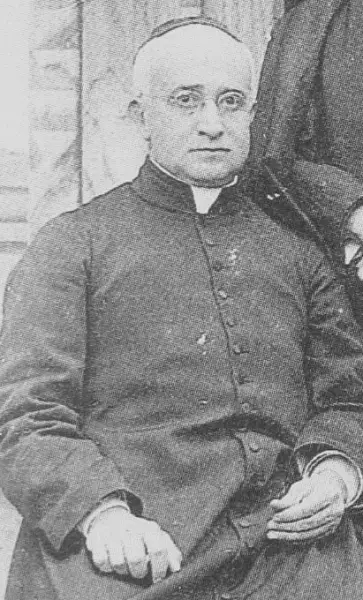
Overview
José María de Yermo y Parres was a priest of the Roman Catholic Church in Mexico who founded a religious family devoted to the spiritual and material needs of the abandoned. Born on 10 November 1851 in Jalmolonga to a family of Spanish nobles, he lost his mother within weeks of his birth and was raised under the watch of a paternal aunt and grandmother, who planted religious values in the boy. A promising student, he received a medal of honour from Emperor Maximilian I in 1864 and formed a lifelong friendship with the poet Juan de Dios Peza. He entered the Congregation of the Mission out of devotion to Saint Vincent de Paul, but a sudden vocational crisis led him to leave, and only after patient discernment, guided by his friend Miguel Arizmendi and his uncle Bishop José Maria Diez de Sollano y Dávalos, did he pursue diocesan priesthood. Ordained in 1879 and assigned to two small churches in Puebla, he was shaken by the sight of pigs devouring the remains of two abandoned newborns, and in response opened the Shelter of the Sacred Heart in 1885. From this grew his religious congregation, hospitals, orphanages, and shelters for the abused. He died in Puebla de los Ángeles on 20 September 1904.
The Complete Life
An Orphan of the Mexican Nobility
The birth of José Maria de Yermo y Parres took place on 10 November 1851 in Jalmolonga, in the Estado de México, to Manuel de Yermo y Soviñas and María Josefa Parres. The Yermo family had come to Mexico from a line of nobles in Spain, but the child's beginning was shadowed by loss: his mother died on 30 December 1851, when he was only weeks old, and his father returned to the capital and asked his sister Carmen to take charge of the boy. José Maria thus passed his boyhood in the keeping of a paternal aunt and grandmother, women who planted in him the religious values that would govern his life. Educated first by private teachers and then in private schools, he proved a distinguished student, and in 1864 he received a medal of honour for his achievements from the emperor Maximilian I of Mexico. In 1863 there began his lifelong friendship with the noted poet Juan de Dios Peza, a companionship that connected the future priest to the literary circles of his generation.
§ Life
Crisis and a Hard-Won Priesthood
In 1867 José Maria left home to enter the Congregation of the Mission, drawn by his devotion to Saint Vincent de Paul, and he professed vows with the order at Toluca on 10 November 1868, and his superiors then dispatched him to its Paris motherhouse in Paris for studies, but on his return around 1870 he experienced a sudden vocational crisis and departed the order, going home unsettled. The crisis did not end his calling. Miguel Arizmendi, a priest and his friend, kept guiding him and pressed him to persist in his studies for the priesthood, and his uncle, Bishop José Maria Diez de Sollano y Dávalos, approved the decision to continue. Though he never re-entered the Vincentians, he discerned his path back toward ordination and was ordained a priest on 24 August 1879. The diocese's new bishop — his uncle's successor — sent him to the two little churches of El Calvario and Santo Niño, treating the post as a slight to his record of good work; José Maria, discerning the will of God in the matter, departed for the assignment in obedience.
§ Life
The Shelter That Became a Congregation
The defining moment of Yermo's priesthood came through horror transformed into resolve. One day he happened upon a group of pigs devouring the remains of two abandoned newborns, and the sickening sight impressed on him that he must help those whom everyone else had abandoned. On 13 December 1885 he opened The Shelter of the Sacred Heart at El Calvario to care for the poor, a foundation that laid the ground for a new religious order and evolved into the religious family he named for the Sacred Heart in service of the poor. From that base his charity multiplied: he established several hospitals and orphanages together with shelters for the abused, and toward the end of his life he collaborated with the Tarahumara people in their distant territories. His method was as simple as it was demanding, captured in his frequent counsel that we forge saints by speaking of them. His order, begun on the heights of El Calvario, now works in countries including the United States of America and Nicaragua.
§ Life
A Death Sung into Heaven
Yermo died in the early morning of 20 September 1904 at Puebla de los Angeles, the city of his life's work. His final illness was an ulcer of the stomach, and as the end approached he asked the nuns of his congregation to sing the Ave Maria Stella, dying with their hymn about him. He was fifty-two years old. He was buried at the motherhouse of the order he had founded, in the city whose poor he had served for a quarter of a century. The congregation carried his charism forward after him, carrying his congregation of the Sacred Heart beyond Mexico into the United States, Nicaragua, and other countries. Within his own country the memory of the priest of El Calvarito endured, and less than half a century after his death the diocese of Puebla opened the formal inquiries that would one day carry his cause to Rome.
§ Life
The Long Road to the Altar
The sainthood process began in Puebla de Los Angeles with the diocese of Puebla opened an informative process on 6 May 1949, though it soon went dormant for decades until a decree allowed it to resume on 13 September 1976; it wound up that work on 3 April 1978. Formal opening of the cause arrived on 31 July 1981, when the Congregation for the Causes of Saints granted its official nihil obstat and conferred on the late priest the title Servant of God. Rome's cognitional process ran from 1 July to 8 August 1983, and validation of both inquiries followed on 7 June 1985, and the Positio dossier reached the congregation in 1988. Approval followed from the theologians on 19 May 1989 and from the congregation on 4 July 1989, and on 7 September 1989 Pope John Paul II confirmed his heroic virtue, declaring him Venerable. The beatification miracle, investigated in 1981 and approved in early 1990, was ratified by the pope on 26 April 1990, and he was beatified at the Basilica of Our Lady of Guadalupe in Mexico City on 6 May 1990. The second miracle was approved through 1998 and 1999, the pope issued the final approval on 20 December 1999, and the canonization followed on 21 May 2000 in Saint Peter's Square, with John Paul II raising him among twenty-seven new saints.
§ Sainthood
Timeline
- 10 Nov 1851
Born in Jalmolonga, Estado de México, to Manuel de Yermo y Soviñas and María Josefa Parres.
§ Life
- 1864
Received a medal of honour from Maximilian I of Mexico for his distinctions as a student.
§ Life
- 1867
Left home to enter the Congregation of the Mission.
§ Life
- 10 Nov 1868
Made his vows in the Congregation of the Mission at Toluca.
§ Life
- 1870
Returned from studies at the order's Paris motherhouse and experienced a sudden vocational crisis that led him to leave the Vincentians.
§ Life
- 24 Aug 1879
Ordained to the priesthood, and soon assigned to the small churches of El Calvario and Santo Niño.
§ Life
- 13 Dec 1885
Opened The Shelter of the Sacred Heart for the poor at El Calvario, the seed of his future congregation.
§ Life
- 20 Sep 1904
Died of a stomach ulcer at Puebla de los Ángeles, asking the nuns as he lay dying to sing the Ave Maria Stella.
§ Life
- 6 May 1949
The informative phase of his sainthood process was inaugurated in the diocese of Puebla de Los Angeles.
§ Sainthood
- 31 Jul 1981
The Congregation for the Causes of Saints issued the nihil obstat, titling him a Servant of God.
§ Sainthood
- 7 Sep 1989
Pope John Paul II confirmed his heroic virtue, accorded him the title of Venerable.
§ Sainthood
- 6 May 1990
Beatified by Pope John Paul II at the Basilica of Our Lady of Guadalupe in Mexico City.
§ Sainthood
- 21 May 2000
Canonized by Pope John Paul II in Saint Peter's Square among twenty-seven new saints.
§ Sainthood
In Their Own Words
Let us speak about saints to forge saints.
The Record
- Major works
- Servants of the Sacred Heart of Jesus and of the Poor·The Shelter of the Sacred Heart·Hospitals, orphanages, and shelters for the abused across Mexico
- Patron of
- Servants of the Sacred Heart of Jesus and of the Poor
- Symbols
- Priest's cassock
- Canonization
- Canonized by Pope John Paul II on 21 May 2000 in Saint Peter's Square, Vatican City
Prayer
Bibliography
Show 5 sources
- Homily of His Holiness Pope John Paul II, Canonization of 27 New Saints, May 21, 2000.
- Biography of José Maria de Yermo y Parres, Vatican News Services.
- "Saint Jose Maria de Yermo y Parres". Saints SQPN. 18 September 2010.
- "CANONIZATIONS from 16 June 1993 to 11 Oct 1998". EWTN.
- "Servants of the Sacred Heart of Jesus and of the Poor" (PDF). Congregation of the Mission. 2007.
Profile text adapted from the Wikipedia article, licensed CC BY-SA 4.0.
Pray with this saint every day
Save St. José Maria de Yermo y Parres to your favorites, read the full profile, and get feast-day reminders in the Saints app.
Get the Saints AppFree on the App Store for iPhone and iPad